The blistered edge of a crust is not just a culinary detail. It is a record of a violent, beautiful encounter between raw dough and nine hundred degrees of heat. In the industry, we call those charred bubbles "leopard spotting," but for the person standing over a stone at dusk, they are something else entirely. They are proof of a small, domestic victory.
Most of us grew up with the kitchen oven, a reliable but uninspired appliance that tops out at 500°F. In that environment, pizza doesn't bake; it languishes. The cheese splits and becomes oily before the dough has a chance to spring. The result is a flat, heavy disk that tastes of compromise.
To reach the heights of a Neapolitan pizzeria in a Canadian backyard, you have to move beyond the kitchen. You have to court the flame. This isn't about buying a gadget. It’s about reclaiming the ritual of the fire.
The Physics of the Flash
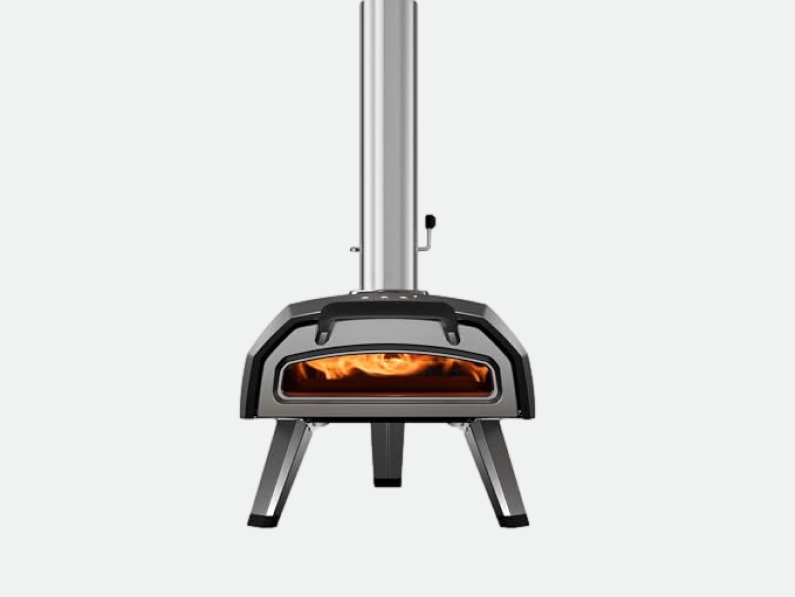
Consider the Ooni Koda 16. It doesn’t look like a traditional kiln; it looks like a sleek, carbon-fiber stone from the future. But inside, it performs an ancient trick. It utilizes a L-shaped flame that wraps around the oven, creating a vortex of heat.
Why does this matter? Because a true pizza requires a "floor" that is screamingly hot and an "air" temperature that can sear the toppings in sixty seconds. When you launch a pie into the Koda, the moisture in the dough turns to steam instantly. The crust inflates. The sugars caramelize. By the time you’ve turned it twice with a metal peel, it’s done.
It is the gold standard for the gas-powered purist. Gas offers control. You can dial the heat back if the crust is browning too fast, a luxury you don’t always get when you’re wrestling with literal logs. For the Canadian entertainer who wants to feed ten people without losing their mind, this is the engine that makes it possible.
The Scent of Hardwood
But some people crave the struggle. They want the soot.
The Gozney Roccbox is a heavy, silicone-jacketed beast that feels like it could survive a fall from a moving truck. It is the favorite of professional chefs for a reason: insulation. It holds heat with a stubbornness that is almost offensive. While other ovens lose their temper the moment a cold breeze hits them, the Roccbox remains a steady, glowing heart.
It comes with a detachable wood burner. Using it is a lesson in patience. You have to learn the language of the wood—how small slivers of oak catch quickly, while thicker chunks provide the bed of coals necessary for a long session. There is a specific smell—a mix of toasted flour and hardwood smoke—that clings to your clothes long after the sun goes down. It is the smell of a Sunday afternoon well spent.
The Hybrid Compromise
Then there is the dilemma of the undecided. You want the convenience of a Tuesday night gas-fired dinner, but you want the romanticism of wood on a Saturday. This is where the Ooni Karu 12G enters the story.
It is a multi-fuel chameleon. It’s smaller, more portable, and designed for the person who might want to take their oven to a lakeside cabin in Muskoka. It represents the realization that we don't always have two hours to prep a fire, but we still want the option to try.
The Electric Revolution
For a long time, the idea of an indoor electric pizza oven was a joke. They were glorified sandwich presses. But then the Breville Pizzaaiolo arrived, and the physics changed.
It uses conductive, radiant, and convective heat to mimic a brick oven. It is a piece of high-level engineering disguised as a kitchen appliance. For the apartment dweller in Toronto or Vancouver who lacks a balcony but possesses a soul that yearns for a Margherita, this is the only path. It doesn't produce smoke. It doesn't require a propane tank. It just requires a plug and a dream.
It is expensive. It is heavy. But it is the first time technology has truly bridged the gap between the backyard and the countertop.
The Value of the Heavyweight
If the Ooni is a sports car, the Gozney Dome is a cathedral.
It is a massive, professional-grade hearth that lives permanently on your patio. It weighs enough to require two people to move it. But once it is seated, it becomes the focal point of a home. You don't just cook pizza in the Dome; you roast whole chickens, you char vegetables, you bake sourdough bread in the falling heat of the evening.
It is built with a ceramic floor and an extra-wide mouth. It feels substantial. When you use it, you aren't just making dinner; you are engaging in a form of architecture. It is for the person who has decided that the backyard is the most important room in the house.
The Entry Point
Not everyone needs a thousand-dollar furnace. For those just dipping their toes into the water, the PC (President’s Choice) Propane Pizza Oven has become a quiet hero in the Canadian market.
It is utilitarian. It lacks the thick insulation of the Gozney or the brand prestige of the Ooni. But it gets hot. It cooks the pizza. For a family that wants to see if their kids will actually enjoy the process before committing a month’s mortgage payment to a hobby, it is a vital gateway. It democratizes the flame.
The Portable Contender
Similarly, the Solo Stove Pi has carved out a niche by focusing on airflow. Known for their smokeless fire pits, Solo Stove applied that same laboratory-grade oxygen intake to a pizza oven. The result is a wood-fired experience that is remarkably easy to start. It’s round, shiny, and looks like a piece of NASA equipment. It’s for the person who loves the mechanics of fire but hates the cough-inducing smoke that usually comes with it.
The Hidden Stakes
We talk about stones and BTUs and cordierite versus ceramic, but the real story is the transition that happens when you step outside.
There is a specific tension that occurs when you have a raw circle of dough on a wooden board. You’ve spent twenty-four hours fermenting it. You’ve sourced the San Marzano tomatoes. You’ve squeezed the water out of the fresh mozzarella. This is the moment of truth.
You slide the peel forward with a sharp, confident snap. The dough hits the stone.
In ten seconds, the crust begins to rise.
In thirty seconds, the edges begin to brown.
In sixty seconds, the cheese is a molten, bubbling sea.
You pull it out, and for a moment, the world is quiet. You’ve created something that didn't exist three minutes ago. You’ve mastered a temperature that would melt lead.
The "best" oven isn't the one with the highest price tag or the most glowing reviews. It is the one that you will actually use. It is the one that will coax you out of the house on a brisk October night in Calgary or a humid July evening in Montreal.
The heat is the point. The fire is the point. Everything else is just a vessel.
Your hands are covered in flour. The propane is hissing. The stars are starting to peek through the light pollution of the suburbs. You slice the pie with a heavy rocker blade, the sound of the crust crunching like dry leaves. You hand the first piece to someone you love, and you watch their face. That first bite—the contrast between the crisp exterior and the airy, pillowy crumb—is the only statistic that actually matters.
The fire is waiting.
Would you like me to dive deeper into the specific dough hydration levels required to survive these high-temperature ovens without burning?