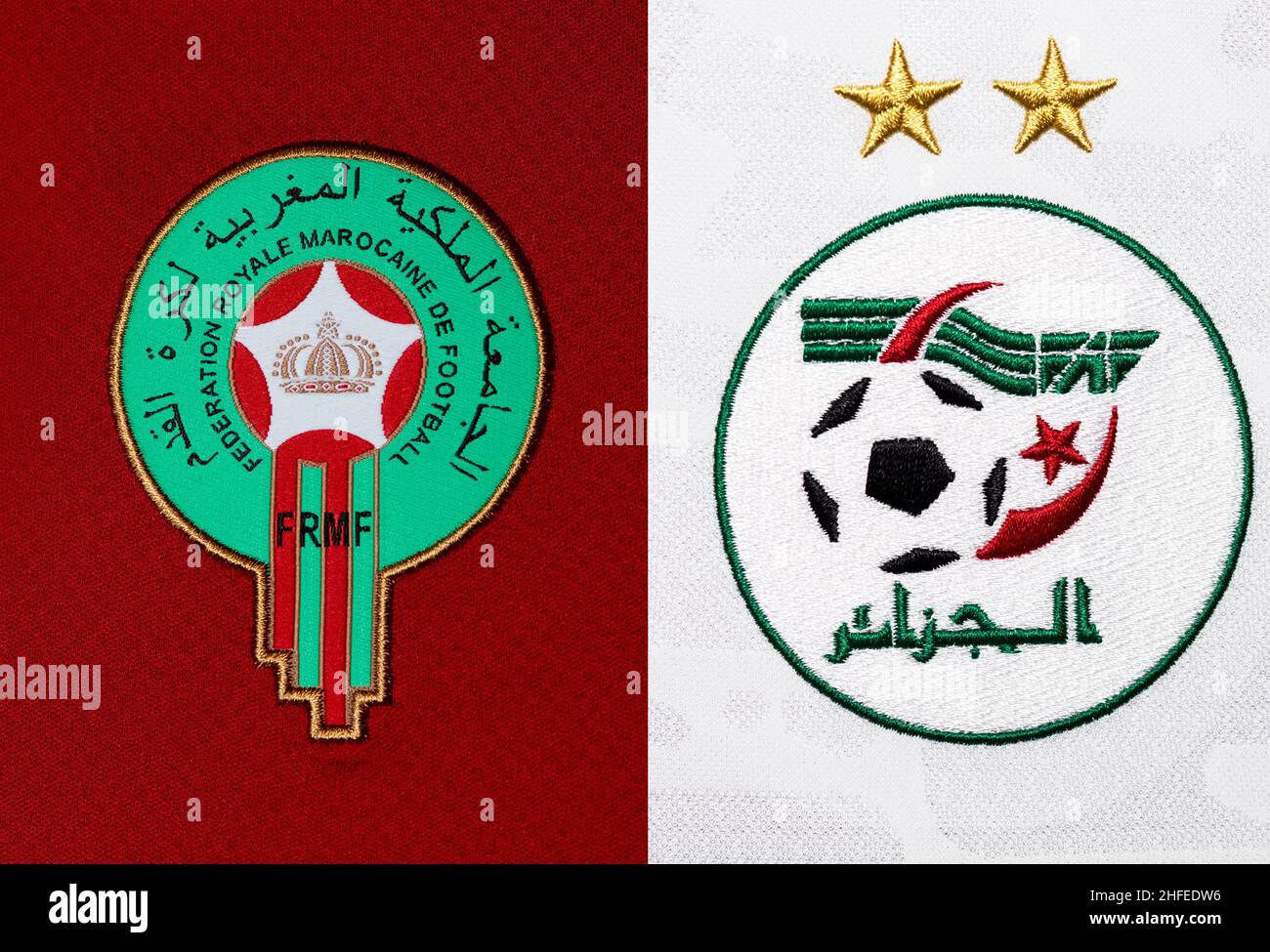
The arrest of Kheireddine Zetchi, the former president of the Algerian Football Federation (FAF), marks a tectonic shift in North African sports governance. This isn't a simple case of administrative oversight or a minor bookkeeping error. Algerian judicial authorities have leveled serious charges involving the dissipation of public funds, illicit gain, and the granting of undue advantages. For a nation where football is the unofficial religion, these allegations represent a betrayal of the public trust that goes far beyond the pitch. The investigation into Zetchi, who led the FAF from 2017 to 2021, exposes a systemic failure in how sports institutions manage massive state subsidies and commercial revenues without sufficient independent oversight.
The Architecture of Financial Mismanagement
At the heart of the investigation lies the "National Technical Centre" in Sidi Moussa and various infrastructure projects that reportedly saw costs balloon far beyond original estimates. Investigators are focusing on how contracts were awarded during Zetchi's tenure. In the world of high-stakes sports administration, the line between an ambitious project and a financial black hole is often blurred by "undue advantages"—a legal term that essentially means someone got a sweetheart deal at the taxpayer's expense.
The FAF doesn't just manage a national team; it manages a brand worth millions. When the Desert Foxes won the 2019 Africa Cup of Nations (AFCON), the influx of prize money and sponsorship deals should have secured the federation's financial future for a decade. Instead, the current probe suggests that much of this capital was diverted or mismanaged. We are looking at a pattern where the euphoria of sporting success was used as a screen to hide internal rot. It is the classic play: win the trophy, distract the public, and move the money.
The Paper Trail of Public Funds
Algerian law is particularly stringent regarding the use of public money by sports entities. Because the FAF receives significant support from the state, its officers are held to the standards of public officials. The charges against Zetchi include "squandering public funds," a heavy accusation that implies a deliberate disregard for fiscal responsibility.
- Contractual Anomalies: Auditors found discrepancies in service provider agreements where the value of work delivered didn't match the invoices paid.
- Asset Depletion: High-value equipment and resources belonging to the federation were allegedly written off or transferred without proper documentation.
- The Sponsorship Gap: Questions remain about why certain lucrative sponsorship offers were rejected in favor of less profitable deals with companies linked to federation insiders.
The Power Vacuum and the Succession Struggle
To understand why Zetchi is in the crosshairs now, one must look at the chaotic transition of power that followed his departure. The FAF has seen a revolving door of leadership, with Djahid Zefizef and later Walid Sadi stepping into a minefield of debt and legal scrutiny. Each new administration has felt the need to distance itself from the previous one, often by handing over files to the judiciary to avoid being tainted by the predecessor's scandals.
Zetchi’s rise to power was initially seen as a breath of fresh air. He was a "football man," the founder of the successful Paradou AC academy, which produced stars like Ramy Bensebaini and Youcef Atal. He promised a modern, European-style approach to management. However, the reality of navigating the Algerian bureaucracy and the "Deep State" of sports politics proved to be a different beast. He found himself caught between his desire to professionalize the league and the entrenched interests that rely on the federation’s patronage.
The Paradou Paradox
There is a biting irony in the fact that Zetchi’s greatest strength—his club, Paradou AC—became a point of contention. Critics often whispered about conflicts of interest, questioning whether the national federation’s resources were subtly benefiting his private academy. While Paradou remained a model of player development, the optics of the FAF President owning the country's premier talent factory were never ideal. In an environment where every dinar is scrutinized, even the appearance of a conflict is enough to start a fire.
International Repercussions and FIFA Scrutiny
This isn't just a local Algerian problem. FIFA, the global governing body, has a notoriously complex relationship with national legal systems. While FIFA mandates that federations must be independent of "government interference," they have zero tolerance for financial corruption that threatens the integrity of the sport.
If the Algerian courts find that FIFA-allocated funds were part of the "squandered" pool, Zurich will be forced to intervene. This could lead to a normalization committee being installed, effectively stripping Algeria of its administrative sovereignty over its own football. This is the nightmare scenario for fans. A suspension would mean the national team—currently rebuilding under new management—could be barred from international competitions, including the World Cup qualifiers.
The Ghost of 2019
The 2019 AFCON victory was supposed to be a starting point for a new era. Instead, it seems to have been the peak before a long, messy descent. The players who lifted that trophy in Cairo did so against a backdrop of the "Hirak" protest movement, symbolizing a new, transparent Algeria. To see the man who led the federation during that triumph now facing charges of financial misconduct is a bitter pill for the supporters who saw that team as a symbol of integrity.
Breaking the Cycle of Corruption
The prosecution of high-ranking sports officials in Algeria serves a dual purpose. For the current government, it is a signal that the era of impunity is over. For the football world, it is a warning. But arrests alone won't fix the problem. The structural "how" of this misconduct is rooted in a lack of transparency.
- Independent Auditing: The FAF needs a permanent, third-party audit firm that reports not to the FAF president, but to a combined committee of the Ministry of Sports and the Algerian Olympic Committee.
- Digital Transparency: Every contract over a certain threshold should be registered on a public portal. If the public can see where the money is going, it becomes much harder to "squander" it.
- Strict Term Limits and Conflict Checks: No individual with active ownership in a professional club should be allowed to hold the presidency without placing their assets in a blind trust.
The investigation into Kheireddine Zetchi is more than a legal proceeding; it is an autopsy of a failed system. It reveals a culture where the prestige of the national team was used as a shield against accountability. As the trial progresses, the evidence will likely show that the problem wasn't just one man, but a framework that allowed one man to operate without checks and balances.
Algerian football is at a crossroads. It can continue the cycle of "elect, accuse, arrest," or it can finally build the institutional guardrails required to protect its wealth. The fans deserve a federation that is as disciplined and transparent as the players they cheer for on Friday nights. Anything less is a waste of the country's most valuable cultural asset.
The judiciary’s next move will determine if this is a genuine cleanup or merely a political reshuffling. If the goal is truly to protect public funds, the investigation must go deeper than the presidency and look at the board members, the contractors, and the silent partners who facilitated these deals. True reform requires more than just a sacrificial lamb; it requires a complete dismantling of the patronage networks that have stifled the domestic game for decades.
The cost of this misconduct isn't just measured in dinars or dollars. It is measured in the lost opportunities for youth development, the crumbling stadiums in the provinces, and the growing cynicism of a generation that just wants to see their team play on a level field. The whistle has blown, but this time, it’s not for a foul on the pitch—it’s for a crime in the boardroom.