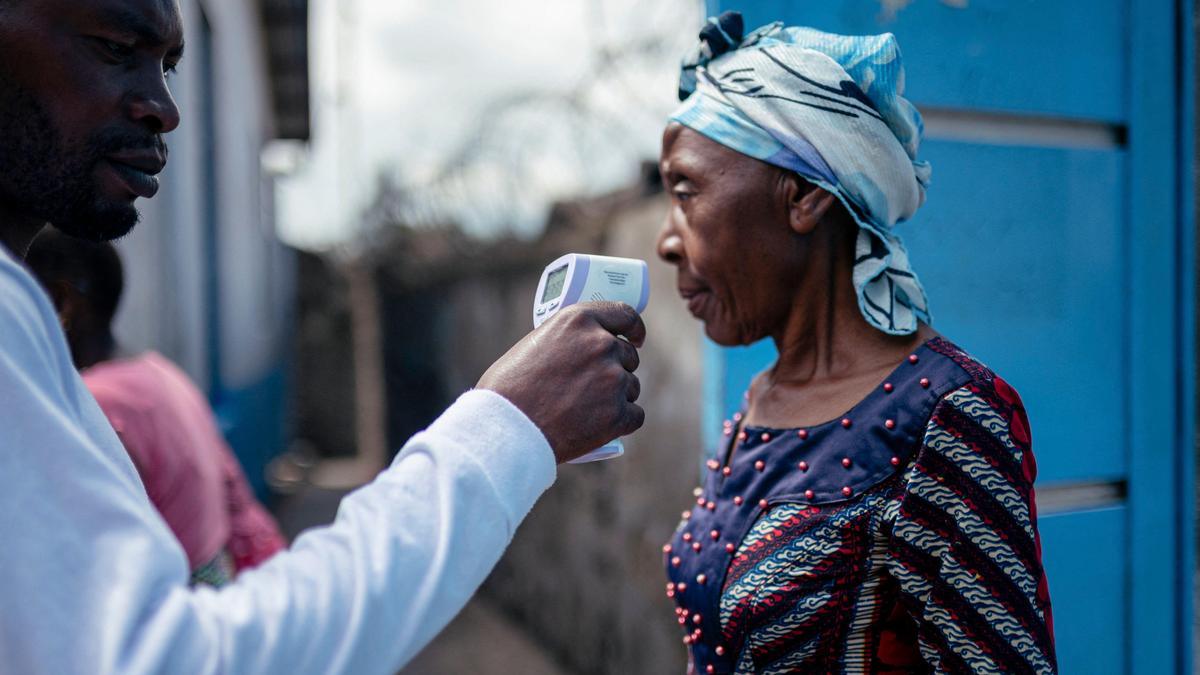
The failure to contain the 2018–2020 Ebola virus disease outbreak in the eastern Democratic Republic of Congo, which ultimately led to a World Health Organization declaration of a Public Health Emergency of International Concern, was not a random misfortune. It was the predictable output of a complex system where structural friction, compromised diagnostic protocols, and misaligned community interventions intersected. When an outbreak escapes localized control, observers frequently blame cultural practices or resource scarcity. A rigorous systems analysis reveals a different reality: the escalation was driven by specific, identifiable bottlenecks in biological validation and transmission-vector management.
To understand how a localized viral spillover accelerates into a regional crisis, we must map the failure points across three critical vectors: the diagnostic pipeline, the transmission mechanics of super-spreading events, and the operational friction of the response architecture.
The Diagnostic Pipeline: Systemic Validation Failures
The primary defense against an expanding epidemic is the rapid, highly specific identification of index cases. In the eastern Democratic Republic of Congo, this defense failed due to a compounding error rate within the diagnostic workflow.
Epidemiological containment relies on a binary classification matrix. A false negative is catastrophically more expensive than a false positive. A false positive consumes isolated bed space; a false negative returns an active transmission vector directly into the population.
[Patient Presents with Symptoms]
               │
               ▼
     [Diagnostic Testing]
               │
       ┌───────┴───────┐
       ▼               ▼
[True Positive]  [False Negative] ──► Returned to Population ──► Exponential Transmission
The breakdown in the diagnostic pipeline occurred across three distinct operational phases.
1. Sample Collection and Degradation Mechanics
The GeneXpert automated molecular diagnostic platform relies on reverse transcription polymerase chain reaction (RT-PCR) technology. While highly sensitive under laboratory conditions, its real-world efficacy degrades when the pre-analytical chain of custody is compromised. Field teams faced severe transit delays across fractured infrastructure. Viral RNA in blood samples degrades rapidly when exposed to temperatures outside the strict 2°C to 8°C cold chain window.
When a patient presenting with high fever and gastrointestinal distress was swabbed or sampled in a remote clinic, the specimen often sat for 24 to 48 hours before processing. This thermal exposure degraded the viral load below the analytical limit of detection for the assays. The machine returned a negative result not because the patient was free of Ebola virus, but because the biological target had destabilized.
2. Clinical Overlap and Cognitive Biases
The early clinical presentation of Ebola virus disease—fever, headache, myalgia, and nausea—is indistinguishable from endemic malaria, typhoid fever, or fulminant dengue. Diagnostic protocols dictated that patients with negative initial malaria tests should be isolated for Ebola screening.
However, high rates of asymptomatic malaria parasitemia in the population meant that many patients tested positive for malaria while simultaneously incubating Ebola. Clinicians fell victim to premature closure bias: once a malaria diagnosis was confirmed via rapid diagnostic test, the search for alternative pathogens ceased. The patient was treated for malaria and discharged, tracking Ebola back into the domestic sphere.
3. False Reassurance and High-Contact Networks
A false-negative lab report changes patient behavior. Believing they were suffering from a standard bout of malaria or typhoid, individuals returned to their normal social and economic routines. They sought comfort from family members, visited traditional healers, and traveled via high-density public transit routes (such as motorcycle taxis) to seek secondary medical opinions. The diagnostic test, intended as a barrier to transmission, inadvertently acted as an accelerant by removing the patient's own behavioral self-isolation.
The Amplification Mechanics of High-Density Transmission Vectors
An outbreak transforms into an epidemic when the basic reproduction number ($R_0$) remains consistently above 1. In this specific crisis, transmission was driven by two high-density amplification vectors that functioned as super-spreading environments: traditional nosocomial networks and traditional funerary practices.
Nosocomial Amplification in Unregulated Health Structures
The healthcare ecosystem in the eastern Democratic Republic of Congo is highly fragmented, consisting of formal public hospitals, international NGO clinics, and hundreds of informal, private-sector tradipraticien (traditional healer) compounds and small pharmacies.
When patients failed to find relief in standard clinics—often due to the diagnostic delays outlined above—they entered the informal medical sector. These environments lack standard infection prevention and control infrastructure. The mechanics of nosocomial transmission here were precise:
- Reuse of Non-Sterile Equipment: Due to supply chain constraints, needles, syringes, and intravenous equipment were frequently reused across multiple patients without autoclaving.
- Lack of Physical Segregation: Waiting areas were enclosed, poorly ventilated rooms where patients with active, undifferentiated hemorrhagic symptoms sat in close proximity to individuals seeking routine care.
- Empirical Injections: The local medical culture heavily favors intravenous or intramuscular injections over oral medications for acute illness. Every injection puncture performed without rigorous personal protective equipment created a direct pathway for blood-borne viral transmission to both the provider and subsequent patients.
Funerary Mechanics and Post-Mortem Viral Load
The biological characteristics of the Ebola virus dictate that the viral load within a human host peaks immediately after death. Epidermal surfaces, bodily fluids, and internal organs are saturated with virions. Traditional burial customs in the region require intimate contact with the deceased: washing the corpse, shaving the hair, dressing the body, and communal ancestral meals where participants touch the deceased to bids farewell.
From an epidemiological perspective, these rituals represent a highly efficient transmission mechanism. A single death of a prominent community member frequently generated dozens of secondary cases.
The response architecture attempted to counter this with Safe and Dignified Burials executed by specialized teams in biohazard suits. This intervention failed because it treated a deeply rooted social and spiritual requirement as a purely mechanical disposal problem.
Communities viewed the intervention not as medical containment, but as a desecration that doomed the soul of the deceased. Consequently, families began hiding corpses, conducting clandestine midnight burials, and transporting bodies across provincial lines to evade response teams. The attempt to forcefully suppress the funerary vector drove it underground, making tracking impossible.
The Operational Friction of the Response Architecture
Containment efforts were crippled by a fundamental mismatch between the centralized command structure of the international response and the decentralized, highly politicized reality on the ground. This structural friction manifested in three operational bottlenecks.
The Security-Public Health Paradox
The outbreak occurred within an active conflict zone characterized by dozens of armed militia groups, deep-seated distrust of the central government in Kinshasa, and decades of structural neglect. The international response architecture arrived with significant capital and visible security detail, often escorted by UN peacekeepers or state military forces.
This militarized posture triggered an immediate counter-reaction. Local populations, accustomed to state forces acting as predatory entities, viewed the Ebola response as an extension of political oppression. The introduction of high-value assets—expensive vehicles, highly paid expatriate staff, and secure compounds—in regions suffering from chronic poverty created a political economy of conflict.
Attacks on Treatment Centers were not irrational acts of ignorance; they were calculated strikes against institutions perceived as foreign, extractive, and aligned with an adversarial state. Every attack forced a suspension of operations, destroying contact-tracing continuity.
The Breakdown of Contact Tracing Topology
Effective contact tracing requires an exhaustive mapping of a patient's social network during their infectious window. This requires absolute trust.
When response teams offered financial incentives for information or arrived with aggressive decontamination crews, the network went dark. Contacts intentionally provided false names, fled into the dense equatorial forests, or migrated to major urban centers like Goma or across the border into Uganda.
[Index Case Identified]
          │
          ├─► Contact A (Cooperative) ──► Isolated
          ├─► Contact B (Evaded)       ──► Flees to Urban Center ──► New Cluster Established
          └─► Contact C (False Identity)─► Lost to Follow-up     ──► Community Transmission
The contact tracing topology, which must be unbroken to achieve containment, became highly fractured. The proportion of new cases arising from known, tracked contact lists plummeted below 50%, indicating that the response was chasing the virus rather than anticipating it.
Vaccine Deployment Constraints and Ring Vaccination Mechanics
The deployment of the rVSV-ZEBOV ring vaccine was a major technological advancement, yet its operational execution ran into logistical barriers. The ring vaccination strategy requires defining a "ring" around an infected individual, consisting of all first-degree contacts and their second-degree contacts (contacts of contacts).
This strategy breaks down under two conditions: when contact tracing is inaccurate, and when the population is highly mobile.
Because contact lists were incomplete, the rings drawn by epidemiologists were structurally flawed, leaving highly exposed individuals unvaccinated. Furthermore, the ultra-cold chain requirements of the vaccine (storing doses at $-60^\circ\text{C}$ to $-80^\circ\text{C}$) restricted deployment to major logistical hubs. Field teams carrying the vaccine into rural zones using portable passive vaccine storage devices faced a strict ticking clock. If a security delay or a broken bridge extended a day trip into a multi-day extraction, entire batches of the vaccine lost potency and had to be discarded.
Quantifying the Systemic Failure
To understand why standard metrics failed to predict the scale of the crisis, we must look at the divergence between official case tracking and the actual, latent epidemiological load. The standard metric used by decision-makers was the Case Fatality Rate (CFR) among admitted patients. This metric was fundamentally skewed.
The true operational metric that dictated the outbreak's trajectory was the Time-to-Isolation interval ($T_I$), defined as:
$$T_I = t_{\text{admission}} - t_{\text{onset}}$$
Where $t_{\text{onset}}$ is the time of initial symptom presentation and $t_{\text{admission}}$ is the time the patient is securely isolated in an Ebola Treatment Center.
During the peak of the containment failure, $T_I$ averaged over six days. During these six days, individuals remained active within their communities, visiting an average of 2.4 informal healthcare providers and exposing dozens of individuals through high-contact networks. The system was structurally incapable of reducing $T_I$ because the diagnostic tools were slow, the community was actively hostile to isolation, and the infrastructure prevented rapid movement.
Strategic Realignment for Future Interventions
Mitigating a highly infectious outbreak in a fragile state requires shifting away from centralized, coercive containment models toward a decentralized, fault-tolerant infrastructure. Future interventions must execute three distinct operational adjustments.
- Decentralize Diagnostic Validation: Transition away from centralized laboratory testing that requires complex sample transport. Deploy next-generation, stable point-of-care molecular assays directly to informal health posts and pharmacies. These assays must feature high thermal stability, eliminating the vulnerability of the cold chain.
- Integrate the Informal Medical Sector: Stop treating traditional healers and private pharmacies as obstacles to be bypassed. They must be integrated into the surveillance architecture. Providing these practitioners with personal protective equipment, training on universal precautions, and financial compensation for referring suspected cases transforms a primary nosocomial vector into an early-warning radar system.
- Redesign the Coercion Model to a Harm-Reduction Framework: Safe and Dignified Burials must be completely surrendered to local leadership. Instead of external teams entering villages in biohazard suits, the response must provide training, water-resistant body bags that can be placed inside traditional coffins, and disinfectant systems directly to community elders. This honors the spiritual mandate while neutralizing the biological risk.
The escalation of the outbreak was the logical consequence of a system that prioritized technological and administrative solutions over local structural realities. True epidemiological resilience is built not by deploying more resources into a broken system, but by redesigning the system to survive the friction of the environment it is meant to protect.