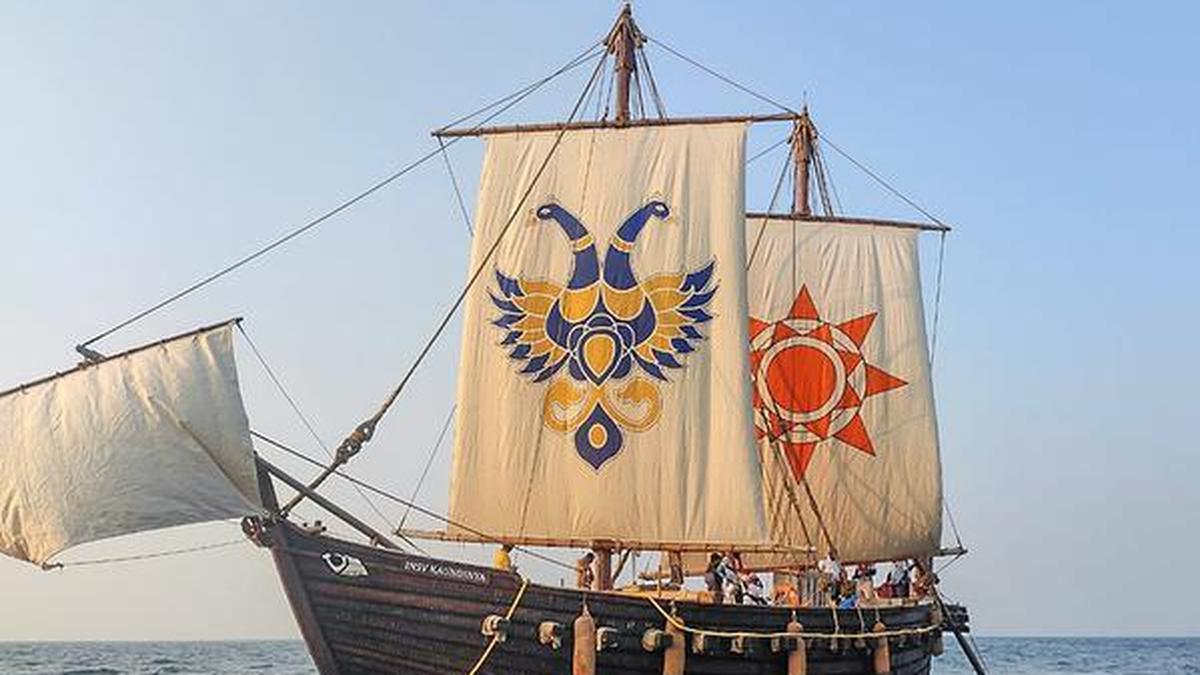
Global shipping is currently in a state of chaos. Cargo ships routinely route around entire continents to avoid drone strikes, while rising tensions threaten narrow checkpoints like the Strait of Hormuz. Yet, a packed room at the United Nations headquarters recently focused on a tiny wooden boat with square sails held together by ropes.
The event, co-organized by the Permanent Missions of India and Oman to the UN, was titled Ancient Trade Routes: The Journey of INSV Kaundinya. On the surface, it celebrated the successful voyage of a traditional stitched-plank vessel that sailed from Porbandar, Gujarat, to Muscat, Oman. Look closer, and you see something deeper. This event wasn't just a nostalgic look at history. It used the past as a quiet, deliberate critique of our fragile modern maritime order. For a different view, consider: this related article.
The Technology Behind the Ship
We like to think modern technology solves everything. INSV Kaundinya proves that ancient mariners knew exactly what they were doing. Inspired by a fifth-century CE ship painted on the walls of the Ajanta Caves, this 21-meter wooden vessel does not contain a single metal nail or screw.
Artisans in Kerala built the ship by stitching wooden planks together using cords and ropes. It sounds flimsy, but stitched-plank construction offers incredible flexibility. When hitting heavy surf, a rigid hull can crack under tension. A stitched hull flexes with the waves, absorbing the energy of the sea. Further insight on this trend has been shared by Reuters.
[Wooden Plank] --- (Stitched Coir/Rope) --- [Wooden Plank]
      |                                           |
      +---- Flexes and absorbs wave impact -------+
The ship has serious limitations by modern standards. It uses a square sail, meaning it cannot sail close to the wind like a modern yacht. It lacks a deep keel, so it rolls aggressively in rough waters. Despite this, during its 17-day journey across the Arabian Sea, the ship reached speeds of five knots in good winds.
The Indian Navy built the vessel in collaboration with the Ministry of Culture and the Department of Ocean Engineering at IIT-Madras. They tested the hydrodynamic performance of the hull and the strength of the wooden mast using computer models before the crew ever stepped on board. It took five years of planning to turn a cave painting into a functional sea-going vessel.
Why the UN Cared About a Wooden Boat
During the UN event, Parvathaneni Harish, India's Permanent Representative to the UN, noted that the international community spends every day discussing maritime crises that threaten global citizens. He contrasted this with the centuries-old tradition of peaceful trade in the Indian Ocean.
Though he avoided naming specific regional conflicts, everyone in the room understood the subtext. Roughly one-fifth of the world's energy supplies pass through the Strait of Hormuz. Modern maritime security relies on military deterrence, legal frameworks, and constant surveillance. Ancient trade routes operated on a completely different model.
Modern Ocean Governance       vs.       Ancient Maritime Trade
-----------------------                 ----------------------
• UNCLOS Legal Framework                • Trust and Mutual Benefit
• Naval Patrols & Deterrence            • Open Corridors of Commerce
• Rigid State Borders                   • Fluid Cultural Exchange
The UN Convention on the Law of the Sea (UNCLOS) provides the current legal structure for global waters. Harish pointed out that these legal frameworks only succeed when grounded in a genuine sense of shared purpose and trust. Long before modern international law existed, communities across the Arabian Peninsula, India, and East Africa managed shared ocean spaces through regular contact and mutual economic benefit.
The Strategic Bond Between India and Oman
Oman's Permanent Representative to the UN, Omar Said Omar Alkathiri, used the event to highlight how this voyage reflects the current relationship between Muscat and New Delhi. The two nations are currently marking 70 years of formal diplomatic relations, but their commercial ties go back 5,000 years to the Bronze Age.
This historical connection directly influences modern policy. The arrival of INSV Kaundinya in Muscat earlier this year, where it was received by India's Shipping Minister Sarbananda Sonowal, coincided with major talks on infrastructure and economic cooperation.
- Green Shipping Corridors: India and Oman are currently discussing the creation of eco-friendly shipping routes to reduce carbon emissions across the Arabian Sea.
- Port Investments: New Delhi is actively pitching opportunities for Omani companies to invest in India's port-led infrastructure projects through public-private partnerships.
- Maritime Conservation: Both countries are using their shared history to frame joint initiatives on responsible fishing practices, marine pollution control, and biodiversity preservation.
The voyage shows that oceans do not separate nations; they connect them. When modern logistics networks break down due to political gridlock, these deep-seated civilizational ties give both countries a reliable foundation for bilateral trust.
Living on an Ancient Vessel
Sanjeev Sanyal, an economist and member of the Prime Minister’s Economic Advisory Council, joined the 18-member crew for the voyage. The team included four naval officers, twelve sailors, and a medic, led by skipper Commander Vikas Sheoran.
Sanyal noted that while the team experienced beautiful sunrises, they also faced heavy rain, storms, and unpredictable currents. Sailing a fifth-century ship means dealing directly with the environment. You cannot simply turn on a high-powered engine to power through a storm. You have to read the wind, adjust the square sail, and accept the physical reality of the ocean.
After docking at Port Sultan Qaboos, the ship was taken out of the water to assess how the stitched hull handled the stress of open-ocean sailing. The data collected by the crew will help naval architects understand how these ancient techniques can inform sustainable shipbuilding practices today.
Reclaiming the Narrative of the Indian Ocean
For a long time, standard history books suggested that maritime trade in the Indian Ocean only became sophisticated after European explorers arrived with their galleons and compasses. INSV Kaundinya completely disrupts that claim.
The ship represents a broader push to revive indigenous knowledge systems. Indian mariners sailed to Africa, the Persian Gulf, and Southeast Asia long before Western empires drew up maritime borders. They traded spices, timber, and textiles for gold and silver, creating a vast economic network based on seasonal monsoon winds.
By bringing this history to the floor of the United Nations, India and Oman are reminding the world that the Global South has its own long history of managing maritime spaces peacefully.
If you want to understand where global trade and maritime diplomacy are heading, stop looking exclusively at modern naval hardware. The real answers lie in understanding the enduring networks of trust, geography, and history that have defined the Indian Ocean for millennia. Keep an eye on the upcoming bilateral agreements between India and Oman regarding maritime heritage and port infrastructure. They will show exactly how these two nations plan to convert historical sentiment into modern economic power.