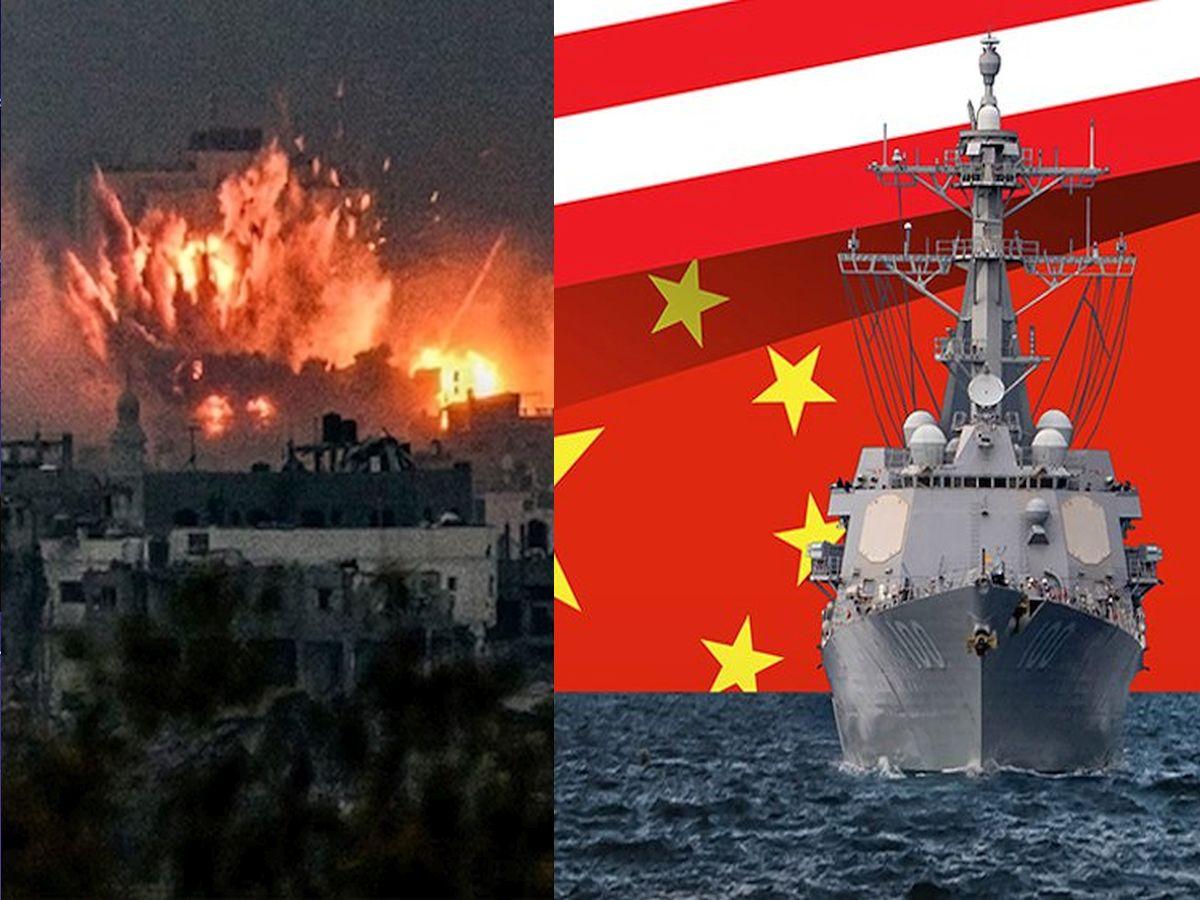
New Delhi has issued a blistering formal condemnation following a drone strike on an Indian-flagged commercial vessel off the coast of Oman, signaling a dangerous escalation in the maritime grey zone. While the Ministry of External Affairs confirms that the crew is safe and the ship remains operational, the incident unmasks a terrifying reality for global trade. This was not a random act of piracy. It was a calculated kinetic strike in a theater where the lines between state-sponsored aggression and non-state militancy have blurred into invisibility.
The vessel, identified in maritime tracking data as a carrier of critical energy supplies, was targeted while navigating the outer reaches of the Gulf of Oman. This corridor serves as the jugular vein of the global energy market. When a ship flying the Tiranga is hit, it isn't just a logistical hiccup for a shipping firm. It is a direct challenge to India’s stated ambition as a "net security provider" in the Indian Ocean Region (IOR).
The Geometry of a Targeted Strike
The "why" behind this attack sits at the intersection of geography and failing diplomacy. For years, the waters off Oman and the Socotra Gap were haunted by Somali pirates in skiffs. Those days are gone. Today’s threat is aerial, digital, and significantly more sophisticated.
Modern maritime assaults in this region typically involve One-Way Attack (OWA) Unmanned Aerial Vehicles. These are not the consumer drones you see at a park. They are military-grade loitering munitions, often GPS-guided or utilizing rudimentary optical sensors to lock onto the massive heat signature of a commercial tanker's engine room.
The mechanics of the strike suggest a high level of intelligence. To hit a moving target in the open sea, the operator requires near-real-time data from Automatic Identification Systems (AIS). While AIS is designed for safety to prevent collisions, it has become a roadmap for aggressors. By broadcasting its position, speed, and heading, the Indian-flagged vessel essentially gave its attackers a mathematical solution for an intercept course.
The Proxy Problem and the Deniability Gap
International law is struggling to keep pace with the hardware. When a missile is fired from a sovereign state’s soil, the path to retaliation is clear. But when a drone is launched from a dhow or a mobile coastal launcher by a proxy group, the "return address" is scrubbed clean.
India finds itself in a diplomatic vice. On one hand, it maintains a nuanced relationship with Iran, a country often accused by Western intelligence of providing the drone architecture used in these waters. On the other, India is a core member of the Quad and a partner in the Combined Maritime Forces (CMF), a multi-national coalition aimed at keeping these lanes open.
The condemnation from New Delhi is an attempt to signal resolve without triggering a full-scale regional confrontation. However, words are becoming an insufficient currency. The Indian Navy has already increased its "mission-based deployments," moving destroyers like the INS Mormugao and INS Kochi into the North Arabian Sea. Yet, even a billionaire-dollar destroyer cannot be everywhere at once. The ocean is too big, and the drones are too cheap.
The Economic Shrapnel
We must look at the math of modern maritime warfare to understand the stakes. A drone costing roughly $20,000 can successfully disable a vessel worth $100 million carrying a cargo worth $50 million more. This is asymmetric warfare in its purest, most brutal form.
The immediate fallout is felt in the insurance markets. When a region is flagged as high-risk, "war risk premiums" skyrocket. For Indian shipping companies, this adds millions of dollars to the cost of doing business. These costs are never absorbed by the shipping titans. They are passed down the line. Every Indian consumer pays for that drone strike when they fill up their scooter or buy goods imported via sea.
Furthermore, there is the human element. The Indian seafarer is the backbone of the global merchant navy, making up nearly 10% of the world's maritime workforce. When Indian-flagged ships are targeted, it sends a chill through the labor market. If the safety of the crew can no longer be guaranteed by the flag on the mast, the recruitment pipeline for the merchant navy begins to dry up.
Hardening the Steel
The solution to this crisis cannot be found solely in diplomatic communiqués. It requires a fundamental shift in how commercial vessels are defended.
We are seeing the early stages of a "harden the hull" movement. This includes:
- Directed Energy Weapons (DEW): Testing is underway for ship-mounted lasers that can burn through drone optics for a fraction of the cost of a traditional interceptor missile.
- Electronic Warfare (EW) Suites: Commercial tankers may soon need to carry active jamming equipment to sever the link between a drone and its operator or to "spoof" GPS coordinates.
- Private Security Evolution: The transition from armed guards with rifles to specialists trained in anti-drone protocols.
However, each of these steps carries massive legal baggage. If a commercial ship starts jamming signals in a crowded waterway like the Strait of Hormuz, the potential for accidental interference with civilian aircraft or neighboring ships is immense.
The Strategic Pivot
India’s response to the Oman incident suggests a departure from the "wait and see" approach of previous decades. By publicly and sharply condemning the act, the government is laying the groundwork for more aggressive maritime patrolling.
The Indian Navy is no longer just a coastal defense force. It is being forced into the role of a regional policeman. This requires not just ships, but a vast network of Maritime Domain Awareness (MDA). India has been busy signing shipping data-sharing pacts with dozens of countries and operating the Information Fusion Centre – Indian Ocean Region (IFC-IOR) in Gurugram.
This center acts as a clearinghouse for "dark shipping" data—identifying vessels that turn off their transponders to engage in illicit activity or to hide their movements before an attack. The attack off Oman was likely tracked by these systems, providing the government with the technical confidence to issue its condemnation.
Beyond the Horizon
The threat is evolving toward autonomous swarms. Imagine ten, twenty, or fifty drones hitting a single tanker simultaneously. Current defense systems, even on sophisticated warships, can be overwhelmed by the sheer volume of targets. For a commercial tanker with no organic defenses, a swarm is a death sentence.
The attack near Oman is a klaxon. It tells us that the sanctuary of the high seas is an illusion. The Indian-flagged ship was lucky this time; the damage was superficial and the men came home. But luck is not a maritime strategy.
As the investigation into the debris continues, the pressure on New Delhi to move beyond condemnation will mount. The security of the sea lanes is the security of the Indian economy. If the shadow war in the Arabian Sea continues to heat up, the Indian Navy may find itself forced to provide permanent escorts for high-value cargo, a move that would signal the end of the era of "free trade" as we have known it since 1945.
The board is set. The drone that hit that ship did more than dent some steel. It punctured the assumption that commerce exists above the fray of regional geopolitics. Ships must now be prepared to fight for their right to pass, or the "Indian-flagged" designation will become a target rather than a shield.
Invest in kinetic interception or prepare to pay the ransom of rising instability. There is no middle ground left in the Gulf of Oman.

:max_bytes(150000):strip_icc():focal(819x186:821x188)/Murdaugh-Family-e90854a716884d608fb6fd925e18d840.jpg)
