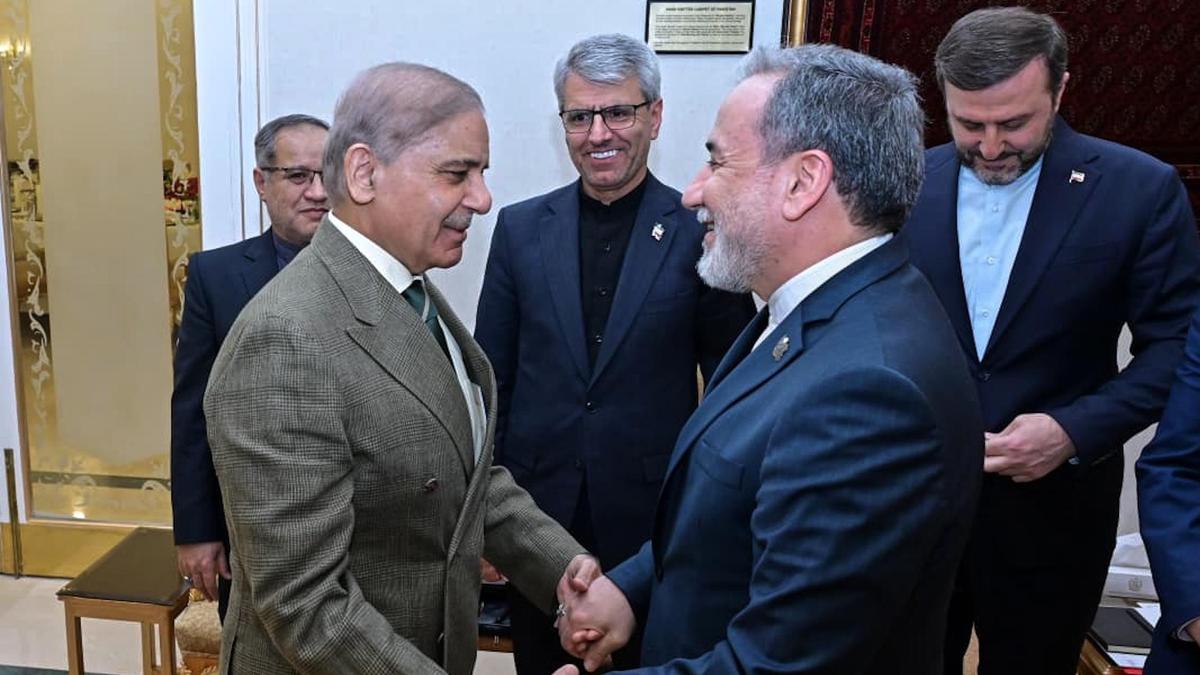
The diplomatic press corps is currently drunk on the narrative of an Iranian "diplomatic offensive." Abbas Araghchi lands in Islamabad, smiles for the cameras, declares the visit a resounding success, and then whisks himself off to Russia. The mainstream takeaway? Iran is skillfully navigating its way out of isolation by shoring up its eastern flank before huddling with its big brother in Moscow.
It’s a neat story. It’s also completely wrong.
What we actually witnessed wasn't the strengthening of a "strategic axis." It was a desperate performance of regional relevance by a regime that is increasingly running out of room to maneuver. To call the Islamabad trip "successful" is to ignore the cold, hard mechanics of Pakistani-Iranian relations—a relationship defined not by brotherhood, but by a mutual, simmering distrust that a few photo ops cannot mask.
The Myth of the Eastern Pivot
The lazy consensus suggests that Iran is building a cohesive "Eastern Bloc" to counter Western pressure. This assumes that Pakistan is a willing or even capable partner in such an endeavor.
I’ve watched these diplomatic cycles for years. Here is what the analysts miss: Pakistan is currently a state in a permanent fiscal chokehold. It is beholden to IMF tranches and Saudi Arabian largesse. Islamabad cannot afford to genuinely align with Tehran in any way that matters. When Araghchi talks about "coordinated efforts" against regional threats, he’s talking to a wall.
Pakistan’s military establishment views Iran not as a partner, but as a source of "managed instability." The border skirmishes of early 2024—where both sides swapped missile strikes—weren't a momentary lapse in judgment. They were a revelation of the baseline reality. You don't "fix" a relationship that fundamentally broken with a two-day visit and a joint statement.
Chasing the Ghost of the Gas Pipeline
Every time an Iranian official visits Islamabad, the "Peace Pipeline" (IP Pipeline) gets dragged out of the closet like a dusty relic. The media dutifully reports that both sides are "committed" to finishing the project.
Let’s be blunt: The pipeline is dead. It has been dead for a decade.
- The Sanctions Trap: Pakistan knows that the moment they weld the final pipe, they trigger U.S. secondary sanctions.
- The Financial Void: Pakistan doesn't have the capital to build its side of the infrastructure, and Iran doesn't have the liquid assets to subsidize it anymore.
- The Saudi Factor: Riyadh remains Pakistan’s most vital financial patron. The House of Saud has zero interest in seeing Iranian gas power the Pakistani grid.
Araghchi claiming success while this white elephant sits in the room is like a CEO claiming a record quarter while the factory is on fire. It is performative diplomacy designed for a domestic audience in Tehran that needs to believe the country isn't a pariah.
Russia is Not a Destination; It’s an Admission
The fact that Araghchi immediately pivoted to Russia tells you everything you need to know about the "success" in Pakistan. If the Islamabad trip actually secured anything tangible—intelligence sharing, border security, or trade concessions—the Foreign Minister would have stayed to hammer out the details.
Instead, he went to Moscow to beg for the only thing that actually keeps the Islamic Republic's current strategy alive: Russian hardware and a UN Security Council veto.
The "successful" Islamabad visit was the opening act; Russia is the main stage because Iran has become a mono-directional power. They have traded their regional autonomy for a seat at the kid’s table in the Kremlin. By leaning so heavily into the Moscow-Tehran-Beijing triangle, Iran is actually losing its leverage. When you have nowhere else to go, your "partners" don't treat you as an equal. They treat you as a client.
The Intelligence Gap: Baluchistan’s Reality
If you want to measure the "success" of this trip, look at the border.
The Sistan-Baluchestan region is a tinderbox. Jaish al-Adl and other insurgent groups move across that border with a fluidity that mocks any "joint security" agreement signed in a plush office in Islamabad.
The fundamental problem is that the Iranian Revolutionary Guard Corps (IRGC) and the Pakistani Inter-Services Intelligence (ISI) have diametrically opposed interests in the borderlands.
- Iran wants a hard crackdown on Sunni militants.
- Pakistan wants to use those same groups as a buffer or a pressure point.
Until that structural misalignment is fixed, every communique about "border peace" is just ink on a page. Araghchi didn't change the calculus on the ground because he can't. The Foreign Ministry in Iran is frequently sidelined by the IRGC on matters of "real" regional policy. Araghchi is the face, but the Quds Force is the fist. Sending the face to negotiate what the fist has already bruised is an exercise in futility.
Why the "People Also Ask" Crowd is Wrong
If you search for "Iran-Pakistan relations," you’ll find questions about whether they are forming a military alliance.
The answer is a hard no.
A military alliance requires shared enemies and shared goals. Iran’s primary enemy is the current security architecture of the Middle East. Pakistan’s primary concern is India and internal economic collapse. These goals do not overlap. In fact, Pakistan’s proximity to China means they are more interested in the CPEC (China-Pakistan Economic Corridor) than in any Iranian revolutionary export. Iran is a secondary character in Pakistan's grand strategy, yet Araghchi is acting like he’s the protagonist.
The High Cost of Symbolic Wins
There is a danger in these "successful" visits. They create a false sense of security for the Iranian leadership.
By pretending that Islamabad is "on side," Tehran risks overextending itself. They assume a level of quiet on their eastern border that simply doesn't exist. We’ve seen this before. Diplomatic "triumphs" are announced, followed three weeks later by a terrorist attack in Zahedan or a diplomatic spat over maritime borders.
The reality of 2026 is that Iran is trying to play a 19th-century game of "Great Power" diplomacy with 21st-century limitations. You cannot build a regional hegemony when your currency is in freefall and your only reliable export to your neighbors is ideology that they find threatening.
Stop Reading the Press Releases
The media loves Araghchi because he is polished. He speaks the language of international relations fluently. But don't let the suit fool you.
This trip wasn't about building a new world order. It was about managing a decline. It was a frantic attempt to show the world—and the Iranian public—that the regime still has friends.
But look at the guest list. Look at the actual deliverables. No new trade deals. No new defense pacts. No resolution on the pipeline. Just "successful talks."
In the world of high-stakes geopolitics, "successful talks" is the phrase you use when nothing actually happened. Iran is more isolated today than it was before Araghchi’s plane touched down in Islamabad. The trip to Russia isn't a victory lap; it’s a retreat to the only corner they have left.
The "success" Araghchi claims is a shadow. And shadows disappear the moment the lights come on.