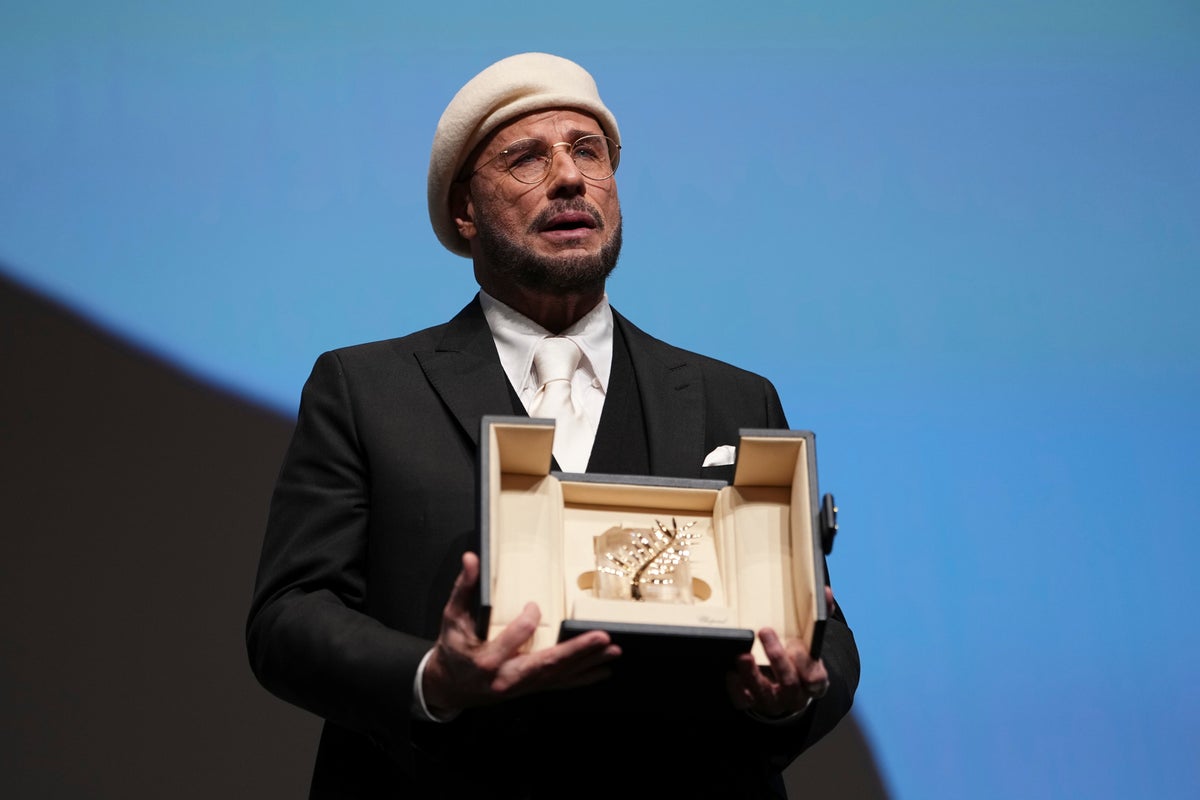
The Cannes Film Festival rarely does anything by accident. When John Travolta stood on the stage of the Palais des Festivals to receive a surprise honorary Palme d'Or, the official narrative painted a picture of spontaneous reverence for a Hollywood icon. Mainstream entertainment outlets rushed to print the sanitized version of events, framing the moment as a sudden burst of sentimentality from the festival’s high command. That narrative is incomplete. The reality of how Travolta secured the highest honor on the French Riviera is a masterclass in strategic talent management, calculated studio lobbying, and the festival’s own need to balance avant-garde cinema with raw American star power.
Honoring Travolta was not a decision made in a vacuum. It was the culmination of a multi-year effort to re-establish his pedigree as a serious dramatic actor rather than a nostalgic relic of seventies disco and nineties indie cool.
The Hidden Mechanics of the Surprise Palme d’Or
Festival organizers love the theater of a surprise award. It generates the kind of unpredictable, unscripted emotion that standard press conferences lack. Behind that curtain of spontaneity lies months of quiet diplomacy between talent agencies, distributors, and festival director Thierry Frémaux.
To understand how these honors are brokered, one must look at the currency of the Croisette. Cannes trades in prestige, but it survives on attention. The festival requires a constant influx of top-tier American talent to satisfy its corporate sponsors and international media buyers. A legacy star like Travolta brings a global audience that a retrospective on Eastern European neorealism simply cannot match.
The negotiation for an honorary Palme d'Or typically begins long before the opening ceremony. Power brokers at major agencies look for specific windows where their client has a significant project to promote or a major career milestone to mark. In this instance, the anniversary of Pulp Fiction provided the perfect cultural anchor. By tying the honorary award to the legacy of Quentin Tarantino’s 1994 masterpiece—a film that won the actual Palme d'Or and redefined independent cinema—the festival insulated itself from critics who might question Travolta's recent filmography.
[Festival Leadership] <---> [Talent Agency/Publicists] <---> [Studio/Distributors]
       |                                                            |
       v                                                            v
Needs: Global Press,         Seeks: Career Validation,        Needs: Maximum Visibility
Celebrity Star Power         Prestige Legacy Positioning      for Upcoming Projects
The Symbiotic Relationship of Hollywood and the Riviera
Cannes has always maintained a conflicted relationship with American cinema. The festival prides itself on being the ultimate arbiter of high art, yet its red carpet relies heavily on the glamour of the studio system. This tension is where the honorary Palme d'Or serves its true purpose.
For the actor, the award is a definitive rebranding tool. Hollywood is notoriously fickle, often relegating aging action stars or romantic leads to straight-to-streaming projects or campy self-parody. An endorsement from Cannes instantly resets the conversation. It reminds directors and studio executives that the individual is a serious artist capable of anchoring high-prestige cinema.
For the festival, the benefits are equally transactional.
- Media Saturation: A surprise appearance by a major American star guarantees front-page coverage across global entertainment desks, driving viewership to official festival broadcasts.
- Sponsor Satisfaction: Luxury brands that fund the festival’s multi-million-dollar events demand high-profile talent for their exclusive dinners and after-parties.
- Industry Goodwill: Honoring a veteran actor builds capital with major Hollywood agencies, ensuring they will send their top clients to the festival in future years.
Anatomy of a Career Resurgence
This was about the future. Travolta’s career has moved in distinct waves, defined by massive peaks and prolonged periods of commercial stagnation.
The first wave established him as a cultural phenomenon through Saturday Night Fever and Grease. Then came a fallow period where poorly chosen scripts threatened to relegate him to dinner theater trivia. Tarantino changed that trajectory by casting him as Vincent Vega, a role that required Travolta to subvert his own charming persona with a layer of heroin-chic melancholy.
   Peak 1: Cultural Icon (1977-1978) -> Saturday Night Fever, Grease
   Trough 1: Career Stagnation (1980s) -> Commercial and critical missteps
   Peak 2: The Tarantino Renaissance (1994) -> Pulp Fiction, Get Shorty
   Trough 2: The Direct-to-Video Era (2010s) -> Low-budget action thrillers
   Peak 3: The Cannes Reset (Present) -> Strategic prestige positioning
The post-Pulp Fiction boom eventually gave way to another decline, marked by a string of low-budget action thrillers that bypassed theaters entirely. A legacy award at Cannes disrupts this downward trajectory. It signals to the industry that Travolta is ready for his third act, positioning him for the type of late-career renaissance recently enjoyed by actors like Brendan Fraser or Michael Keaton. Directors looking to cast a weathered, charismatic lead suddenly see him through the lens of French cinephilia rather than American box office statistics.
The Counter-Argument: Is Cannes Diluting Its Brand?
Not everyone in the South of France views these sudden presentations with admiration. Purists within the international press corps argue that the proliferation of honorary awards diminishes the value of the actual competition.
When a Palme d'Or is awarded to a film in competition, it is the result of a fierce, often adversarial debate among a jury of international filmmakers. It represents the pinnacle of contemporary cinematic achievement. Conversely, an honorary Palme is an executive decision made by the festival’s administration. Critics contend that using the same name for a competitive prize and a lifetime achievement award muddies the waters, transforming a symbol of artistic excellence into a marketing device.
There is also the question of timing. Why honor Travolta now? Skeptics point out that the festival has occasionally used lifetime achievement awards as a shield against criticisms of insularity or a lack of diversity in its main competition lineup. By injecting a massive dose of Hollywood nostalgia into the media cycle, the festival effectively controls the narrative, ensuring that the dominant headlines focus on celebration rather than systemic critiques of the industry.
The Logistics of Secrecy on the Croisette
Keeping a secret at Cannes is nearly impossible. The festival is a pressure cooker of thousands of journalists, publicists, and industry insiders crammed into a few square blocks along the Mediterranean coast.
The administrative staff minimized the paper trail to pull off the surprise. The physical trophy was requested from Chopard—the luxury jeweler that manufactures the 24-karat gold palm branch—under a generic codename. Travel arrangements for Travolta and his immediate circle were booked through private aviation charters under corporate shell names, avoiding the standard festival hospitality desks at the Nice Côte d'Azur Airport.
The itinerary was timed to the minute:
- 14:00 - Arrival at a private terminal in Nice, avoiding the main commercial gates.
- 15:30 - Secure check-in at an undisclosed villa outside Cannes proper, bypassing the highly monitored hotels on the Boulevard de la Croisette.
- 19:15 - Staging in a secure holding room beneath the Palais des Festivals, accessed through the technical tunnels rather than the main artist entrance.
- 20:00 - The unannounced walk onto the stage during a scheduled retrospective screening, catching the audience and the majority of the press corps completely off guard.
The execution was flawless, creating a viral moment that dominated social media algorithms for forty-eight hours.
The Real Power of the Croisette
The entertainment industry often mistakes publicity for influence. The true power of the Cannes Film Festival is its ability to alter the industry's perception of a career overnight.
An honorary Palme d'Or is a tool of reinvention. For John Travolta, the award serves as a formal invitation back to the table of high-stakes, prestigious filmmaking. It strips away the baggage of recent cinematic misfires and replaces it with the enduring aura of an international icon. Whether this moment translates into a sustained artistic revival depends entirely on the choices made in the coming months. The festival provided the platform and the prestige. The industry will now watch to see if the actor can leverage this French validation into a meaningful American comeback.