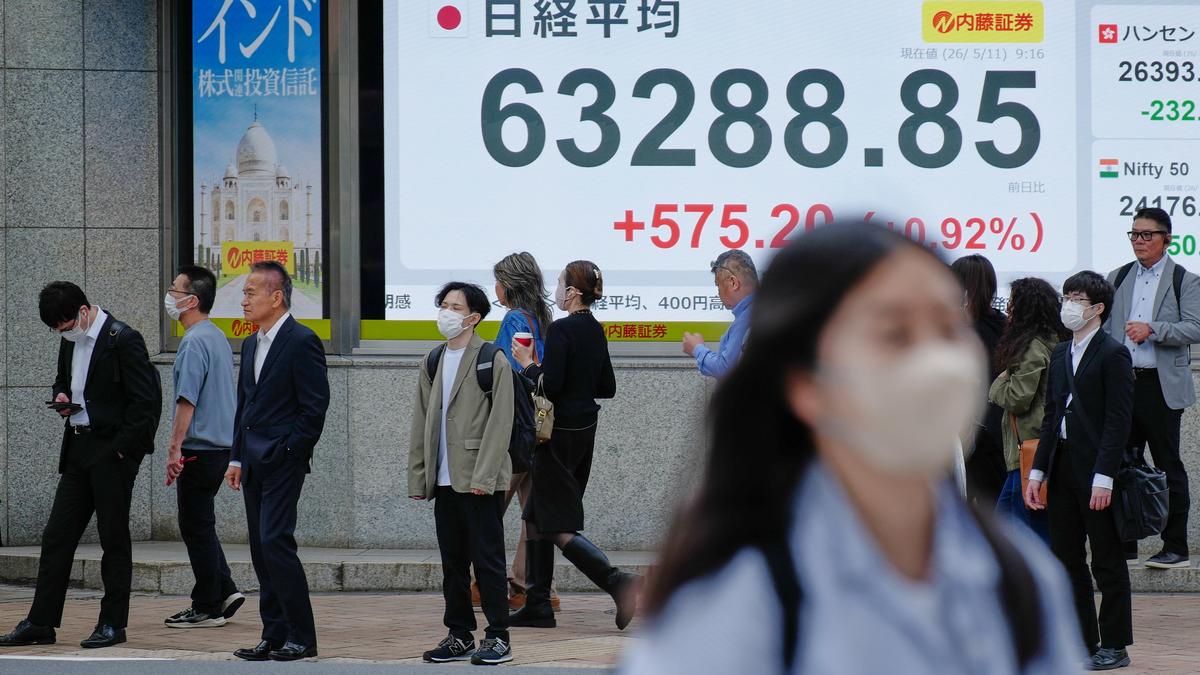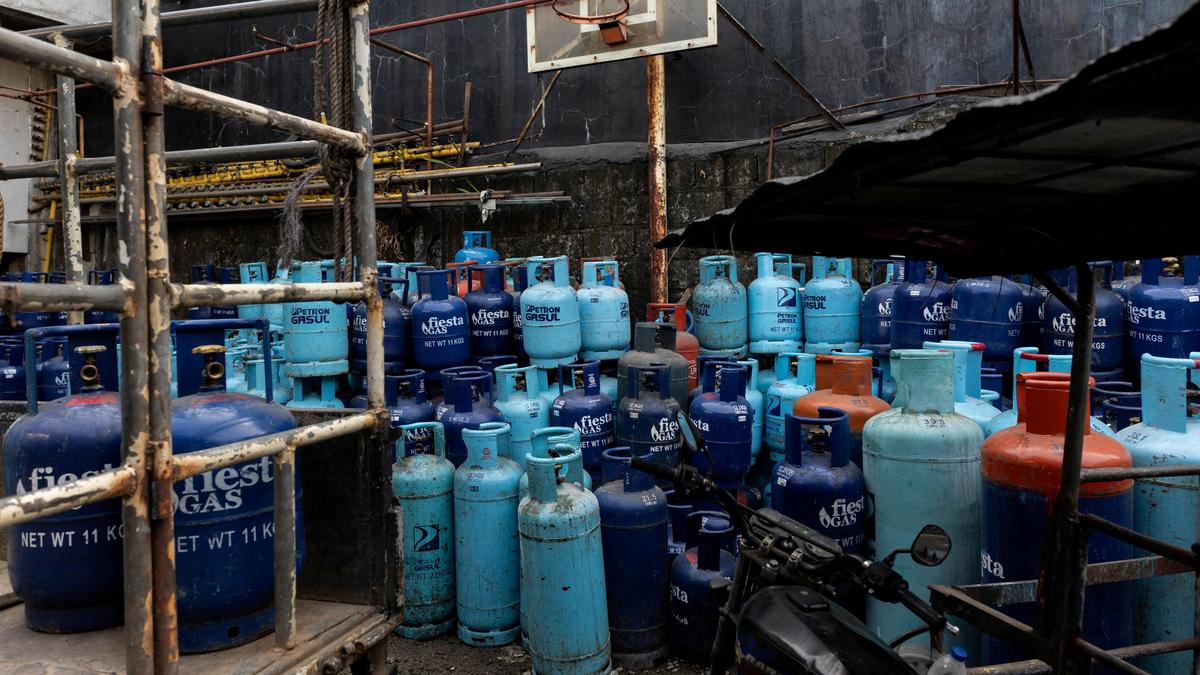
Energy markets are screaming, but most governments in Asia aren't listening. If you think the current price at the pump is bad, you've seen nothing yet. The reality is that the Middle East is on a knife-edge. A direct, sustained conflict involving Iran wouldn't just be a localized tragedy. It would be an economic wrecking ball for every nation from New Delhi to Tokyo. We’re talking about a massive threat to the world’s most critical maritime chokepoints. Asia depends on this region for roughly 70% of its crude oil imports. When that flow stops, the lights don’t just flicker. They go out.
The "first wave" of shocks was the initial volatility following the recent escalations. That was just a warning shot. The second wave—the one that actually breaks the back of regional economies—is what happens when the Strait of Hormuz becomes a no-go zone. You don’t need to be a geopolitical strategist to see the math. About 20 million barrels of oil pass through that narrow strip of water every single day. There’s no pipe, no truck, and no alternative route that can handle that volume. If Iran decides to close the gate, or if the gate is blown off its hinges, Asia is the first to starve.
Why the Strait of Hormuz is Asia's biggest weakness
If you look at a map, you’ll see a tiny gap between Iran and Oman. That’s the Strait of Hormuz. It’s the jugular vein of the global energy industry. For countries like South Korea and Japan, which have almost zero domestic energy resources, this isn't just a business concern. It's an existential crisis. I’ve talked to logistics managers who are already losing sleep over "war risk" insurance premiums. Those costs are already spiking, and they get passed directly to you.
China is often cited as the biggest player here, and they are. They've been buying Iranian oil at a discount for years, often through "dark fleet" tankers that hide their tracks. But even Beijing can't ignore a total blockade. If Iran gets dragged into a full-scale war, those shadow shipments vanish. China might have massive strategic reserves, but they’re finite. India is in an even tighter spot. Their refining sector is world-class, but it needs a constant, uninterrupted diet of Middle Eastern sour crude to function.
The myth of energy independence and the gas reality
Politicians love to talk about "de-risking" and "energy independence." Honestly, it’s mostly talk. You can’t build enough solar panels or wind turbines in six months to replace the baseload power provided by natural gas and oil. While the world focused on oil, Liquefied Natural Gas (LNG) became the new silent killer for Asian budgets. Qatar is a massive supplier to the region. If the Strait is blocked, LNG tankers can’t get out.
Imagine the impact on electricity bills in Thailand or Vietnam. These are manufacturing hubs. Their competitive advantage is cheap labor and relatively stable power. If power prices triple because they’re forced to bid for spot-market LNG from the US or West Africa, those factories stop being profitable. We’d see a massive flight of capital. It’s a domino effect that starts with a single missile in the Persian Gulf and ends with a recession in Southeast Asia.
The inflation monster is coming back for more
We just spent two years fighting off the post-pandemic inflation surge. Central banks in Asia were finally starting to breathe. But an energy shock from an Iran war would be a "supply-side" disaster that interest rates can't fix. You can't interest-rate your way into more oil. When crude hits $120 or $150 a barrel—which is a very real possibility in a total war scenario—everything gets more expensive. Food. Transport. Plastics. Everything.
For emerging economies like Indonesia or the Philippines, this is a nightmare. These governments often subsidize fuel to keep the peace. When global prices skyrocket, those subsidies eat the national budget alive. They’re forced to choose between bankrupting the country or letting fuel prices rise and facing civil unrest. It’s a lose-lose situation. I remember the 2008 oil price spike; it triggered protests across the continent. History doesn't always repeat, but it sure does rhyme.
What the big players are doing wrong
Most Asian nations are playing a dangerous game of "wait and see." They’re relying on the US Navy to keep the shipping lanes open. That’s a shaky bet in 2026. The US is stretched thin. Between supporting Ukraine and keeping an eye on the South China Sea, the capacity to police the Gulf indefinitely is shrinking.
Japan is perhaps the only one taking this seriously, building up massive strategic reserves that could last over 200 days. But what about the others? Most of ASEAN has nowhere near that level of cushion. They’re living hand-to-mouth on energy shipments. If a tanker is delayed by even a week due to skirmishes, the refinery runs start to drop.
How to protect your interests before the hammer drops
You shouldn't wait for the headlines to turn red before you act. Whether you’re running a business or managing your own finances, the "second wave" is a matter of when, not if. The volatility is the new baseline.
First, businesses must audit their supply chains for indirect energy exposure. It’s not just about your electric bill. It’s about your logistics providers and their ability to absorb a 50% increase in fuel surcharges. If they can’t, your goods don't move. You need to lock in long-term contracts now, even if they seem slightly higher than today’s spot price.
Second, watch the currency markets. High oil prices usually lead to a stronger US Dollar and weaker Asian currencies. This is a double whammy. You pay more for oil, and you pay for it in a currency that's getting more expensive. Hedging your currency exposure isn't just for big banks anymore; it's a survival tactic for any mid-sized importer.
Finally, diversify your energy sources. This doesn't mean just buying a Tesla. It means looking at your operational footprint. Can you shift production to regions with more domestic energy security? Can you implement efficiency measures that were "too expensive" last year? They won't be expensive when oil hits $130.
The window to prepare is closing. The tension between Iran and its adversaries isn't a temporary glitch. It’s a fundamental shift in the global order. Asia has enjoyed decades of relatively cheap, easy-to-access energy from the Middle East. That era is over. Those who recognize the fragility of the Hormuz chokepoint and move to insulate themselves will survive the coming shock. Those who keep waiting for "normal" to return will be left in the dark.
Move your capital into energy-resilient assets. Shift your supply chain away from high-risk maritime routes where possible. Get lean on fuel consumption before the market forces you to do it at gunpoint.