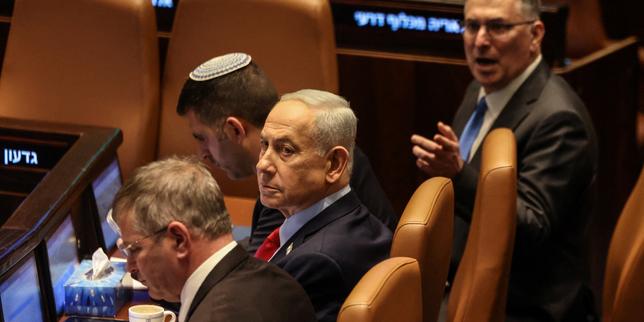
The air in Jerusalem during a political crisis doesn’t smell like old parchment or wood-paneled offices. It smells like diesel fumes from idling security details and the sharp, metallic tang of an approaching storm. For the average citizen, the headlines about the Knesset—Israel’s parliament—dissolving into another round of early elections aren’t just political theater. They are the sound of a clock resetting when the house is already on fire.
By the end of August, or perhaps a few weeks later, millions will walk behind the blue curtains once again. They will hold a small slip of paper that carries the weight of a nation’s exhaustion. To understand why this matters, you have to look past the tally of seats and the complex coalitions. You have to look at the people standing in line at the grocery store, wondering if the government will still be in one piece by the time their milk expires.
The Friction of a Fragmented Reality
Imagine a ship where the officers are so busy arguing over the map that nobody is watching the engine. That is the feeling on the ground. The current legislative push for early elections isn't a sudden whim; it is the culmination of a structural breakdown that has left the country in a state of permanent "almost."
The math is brutal. In the Knesset, 120 seats are up for grabs. To lead, you need 61. But in a land of a thousand opinions, getting 61 people to agree on the color of the sky is a monumental task. When the coalition fractious nature finally hits a breaking point, the law dictates a return to the people. This time, the timeline points toward late August as the earliest possible window for a vote.
Why August? Because the machinery of democracy is heavy. It requires months of logistical preparation, the purging of voter rolls, and the heating up of campaign engines that never really cooled down to begin with.
For a small business owner in Tel Aviv, this news is a cold shower. Uncertainty is the enemy of the checkbook. When a government is "interim," budgets are frozen. Long-term projects—new roads, school funding, healthcare subsidies—stutter to a halt. The nation holds its breath, not out of anticipation, but out of necessity.
The Invisible Stakes of a Summer Vote
The heat in late August is oppressive. It is a time when the Mediterranean humidity clings to your skin like a wet wool blanket. Holding an election during this window adds a layer of physical irritability to an already polarized public.
Consider a teacher named Adina. She represents the "invisible stakes." Adina has spent the last year navigating a curriculum disrupted by social unrest and security concerns. She wants to know if her school will have the resources it needs for the September start. But with the country heading to the polls in late August, there is no one at the helm to sign the checks. The bureaucracy enters a twilight zone where decisions are deferred and problems are inherited by "the next guy."
This is the tragedy of the perpetual campaign. The focus shifts from the hard work of governing to the desperate work of surviving the next news cycle. Policy is traded for slogans. Substance is sacrificed for optics.
The disconnect between the halls of power and the street has never felt wider. In the cafes of Haifa, the talk isn't about the specific date of the vote—whether it’s August 27th or September 3rd—but about whether any of it will actually change the underlying math. The fear is that the country is caught in a loop, a digital glitch in the democratic process that keeps returning the same inconclusive result.
The Cost of the Slip of Paper
There is a financial price tag to this instability that rarely makes the front page. Every election costs the Israeli taxpayer billions of shekels. This includes the direct cost of running polling stations and the indirect cost of a national holiday—a day where the economy effectively stops.
When you add up the last few years of repeated cycles, the numbers are staggering. That is money that didn't go to hospitals. It’s money that didn't go to lowering the cost of living, which remains one of the highest in the developed world.
But the psychological cost is higher.
Trust is a non-renewable resource. Every time a government collapses before its term is up, a little more of that trust evaporates. The citizen begins to see the ballot not as a tool for change, but as a chore. They see the politicians not as leaders, but as players in a game where the rules are written in disappearing ink.
The Architecture of the Collapse
The collapse of a government usually starts with a whisper and ends with a gavel. It might be a disagreement over the military draft, a dispute over the budget, or a personal rivalry that finally boils over. In this specific case, the move toward early elections reflects a fundamental inability to bridge the gap between the various factions that make up the Israeli mosaic.
Secular versus religious.
Hawk versus dove.
Peripheral towns versus the high-tech center.
These aren't just debate topics; they are the tectonic plates of the society. When they shift, the building shakes. The push for a late August vote is an attempt to find a release valve for this pressure. The hope—however faint—is that a new mandate will provide the clarity needed to move forward.
History suggests otherwise.
In previous cycles, the "clarity" provided by the voters was more like a smudge. The country found itself right back where it started, with a fragmented parliament and a leader trying to stitch together a coat made of mismatched rags.
The Human Element in the Booth
On election day, the noise of the television pundits fades away. There is a profound silence inside the voting booth. It is just the citizen, the tray of slips, and the blue box.
For a young soldier just finishing their service, that slip of paper represents their first real say in the future of the country they just spent three years defending. For an elderly survivor in West Jerusalem, it is a reminder of the fragility of the sovereign state they helped build.
They aren't thinking about the "logistical window of August." They are thinking about their rent. They are thinking about their safety. They are thinking about whether their children will have to go through the same cycle of instability every two years for the rest of their lives.
The news that elections are coming "at the earliest in late August" is presented as a scheduling update. But it is actually a confession. It is an admission that the current system has run out of road.
The campaign will be loud. The billboards will be massive. The social media feeds will be toxic. Candidates will promise that this time is different, that this time they have the solution to the deadlock.
But as the sun sets over the Judean hills, the reality remains. The country is waiting for something more than just a vote. It is waiting for a resolution.
The tragedy of the August timeline is that it guarantees a summer of anger rather than a summer of rest. Instead of beaches and family vacations, the national conversation will be dominated by the same grievances that have stalled progress for years.
The ballot is a powerful thing, but it is also a heavy one. When you ask a population to carry it too often, their arms begin to tire. The danger isn't just that the election won't solve the problem; the danger is that people will stop caring if it does.
As the clock ticks toward August, the people of Israel aren't looking for a winner. They are looking for a way out of the loop. They are looking for a government that lasts longer than the tires on their cars.
In the end, the date on the calendar is the least important part of the story. The real story is the quiet desperation of a nation that just wants to wake up to a Tuesday where the government isn't the lead story.
The ink on the ballots will dry quickly in the August heat. Whether the decisions made in those booths will finally stick is a question that no one, from the Prime Minister to the person in the street, can answer with any certainty. All they can do is take the slip, walk to the box, and hope that this time, the machinery finally works.
The blue curtain closes. The slip drops. The cycle begins again.


