The insurance industry calls it "soft fraud" when a policyholder pads a legitimate claim. But when three California residents donned a brown bear costume to savage the interiors of high-end luxury vehicles, they crossed into the theater of the absurd. This wasn't a crime of opportunity. It was a calculated, albeit ridiculous, attempt to exploit the gaps in remote claims processing. In early 2024, the California Department of Insurance uncovered "Operation Bear Claw," an investigation that revealed a trio had filed claims for interior damage to a 2010 Rolls Royce Ghost and two Mercedes-Benz models, claiming a wild animal had broken into their cars in the Lake Arrowhead area.
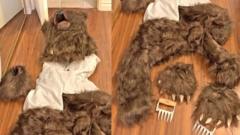
The scheme unraveled because biology does not lie. When investigators brought in a biologist from the California Department of Fish and Wildlife to review the "security footage" provided by the claimants, the expert noted the "bear" moved with the unmistakable gait of a human. A subsequent search of the suspects' home turned up the costume—complete with metal claws designed to mimic animal shredding. While the $141,839 in attempted fraud makes for a viral headline, the case exposes a much darker reality in the insurance sector. We are currently seeing a massive surge in "staged event" fraud, driven by the industry’s own rush toward automation and the removal of human oversight.
The Death of the Physical Inspection
For decades, an insurance adjuster was a person with a clipboard and a cynical eye. They showed up at your driveway, smelled the upholstery, and looked for tool marks. That era is over. Today, the "low-touch" or "no-touch" claims model is the gold standard for efficiency. Companies encourage users to upload photos and videos to an app. An algorithm or a remote reviewer in a different time zone then approves the payout.
The suspects in the bear suit case understood this shift perfectly. They weren't trying to fool a local mechanic; they were trying to fool a digital interface. By providing grainy night-vision footage, they banked on the fact that a remote claims processor, incentivized by speed and volume, would check a box and move on. This "efficiency gap" has become a playground for fraudsters who realize that as long as the digital trail looks plausible, the physical reality is rarely questioned.
Data Points the Human Eye Misses
Insurance carriers are fighting back with telematics and metadata, but the bear suit incident proves these tools are reactive, not proactive. While the suspects were eventually caught, the system initially allowed the claims to progress. The industry is currently locked in an arms race where AI-driven fraud detection attempts to flag anomalies in pixels—such as the way light reflects off a "claw" mark—while criminals experiment with increasingly bizarre methods to bypass those filters.
If the "bear" had been a bit more convincing or the video quality a bit lower, the check might have cleared. This highlights a systemic vulnerability. When we prioritize the speed of a payout over the integrity of the investigation, we effectively subsidize the cost of fraud for the rest of the honest policyholders.
Why Luxury Vehicles are the Primary Target
The choice of a Rolls Royce and two Mercedes was not accidental. In the world of insurance fraud, the "total loss" or "high-value repair" threshold is the sweet spot. Damaging a Toyota Camry doesn't yield enough profit to justify the risk of a felony. However, the cost of replacing the hand-stitched leather and bespoke wood trim of a Rolls Royce Ghost can easily exceed $60,000 for a single incident.
Fraudsters target high-value assets because the "complexity" of the repair provides a smoke screen. It is easier to hide a lie inside a $50,000 invoice than a $500 one. In this case, the perpetrators were seeking a combined payout that would have represented a significant return on their investment in a cheap polyester costume. This is the business logic of the modern swindler: maximize the margin per crime to minimize the number of times you have to roll the dice.
The Psychological Profile of the High Stakes Scammer
There is a common misconception that insurance fraud is a "victimless" crime committed by people in financial distress. The reality is often more professional. The individuals involved in Operation Bear Claw displayed a level of premeditation that suggests a deep familiarity with how insurance companies categorize "acts of God" versus "vandalism."
Animals are perfect scapegoats. An animal has no motive, no accomplices, and cannot be cross-examined. By blaming a bear, the scammers attempted to remove human agency from the equation. This reflects a growing trend where fraudsters use natural disasters, wildlife, or even phantom "hit and run" drivers to create claims that are difficult to disprove without a forensic level of scrutiny that most insurance companies are no longer willing to pay for.
The Geography of Fraud
Lake Arrowhead provided the perfect backdrop. It is a wealthy enclave where bears are common, and luxury cars are ubiquitous. A successful scam requires a believable "why." If this claim had been filed in downtown Los Angeles, it would have been flagged instantly. By placing the incident in a rural mountain community, the scammers added a layer of environmental plausibility that bought them time. They understood that context is just as important as the evidence itself.
The Rising Cost for the Honest Consumer
We often talk about "inflation" as the reason for skyrocketing insurance premiums. That is only half the story. The "fraud tax" is a massive, hidden component of every premium increase. In California alone, insurance fraud is estimated to cost the average family hundreds of dollars per year in increased rates.
When a group of people tries to steal $140,000 through a bear suit scam, the cost of the investigation, the legal fees, and the eventual payout (if successful) are baked into the risk pools of every other driver. The industry is currently facing a crisis of affordability, yet companies continue to prioritize the "user experience" of fast claims over the rigorous gatekeeping that would prevent these losses. It is a paradox that the more convenient we make insurance, the more expensive it becomes.
The Role of State Task Forces
Operation Bear Claw was a win for the California Department of Insurance’s Fraud Division. However, for every bear suit that gets caught, how many "mysterious" engine fires or "accidental" floods go unnoticed? State agencies are chronically underfunded, often relying on the insurance companies themselves to flag suspicious activity. This creates a conflict of interest. Companies want to keep customers happy and avoid "bad faith" lawsuits for denying claims, which can sometimes lead to a "pay and chase" mentality where it is cheaper to pay a fraudulent claim than to fight it and risk a legal headache.
The Evolution of the Scrape and Shred
We are moving into an era of "Deepfake Fraud." While the bear suit was a physical costume, the next iteration will likely involve digitally altered video where a bear—or a fallen tree, or a phantom car—is inserted into security footage with such precision that even a biologist might be fooled. The metal claws found in the suspects' home represent a primitive version of this. They were trying to create a physical "deepfake" on the leather seats.
The industry must decide if it wants to remain a digital-first enterprise or if it needs to return to its roots. The bear suit case is funny, yes, but it is also a warning. It shows that the human imagination for deception will always outpace the current state of algorithmic detection. We are relying on code to catch people who are thinking outside the box—or, in this case, inside the bear.
How to Protect the System from the Absurd
The solution isn't to make insurance harder for honest people, but to make it more dangerous for the dishonest. This requires a shift in three specific areas:
- Mandatory Physical Verification: For any claim involving interior damage over a certain dollar threshold, a human must physically touch the vehicle.
- Cross-Industry Data Sharing: Fraudsters often hit multiple carriers with similar schemes. A unified database of "animal-related" luxury car claims would have likely flagged these individuals much sooner.
- Stricter Criminal Penalties: Insurance fraud is often treated as a white-collar nuisance. Until the risk of prison time outweighs the potential $140,000 payday, the costumes will stay in the closet.
The "Man in the Bear Suit" is a punchline today, but he is also the face of a billion-dollar drain on the global economy. As long as we treat insurance claims as a friction-less digital transaction, we are essentially inviting the bears to the picnic. The industry must stop assuming that every video uploaded to an app is a true reflection of reality. If a story looks like a man in a bear suit, smells like a man in a bear suit, and walks like a man in a bear suit, we should probably stop writing the check.
Stop looking for the algorithm to save the bottom line and start reinvesting in the people who know what a real bear looks like.