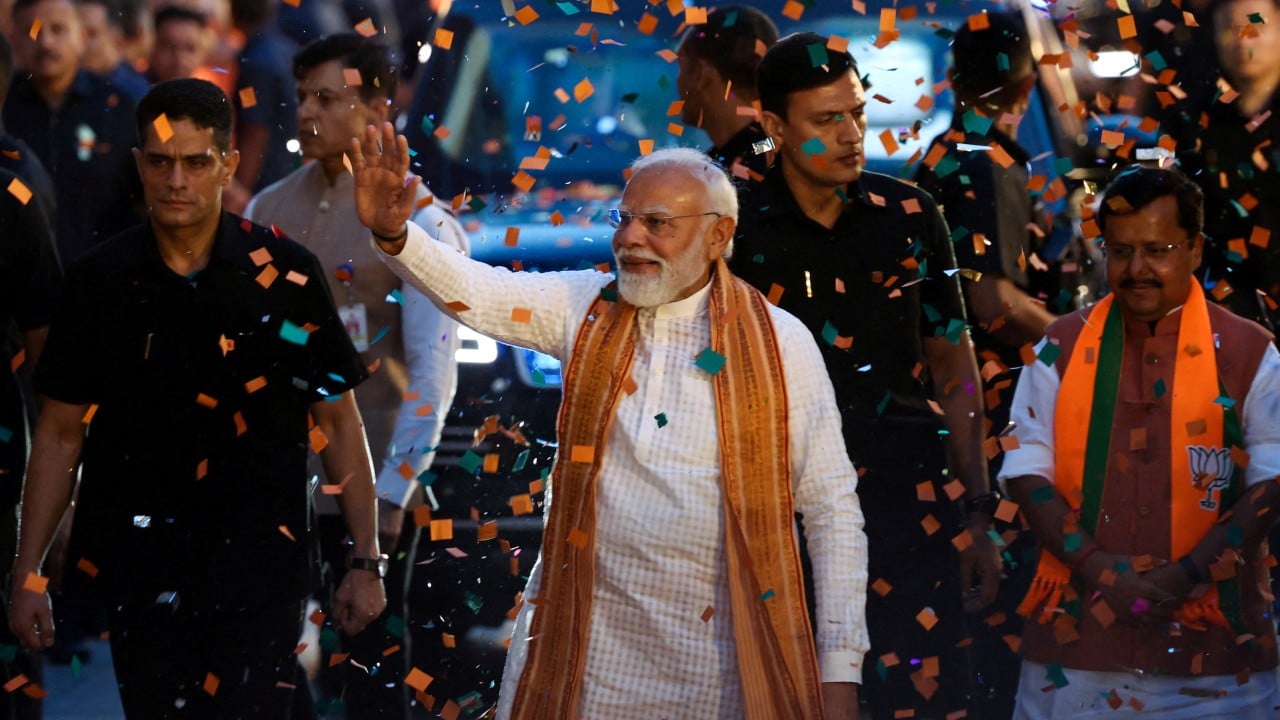
The ground in Kolkata didn't just shake this week; it split wide open. For decades, West Bengal was the fortress that the Bharatiya Janata Party (BJP) couldn't breach. It was the land of the Left and then the indomitable Mamata Banerjee. That's over now. With the BJP crossing the majority mark in the 2026 Assembly elections, winning over 205 seats, we aren't just looking at a change in state government. We're witnessing the final collapse of the old "secular" wall that once hemmed Narendra Modi into the Hindi heartland.
If you think this is just another state election, you're missing the point. This victory is the most significant ideological shift in Indian politics since 2014. It proves that the BJP’s brand of politics can successfully transplant itself into deep-red cultural bastions that were supposedly "immune" to it.
The end of the minority veto
For years, the math in Bengal was simple. If you held the minority vote—roughly 27% to 30% of the state—and added a slice of the rural poor, you were invincible. The Trinamool Congress (TMC) lived by this rule. But in 2026, that math broke.
The most fascinating part of this result isn't just the BJP's 44.8% vote share. It’s how the minority vote fragmented. In places like Murshidabad and Malda, the TMC didn't lose because those voters suddenly became BJP fans. They lost because the minority vote split between the TMC, a revived Congress-Left combine, and new players like Humayun Kabir’s outfit.
When that vote isn't a monolith, the BJP’s "Hindu consolidation" strategy becomes a steamroller. In 142 seats with significant minority influence, the BJP managed to bag 72. That's a staggering hit rate that nobody saw coming. It tells us that the "minority veto"—the idea that a consolidated bloc can permanently block the BJP—is a ghost of the past. If the opposition can't keep its own house in order, the BJP doesn't even need to win over those voters to win the seat.
The Suvendu factor and the fall of the cult
Mamata Banerjee’s defeat in Bhabanipur to her former lieutenant Suvendu Adhikari by 15,000 votes is the ultimate "Et tu, Brute?" moment. It’s deeply symbolic. For 15 years, the TMC was built on the personal charisma and perceived invincibility of "Didi." When the leader loses her own backyard, the spell breaks for the entire party.
Why did it happen? Honestly, it was a mix of three things:
- Governance fatigue: After 15 years, the "Ma, Mati, Manush" slogan felt like a tired script.
- Corruption allegations: The baggage of local-level scams finally became too heavy to carry.
- The Special Intensive Revision (SIR): Let’s be blunt—the removal of 2.7 million names from the electoral rolls, which disproportionately affected minority communities, played a role. While the Election Commission dismissed claims of bias, the tactical advantage it gave the BJP in tight contests is undeniable.
The BJP ran a campaign that was remarkably "Bengali." They stopped feeling like outsiders. They traded the aggressive "Jai Shri Ram" for a more localized appeal to Bengali cultural pride, coupled with a promise of "good governance." It worked because voters were ready for something—anything—new.
What this means for Modi’s third term
Nationally, this win is a massive shot in the arm for Narendra Modi. After the 2024 general elections, many claimed the Modi wave was receding because he had to rely on coalition partners. Bengal 2026 shuts that narrative down.
This victory gives the BJP a massive psychological edge heading toward the 2029 general elections. It shows that the party can still expand its footprint even when it seems to have hit a ceiling. If they can win Bengal, where else is safe for the opposition?
- The East is Won: With Bengal and Assam firmly in the bag, the BJP now dominates the eastern corridor.
- The Southern Wall: The South remains the only region holding out. The shock victory of C. Joseph Vijay in Tamil Nadu shows that while the BJP is winning in the East, the South is busy creating its own local alternatives rather than joining the saffron wave.
- Ideological Remaking: This isn't just about seats; it's about remaking India. A win in Bengal allows the BJP to push its national agenda—like the Uniform Civil Code—with a newfound moral authority, claiming they have a mandate from "Kashmir to Kanyakumari" (well, almost).
The demographic shift you can’t ignore
The data shows the BJP didn't just win on religion. They won on economics. Among younger voters and Gen Z households in Bengal, the promise of "double-engine growth" started to outweigh traditional identity politics.
In semi-urban areas, the BJP’s vote share surged because they focused on the "merchant class" and small business owners who felt stifled by the TMC’s local syndicates. They didn't just talk about temples; they talked about jobs and infrastructure. It’s a blueprint they’ll likely use in every other regional stronghold they try to topple next.
What happens to the TMC now?
The TMC is in a tailspin. The centralized leadership that once made them strong is now their biggest liability. When the center collapses, the fringes scatter. Expect a wave of defections from the TMC to the BJP over the next six months.
Abhishek Banerjee’s strategy of "renewing" the party by reshuffling candidates clearly backfired. Instead of bringing in fresh blood, it just created a bunch of angry ex-MLAs who were more than happy to see the party lose. The TMC needs to find a new reason to exist beyond just "being the alternative to the BJP." Right now, they don't have one.
Start watching these three things
If you’re trying to figure out where the country goes from here, don't look at the victory rallies. Look at these practical shifts:
- Bureaucratic overhaul: Watch how the BJP reshapes the West Bengal administration. They've complained for years that the police and civil services were "politicized" by the TMC. Expect a massive purge and a new alignment with New Delhi.
- Infrastructure projects: The BJP will likely fast-track massive highway and port projects in Bengal to show immediate "results" and justify the vote.
- The 2029 Roadmap: This win confirms that the BJP's path to a fourth term runs through the East. They’ve found the "cheat code" for breaking regional parties: wait for incumbency to rot them from the inside, then provide a localized version of the national "Modi" brand.
The Bengal wall has fallen. The political map of India didn't just change colors; it changed its entire logic.
West Bengal & Assam Election Results 2026: BJP Sweeps, Major Political Shift
This video provides a detailed breakdown of the 2026 election results in West Bengal and Assam, highlighting the historic nature of the BJP's victory and the immediate political consequences.