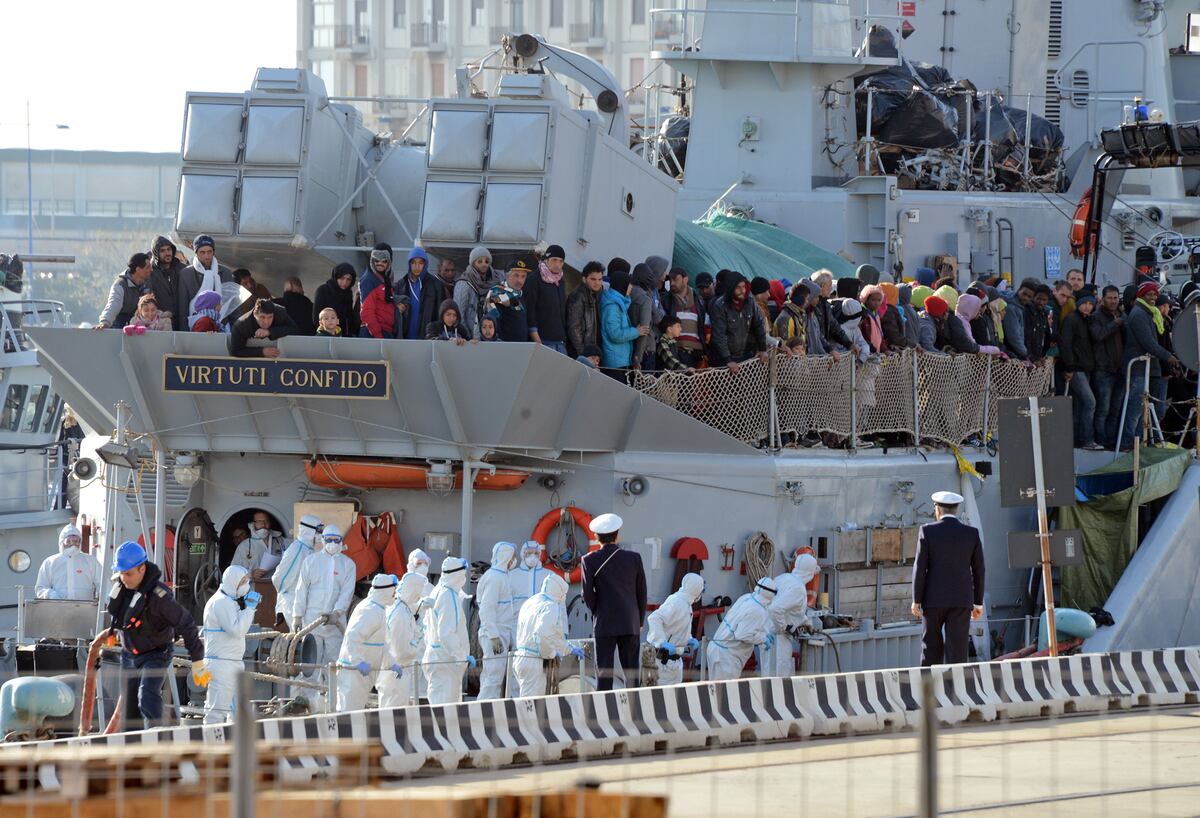
The ink on a diplomatic communique is always dry, but the soil it describes is often soaked. In the windowless briefing rooms of Washington, the air is climate-controlled and smells of floor wax and stale coffee. Here, officials use words like "historic opportunity" and "constructive framework." They speak of "demarcation" and "de-escalation" as if they are moving pieces on a mahogany chessboard.
But three thousand miles away, the reality of the Israel-Lebanon border isn't found in a transcript. It is found in the sound of a generator clicking off at midnight in a Lebanese village, leaving a family in a thick, suffocating silence. It is found in the way a farmer in the Galilee looks at the ridgeline, wondering if the rustle in the brush is a mountain breeze or the precursor to a siren. Recently making news lately: Europe is finally forcing a messy breakup with Russian gas.
The recent talks in Washington represent more than a diplomatic calendar entry. They are an attempt to rewrite a script that has been written in blood for three quarters of a century. To understand why these talks matter, you have to stop looking at the map and start looking at the shadows.
The Geography of Anxiety
Imagine a woman named Farah. She is not a politician. She lives in a small apartment in Tyre, south Lebanon. For Farah, the "Lebanese-Israeli conflict" isn't a headline; it is the reason her children know the difference between the sound of a sonic boom and a gas canister exploding. When the news speaks of a "peace opportunity," Farah doesn't cheer. She exhales. More details into this topic are detailed by Al Jazeera.
For decades, the Blue Line—the United Nations-recognized boundary—has been less of a border and more of a scar. It is a place where two nations stand chest-to-chest, breathing each other’s air while holding their breath.
The diplomats in D.C. are chasing a ghost called stability. They are trying to solve a puzzle where the pieces are made of land, maritime gas rights, and historical grievances that refuse to stay buried. The core of the current push involves a rare alignment of exhaustion. Lebanon is reeling from an economic collapse so profound that the World Bank called it one of the worst since the mid-19th century. Israel, despite its military and technological might, faces the constant, draining pressure of a multi-front shadow war.
Neither side can afford the status quo anymore. This is the "historic opportunity" the State Department is hailing. It isn't necessarily born of sudden friendship. It is born of a shared, desperate need for air.
The High Cost of a Cold Peace
When we talk about peace talks, we often focus on the "big" wins: the signing ceremonies, the handshakes, the flags. We rarely talk about the absence of things.
Peace, in this context, is the absence of the "Red Alert" app chirping on a teenager’s phone in Kiryat Shmona. It is the absence of the 90% currency devaluation that prevents a Lebanese doctor from buying medicine. The "maritime dispute" sounds like a boring legal argument over invisible lines in the Mediterranean. In reality, it is a fight over who gets to bake the bread. If Lebanon can tap into the sub-sea gas fields, it might—just might—be able to turn the lights back on.
But the stakes are invisible because they are systemic.
The border is currently a theater of posturing. You have the Lebanese Armed Forces, Hezbollah’s armed wing, and the Israeli Defense Forces all operating in a space the size of a postage stamp. A single misunderstanding—a stray drone, a nervous soldier, a misfired flare—can ignite a conflagration that neither Beirut nor Jerusalem actually wants.
The Washington talks are an attempt to build a fence of words high enough to keep the sparks from jumping.
The Ghost at the Table
You cannot talk about Israel and Lebanon without talking about the groups that aren't officially in the room. In every diplomatic meeting, there is a ghost at the table.
Hezbollah holds a veto over Lebanese domestic and foreign policy that isn't written in any constitution. Their presence makes these talks a tightrope walk over a canyon. For the United States, the goal is to strengthen the Lebanese state enough so that it can eventually stand on its own, independent of paramilitary influence. It is a long game. A very long game.
Consider the complexity of the "security guarantees" being discussed. Israel wants to ensure that its northern communities can return to their homes without the threat of cross-border raids. Lebanon wants its sovereignty respected and its economic waters secured. These are not just line items. They are the fundamental requirements for a functioning life.
If the talks succeed, it won't mean the end of all tension. It will mean the professionalization of that tension. It replaces the chaos of the militia with the predictability of the bureaucrat.
The Language of the Possible
Diplomacy is often criticized for being slow and toothless. Critics ask: "What does a piece of paper in Washington do for a soldier on the ground?"
The answer is: It gives him a reason not to pull the trigger.
These talks are looking at the "Land Blue Line," attempting to resolve thirteen specific points of dispute where the border is still contested. Some of these disputes are over a few meters of dirt. To a casual observer, it seems absurd. Why risk a war over a grove of trees?
But these meters are symbols. They are the bricks in the wall of national pride. By addressing them in a sterile room in D.C., the negotiators are trying to strip the emotion away from the geography. They are trying to turn a "holy cause" into a "border adjustment."
The shift is subtle but vital. When a conflict is about "existence," there is no room for compromise. When a conflict is about "coordinates," you can move a decimal point.
Why This Time is Different
Optimism in the Middle East is usually a sign of a short memory. We have seen these "historic" moments before, only to see them dissolve into the next cycle of violence.
However, the gravity of the current situation provides a different kind of momentum. Lebanon is not just struggling; it is drowning. Its schools are closing. Its hospitals are running on batteries. The desperation has reached a point where the traditional rhetoric of "resistance" is being weighed against the literal survival of the population.
On the other side, Israel is navigating a regional shift. With the Abraham Accords and changing alliances in the Gulf, the old map of "Israel vs. Everyone" is being replaced by something more complex and, perhaps, more manageable.
The talks in Washington are the first real attempt to plug Lebanon into this new reality. It is a gamble that economics can eventually outpace ideology.
The Long Road Home
Success in these negotiations won't be signaled by a grand treaty. It will be signaled by small, boring things. It will be a commercial flight path that doesn't have to dodge a certain zone. It will be a joint committee that meets once a month to discuss water rights. It will be the gradual return of farmers to fields that have been minefields for thirty years.
We often think of peace as a sudden light, like a sunburst after a storm. It isn't. Peace is the slow, agonizing process of clearing the rubble. It is the work of people who are tired of being afraid.
The officials in Washington may use dry language, but the stakes are vibrantly, terrifyingly alive. They are talking about whether a generation of children will grow up looking at the horizon with curiosity rather than dread.
The "historic opportunity" isn't about the diplomats. It’s about the people who live in the silence after the generator dies. It is about whether, for the first time in a long time, the lights will stay on when the sun goes down.
The table is set. The maps are spread out. The world is watching, not because we love the process, but because we know the cost of the alternative. The silence on the border is currently a fragile thing, held together by the hope that, this time, the words spoken in Washington will finally be louder than the guns.