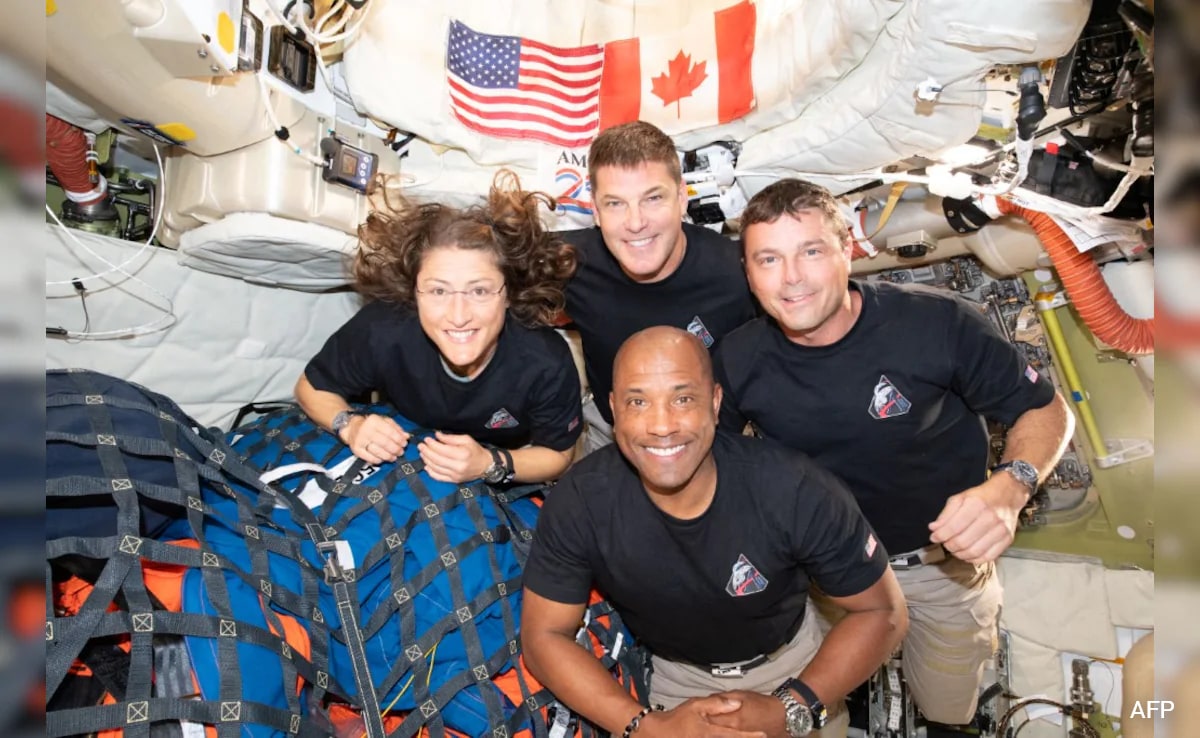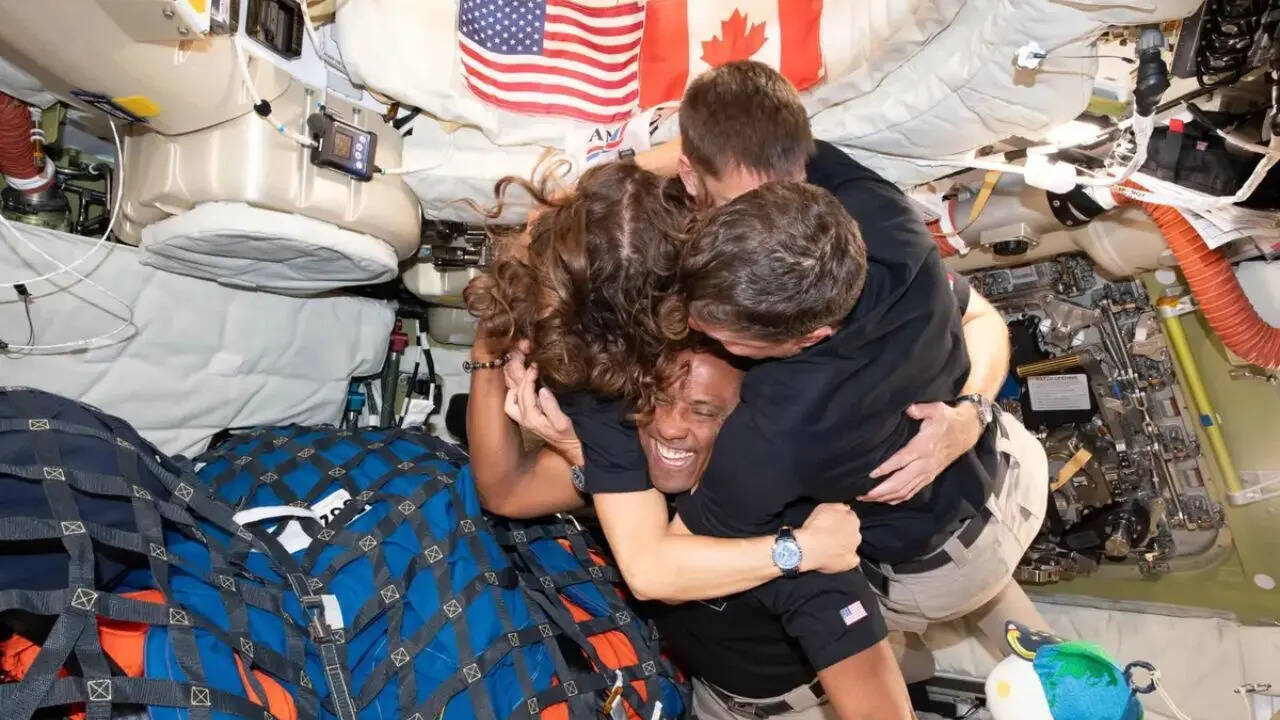
NASA is betting a multibillion-dollar mission and four human lives on a patch of water that can turn hostile in minutes. While the Artemis II mission focuses on the technical marvel of the Space Launch System and the Orion capsule, the ultimate success of the mission hinges on a variable no engineer can control. The weather at the splashdown site is not just a logistical detail. It is a binary switch between a safe return and a catastrophic recovery failure.
If the Pacific Ocean doesn't cooperate on the day of return, the crew faces risks ranging from severe motion sickness and inner-ear trauma to the literal capsizing of the spacecraft. NASA’s current recovery window is narrower than many realize, dictated by the physics of a capsule that must hit the water at exactly the right angle and velocity while surviving the unpredictable whims of maritime meteorology.
The Margin for Error is Vanishing
Returning from the moon is not like returning from the International Space Station. Orion will hit the atmosphere at nearly 25,000 mph. By the time the parachutes deploy, the spacecraft is already at the mercy of the lower atmosphere’s wind gradients.
The primary concern isn't just rain. It is the sea state. Engineers measure this through a combination of wave height, period, and wind speed. If the "significant wave height" exceeds the safety threshold—generally around 8 feet for a stabilized recovery—the risk of the capsule rolling over increases exponentially. Orion is designed to right itself using a series of inflatable bags, but those bags are not infallible. A rogue swell during the uprighting process could swamp the vents or delay the crew’s egress, leaving them bobbing in a pressurized tin can while their bodies struggle to readapt to Earth’s gravity.
Why the Pacific is a Double Edged Sword
NASA chooses the Pacific Ocean off the coast of Baja California for a reason. It offers a massive, relatively deep landing zone away from major shipping lanes. However, this region is a playground for complex weather systems.
Cold currents from the north meet warmer air from the south, creating persistent marine layers and unpredictable squalls. Visibility is the silent killer of recovery operations. If the recovery teams in the USS San Diego or a similar LPD-class ship cannot maintain visual contact or fly their MH-60S Seahawk helicopters, the crew stays in the water.
Every minute spent in the water after splashdown is a minute of physical toll on the astronauts. After ten days in microgravity, the human vestibular system is shot. The gentle rocking of a ship feels like a violent upheaval. In a cramped capsule smelling of burnt heat shield and recycled air, the "Barf Rate" among returning astronauts is historically high. Extended wait times in heavy seas aren't just uncomfortable; they are a medical liability.
The Skip Reentry Gamble
To manage these weather risks, NASA is utilizing a "skip reentry" maneuver. This allows the Orion capsule to literally skip off the top of the atmosphere like a stone across a pond.
How the Skip Extends the Reach
By skipping, Orion can extend its travel distance after the initial atmospheric entry, allowing flight controllers to move the splashdown point by hundreds of miles to avoid localized storms.
- Initial Entry: The capsule hits the upper atmosphere to bleed off velocity.
- The Skip: It pitches up to gain altitude, briefly exiting the thickest part of the atmosphere.
- The Final Descent: It re-enters at a lower speed, targeting a specific weather window.
This maneuver is a masterstroke of orbital mechanics, but it adds complexity. A slight miscalculation in the skip angle could lead to an "undershoot" into a storm or an "overshoot" that puts the capsule thousands of miles away from the recovery fleet. There is no such thing as a "perfect" landing when you are trying to hit a moving target in a fluid environment.
Wind Shear and Parachute Collapse
Even if the waves are calm, the wind can still ruin the mission. Orion’s parachute system is a masterpiece of textile engineering, involving eleven different chutes that must deploy in a precise sequence.
Surface winds above 20 knots pose a specific threat: parachute dragging. Once the capsule hits the water, the chutes must be cut immediately. If the pyrotechnic cutters fail and a gust of wind catches the massive canopy of the main chutes, Orion could be dragged across the water or flipped before the recovery divers can even reach the scene. We saw glimpses of these challenges during the Apollo era, but Orion is a much heavier beast. Its mass properties mean it interacts with the water-air interface with more kinetic energy and less buoyancy margin than its predecessors.
The Logistics of the Recovery Fleet
The Navy doesn't just "show up" to pick up the astronauts. The recovery footprint involves a sophisticated ballet of amphibious transport docks, divers, and aerial assets.
If a hurricane or a significant tropical depression moves into the projected landing zone five days out, NASA has to make a choice: burn fuel to change the trajectory or delay the return. But space missions aren't like airline flights. You can't just "hover" in lunar orbit indefinitely. Life support consumables—oxygen, power, and water—are hard limits. If the weather turns foul while Orion is already on its trans-Earth injection burn, the astronauts are committed. They are coming down, whether the ocean is a mirror or a washing machine.
The Biological Reality of the Crew
We often talk about the hardware, but the "wetware"—the humans—is the most fragile part of the splashdown.
The Artemis II crew consists of four distinct physiological profiles. Their ability to handle the "impact load" of splashdown—which can feel like a minor car accident—is dependent on their physical condition after ten days of fluid shifts and bone density loss. High winds mean a harder horizontal impact. Heavy seas mean a longer wait for the "wellness check" from the Navy divers.
The recovery team’s goal is to get the crew out within two hours. In rough weather, that timeline can easily double. Standing on a deck in the middle of the Pacific, looking out at a gray horizon, you realize that all the gold-plated sensors in the world don't matter if a diver can't safely jump out of a helicopter.
Tropical Cyclones and the Climate Variable
We are entering an era of more volatile oceanic weather. While NASA uses historical data to plan launch windows, the climate of 2026 is not the climate of 1969.
Rapid intensification of storms in the Eastern Pacific is becoming more common. A system that looks like a mild depression on Monday can become a Category 1 hurricane by Wednesday. This compression of the weather cycle puts immense pressure on the Mission Management Team. They aren't just looking at the weather today; they are betting on the accuracy of predictive models for a week from now. If the models are wrong, the recovery ship might find itself sailing into the very storm it was supposed to help the astronauts avoid.
The Illusion of Control
NASA excels at mitigating known risks. They have redundant computers, backup parachutes, and heat shields that can withstand temperatures of 5,000°F. But the interface between a high-tech spacecraft and the chaotic Pacific Ocean remains the most "analog" part of the mission.
You can simulate a splashdown in a tank in Virginia a thousand times, but you cannot simulate the raw, unpredictable energy of a North Pacific swell hitting a 20,000-pound capsule. The success of Artemis II will eventually come down to a meteorologist in a room in Houston, staring at a satellite feed, hoping the wind speeds stay below the red line.
The ocean remains the final, unconquerable barrier. Orion is built to cross the void between worlds, but its most dangerous enemy is the simple movement of air over water.