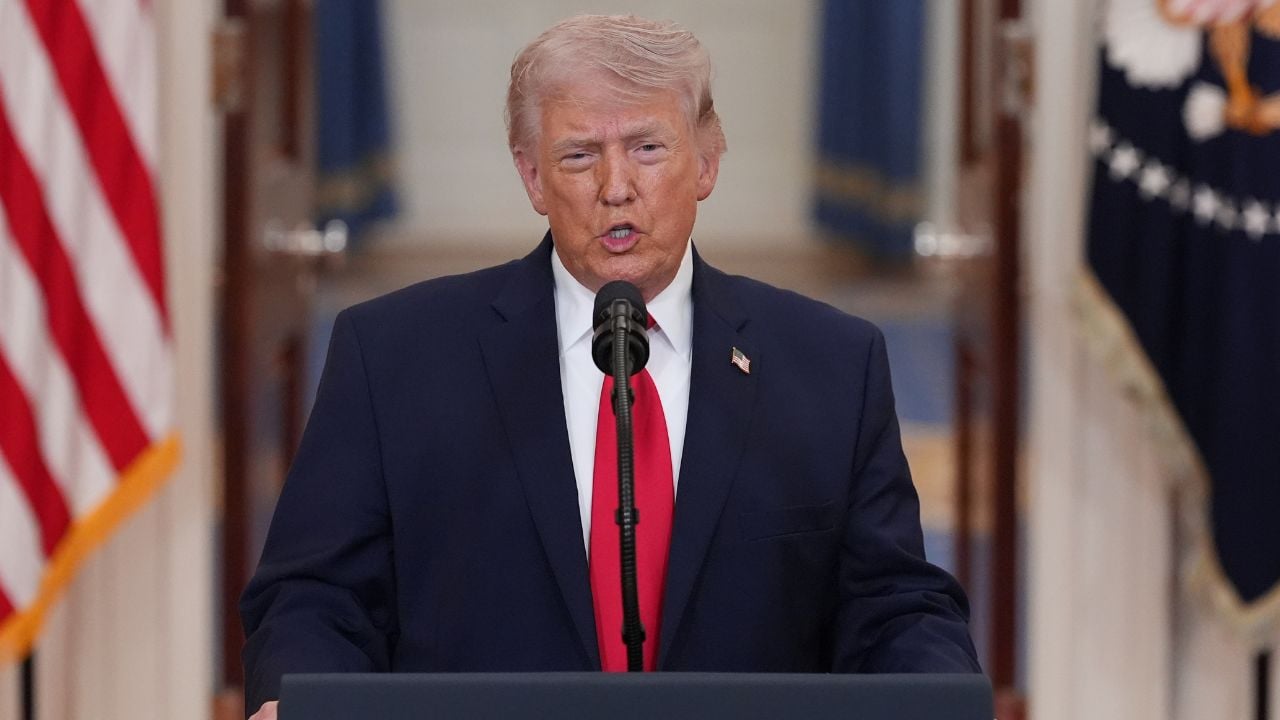
Donald Trump claims he is on the verge of stripping Iran of its "nuclear dust," but the reality on the ground suggests a far more dangerous stalemate. While the President told reporters in Washington on Thursday that Tehran has agreed to hand over its entire stockpile of enriched uranium, the Iranian foreign ministry is already signaling that the "indisputable right" to enrich remains the ultimate red line. This discrepancy is not just a matter of diplomatic framing; it is the difference between a historic breakthrough and a return to full-scale regional warfare.
The stakes could not be higher. We are currently six weeks into a conflict that began on February 28, 2026, a war that has seen joint U.S.-Israeli airstrikes battering Iranian infrastructure and a crippling naval blockade that has effectively choked the Islamic Republic’s maritime trade. Trump’s "grand bargain" is essentially an ultimatum: give up the fuel or face the total destruction of the regime’s power grid and energy sector.
The Twenty Year Gap
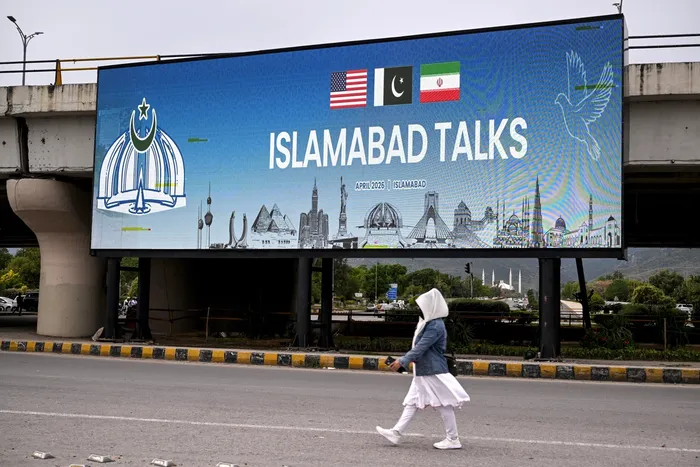
The core of the friction in the Islamabad talks, mediated by Pakistan, is a simple number. The United States is demanding a 20-year suspension of all uranium enrichment activities. Tehran has counter-offered with a five-year pause.
To a casual observer, fifteen years might seem like a negotiable middle ground. In the world of nuclear proliferation, it is an eternity. A five-year pause allows Iran to mothball its advanced centrifuges—like the IR-6 and IR-9 models—while keeping its technical expertise and specialized hardware intact. By 2031, they could theoretically flip a switch and resume their march toward a weapon. A twenty-year ban, however, is a generational death sentence for a nuclear program. It ensures that the current crop of scientists retires and the equipment becomes obsolete.
Trump’s insistence on "giving back the nuclear dust" refers to the removal of Iran’s highly enriched uranium (HEU) stockpiles. Before the February strikes, the IAEA reported Iran had enough uranium enriched to 60%—just a short technical step from weapons-grade 90%—to produce several nuclear devices. Trump wants that material physically removed from Iranian soil, likely shipped to Russia or a neutral third party, to ensure the "breakout time" for a bomb remains years, not weeks.
Diplomacy Under the Gun
This isn't the JCPOA of the Obama era. This is "Maximum Pressure" backed by active kinetic operations. Defense Secretary Pete Hegseth made the administration's position clear: the choice for Tehran is "blockade and bombs" or total capitulation on the nuclear front.
The strategy is high-risk. By boxing the Iranian leadership into a corner where they must choose between national pride and economic survival, the U.S. is betting that the regime fears its own people more than it fears Washington. Internal turmoil in Iran has been mounting since 2024, accelerated by the fall of Bashar al-Assad in Syria and the systematic dismantling of the "Axis of Resistance."
However, history shows that cornered regimes often lash out rather than fold. The Iranian military’s central command has already threatened to shut down the Strait of Hormuz entirely if the blockade continues. If that happens, the global energy market will experience a shock that makes the 1970s look like a minor market correction.
The Missing Verification
Even if Trump flies to Islamabad to sign a deal, a massive hurdle remains: the IAEA hasn't had full access to Iran's facilities since the strikes began. The Agency’s latest reports indicate that while sites like Natanz and Fordow have taken hits, the precise whereabouts of the current HEU inventory are unknown.
Iran has mastered the art of "tunneling," moving critical assets into deep underground complexes that are nearly impervious to conventional bunker-busters. If the "nuclear dust" Trump is chasing has already been moved to these black sites, any signed agreement might be nothing more than a theater of peace while the actual enrichment continues in the dark.
The Israel Factor
Prime Minister Netanyahu and his defense minister, Israel Katz, are watching these negotiations with a finger on the trigger. Israel’s objective is not a suspension of the program; it is the permanent destruction of the capability.
The White House is currently touting a 10-day truce between Israel and Lebanon, but this is a fragile peace. If Israel perceives that the U.S. is settling for a "weak" deal—one that leaves Iran with even a symbolic enrichment capacity—they may choose to act unilaterally. The Israeli leadership sees an Iranian nuclear weapon as an existential threat that no diplomatic treaty can truly mitigate.
The Bottom Line for Washington
Trump is looking for a signature win to justify a war that is becoming increasingly unpopular on Capitol Hill. The House of Representatives recently moved to curb his war-making authority, reflecting a growing weariness over the costs and the lack of a clear endgame.
The President’s rhetoric suggests he believes the deal is done. But until the first canisters of enriched uranium actually leave Iranian territory, the "nuclear dust" remains a powder keg. We are not witnessing the end of a conflict, but a high-stakes poker game where the pot is global security and the players are all-in.
The April 22 deadline for the current ceasefire is the real moment of truth. If no signatures are on paper by then, the bombs start falling again.
Washington is betting that Tehran’s hunger for survival outweighs its nuclear ambitions. It is a gamble that assumes the Iranian regime is rational, desperate, and willing to trade its ultimate deterrent for a chance to breathe. If that assumption is wrong, the "grand bargain" will be remembered as the prelude to a much larger conflagration.