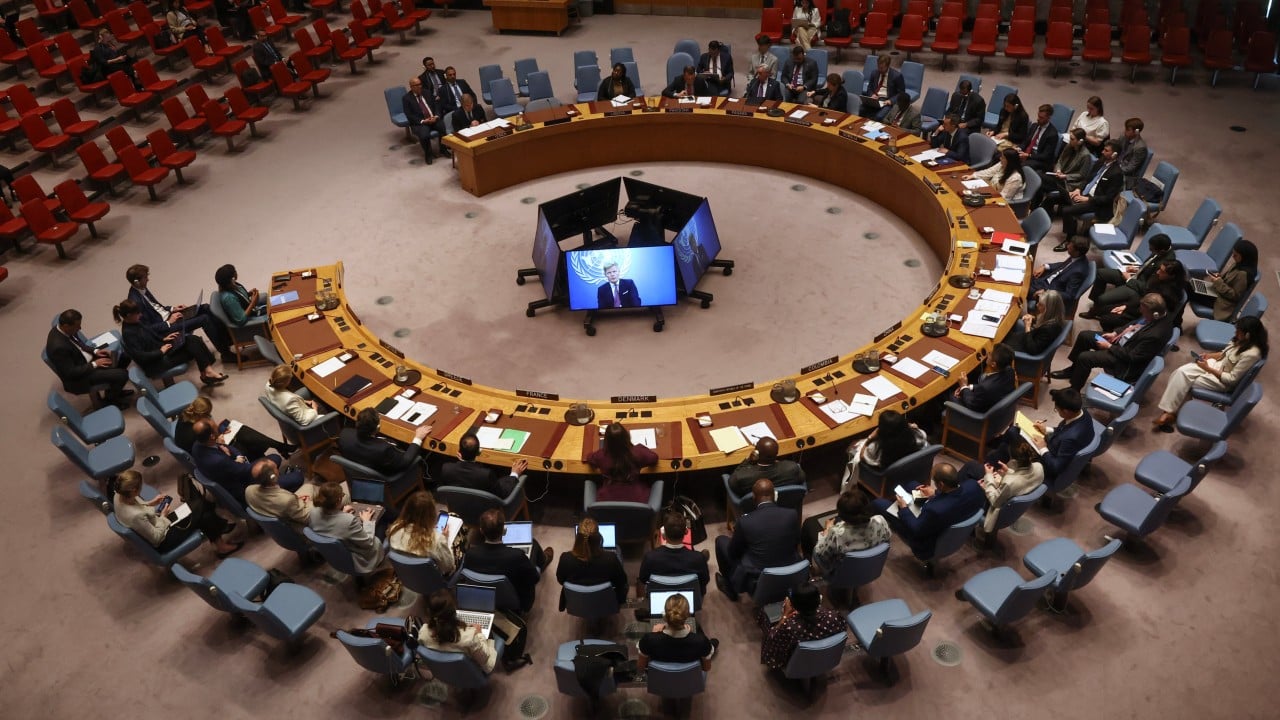
The United Nations Security Council is currently a relic of 1945 attempting to police a 2026 world that no longer recognizes its authority. This isn't just a matter of diplomatic friction; it is a systemic collapse that has left middle powers like Kazakhstan exposed and desperate for a new global architecture. President Kassym-Jomart Tokayev’s recent demands for immediate reform aren't merely rhetorical flourishes. They are a direct response to the reality that the current international order cannot even sustain a fragile Iran truce, let alone prevent the next major conflagration. The core of the problem lies in the veto power of the P5—the United States, Russia, China, France, and the UK—which has transformed the Security Council from a peacekeeping body into a theatre of permanent deadlock.
The Architecture of Paralysis
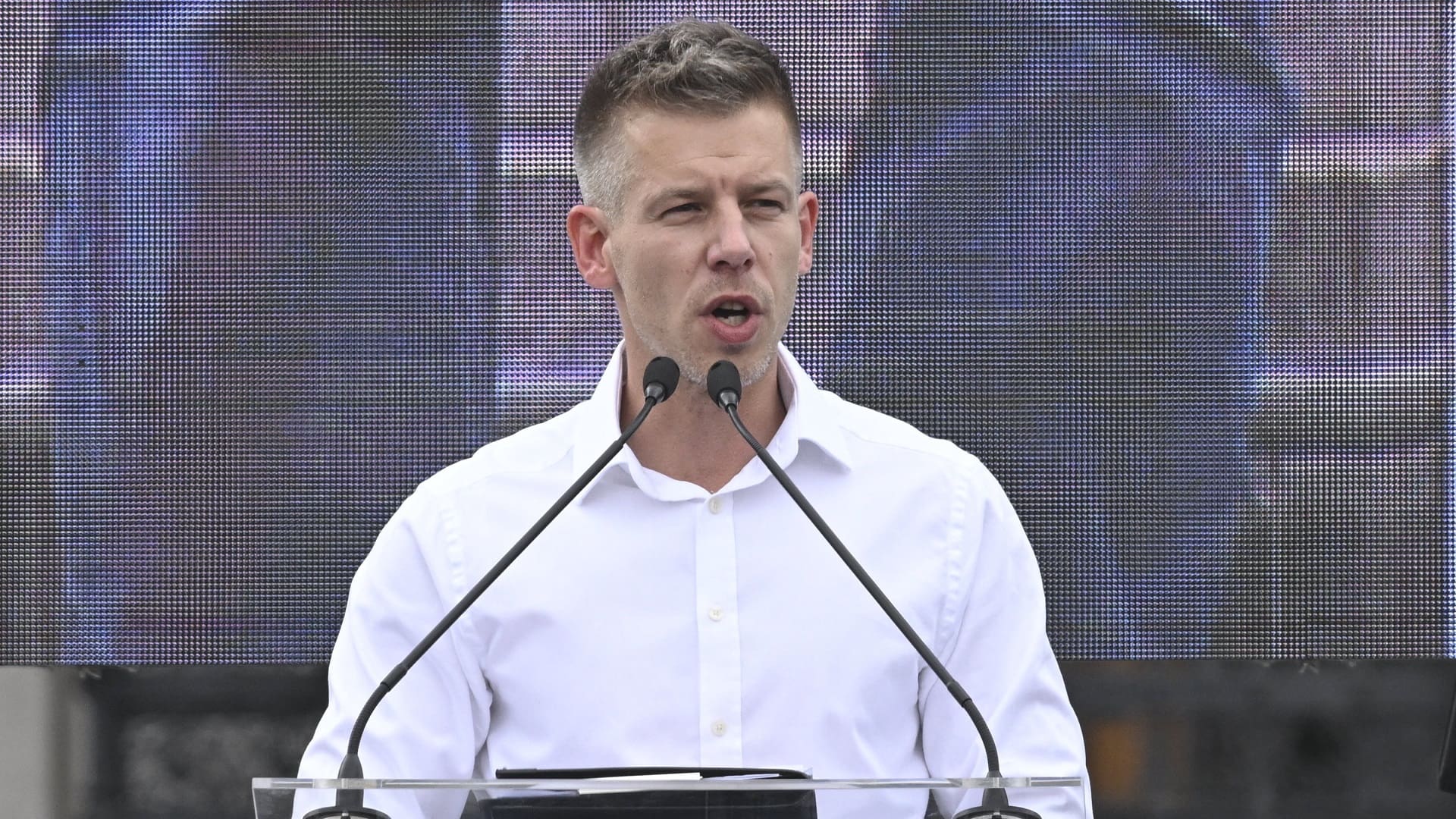
To understand why Tokayev is sounding the alarm, you have to look at the math of modern conflict. When the UN was formed, the primary goal was to prevent another world war between industrial titans. Today, the threats are asymmetrical, involving non-state actors, proxy militias in the Middle East, and cyber-warfare. The UN Charter provides no effective mechanism for these challenges when one or more of the permanent members has a vested interest in the chaos. Meanwhile, you can explore related developments here: Why Hungary Is Scrambling Over Vanishing Government Documents.
The recent instability surrounding the Iran truce serves as a perfect, grim case study. While a temporary cessation of hostilities might hold on paper, the lack of a neutral, empowered international arbiter means that every violation is met with finger-pointing rather than enforcement. Kazakhstan, situated at the crossroads of Russian influence and Chinese economic expansion, views this vacuum with justified terror. If the UN cannot maintain a basic truce in a region as vital as the Persian Gulf, it has zero hope of protecting the sovereignty of smaller nations when the interests of the giants eventually collide.
Middle Powers Step Into the Void
We are witnessing the rise of a new diplomatic tier. Countries like Kazakhstan, Turkey, and Brazil are no longer content to sit in the General Assembly and wait for instructions from the Security Council. They are starting to build their own security frameworks because the primary one has failed. To see the bigger picture, check out the recent article by The New York Times.
Tokayev’s push for "middle power" leadership is a strategic necessity. For Kazakhstan, the UN is the only legal shield against the "might makes right" philosophy that has returned to global politics. When the UN fails to reform, it doesn't just become irrelevant; it becomes dangerous. It provides a veneer of international law that the powerful use as a weapon while the weak are forced to obey.
The Veto Problem
The veto is the poison pill of the UN. It was designed to keep the big powers at the table, but it has ended up locking the door. Every major humanitarian crisis of the last decade has been exacerbated by a veto or the threat of one.
- Information Warfare: The Council cannot agree on basic facts because member states use their platforms to spread contradictory narratives.
- Economic Weaponization: Sanctions are applied inconsistently, often serving domestic political agendas rather than international peace.
- Selective Sovereignty: The UN intervenes when it is convenient for the P5 and looks away when it is not.
Kazakhstan’s proposal involves a radical expansion of the Security Council to include voices from the Global South and Central Asia. This isn't about diversity for the sake of appearances. It is about legitimacy. If the countries that represent the bulk of the world's population and emerging markets have no say in the Council’s decisions, they will simply stop following them. We are already seeing the emergence of alternative blocs—like the expanded BRICS or the Shanghai Cooperation Organisation—that are beginning to function as shadow UNs.
The Iran Variable and the Fragility of Peace
The current situation in Iran highlights the UN's impotence. A truce that relies entirely on the exhaustion of the combatants rather than a robust monitoring framework is just a pause to reload. Tokayev recognizes that without a reformed UN, there is no body capable of verifying nuclear compliance or mediating border disputes in a way that all parties trust.
The diplomatic community often speaks of "stability" as a static state. It isn't. Stability is an active process that requires constant maintenance. In the Middle East, the UN has become a bystander. When Kazakh diplomats talk about UN reform, they are specifically looking at the lack of enforcement mechanisms. They see a world where international law is becoming a suggestion.
The Cost of Inaction
What happens if Tokayev is ignored? The answer is already visible in the increasing frequency of "gray zone" conflicts. These are wars that are fought through proxies, cyber-attacks, and economic sabotage—methods that bypass the UN's traditional definitions of aggression.
For an industry analyst, the risks are quantifiable. Global supply chains cannot function in a world where the primary international arbiter is broken. The cost of shipping, insurance, and energy fluctuates wildly based on the latest failed resolution in New York. If the UN cannot guarantee the safety of international waters or the sanctity of borders, the global economy will continue to fracture into isolated, protected trading blocs. This isn't a hypothetical future; it is the current trajectory.
The Kazakh Strategy
Kazakhstan is playing a sophisticated game. By positioning itself as the voice of the "sensible middle," it is trying to shame the P5 into concessions. This involves a heavy emphasis on "multi-vector diplomacy"—maintaining ties with Washington, Moscow, and Beijing simultaneously. However, this balancing act only works if there is a rules-based order to balance against.
The Kazakh leadership knows that if the UN collapses, they will be forced to choose a side. That is a choice they want to avoid at all costs. Their survival depends on a world where a small or medium-sized nation can appeal to a higher authority that actually has the teeth to act.
Structural Obstacles to Change
The irony of UN reform is that the very rules that need changing require the approval of those who benefit from them. The P5 are unlikely to vote away their own supremacy. This creates a circular logic of failure.
- The US is hesitant to empower a body that might challenge its strategic interests.
- Russia and China view reform as a Western ploy to dilute their influence.
- The UK and France cling to their permanent seats as the last vestiges of their former global status.
This gridlock is why Tokayev’s rhetoric has taken on such a sharp, urgent edge. He isn't just asking for a seat at the table; he is warning that the table is about to break.
The New Reality of Global Diplomacy
The era of the "Grand Bargain" is over. We have entered a period of tactical, short-term alliances. When a state like Kazakhstan calls for UN reform, they are essentially asking for a return to a predictable world. But the P5 have found that unpredictability serves their immediate interests.
The Iran truce is a symptom of this wider rot. It was brokered largely outside the traditional UN framework, signaling that the organization is already being bypassed. If the UN wants to regain its position, it must move beyond being a debating society. It needs to decentralize power and move away from the obsession with the P5's consensus.
The reality is that the UN will not reform until a crisis occurs that is so massive it threatens the P5 themselves. Until then, leaders like Tokayev will continue to speak to an empty room, while the rest of the world prepares for a future where the only law is the one you can enforce yourself. The window for a peaceful transition to a new international order is closing. The truce in Iran is not a sign of success; it is a stay of execution for a system that has forgotten how to lead.
Stop looking at the UN as a solution. It has become the primary obstacle to the very peace it was designed to protect. If the international community cannot find a way to strip the P5 of their absolute veto and incorporate the rising powers of the 21st century, the organization will simply wither away, leaving a vacuum that will be filled by something far more volatile. The choice is no longer between reform and the status quo; it is between reform and total irrelevance.