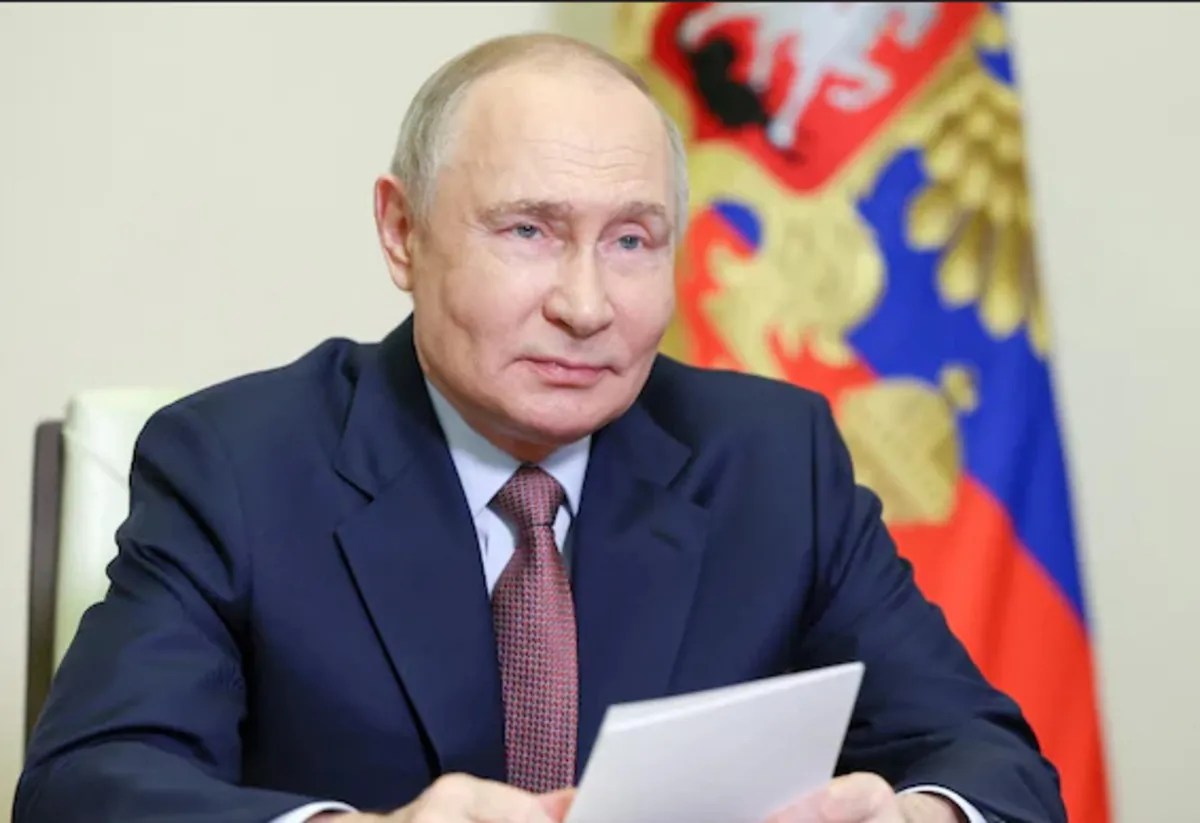
The Western media is obsessed with concrete. They want to know if Vladimir Putin is six stories underground in a Ural Mountain facility or hiding behind the gold-leafed curtains of the Kremlin. They track the "Bunker Train." They analyze the shadows in his video addresses. They look for the physical walls of a cage.
They are looking at the wrong map.
The Kremlin’s recent video release, intended to "debunk" claims of a bunkered president, is a masterclass in misdirection that both the West and the Russian public swallowed whole. Whether Putin is physically in a bunker is irrelevant. What matters is that he has successfully bunkered the entire Russian information architecture. The debate over his physical location is a relic of 20th-century geopolitical analysis. It assumes that power is tied to a specific GPS coordinate.
It isn't. Not anymore.
The Physicality Fallacy
I have spent years watching analysts waste time on "Kremlyology," trying to guess health status from the grip on a table or the height of a ceiling. This focus on the physical shell of leadership is a comfort blanket for the West. If we can pin him to a bunker, we can convince ourselves he is scared, isolated, and losing touch.
The reality is far more clinical. Putin’s "bunker" isn't a hole in the ground; it is a proprietary, air-gapped data environment. In a world of signals intelligence and satellite surveillance, every world leader lives in a functional bunker. The White House Situation Room is a bunker. Chequers is a bunker. The difference is that Putin has extended this isolation to the very logic of his governance.
The obsession with his physical presence misses the point of modern power. Power is the ability to dictate reality to 140 million people while being invisible. Whether he is sitting in Novo-Ogaryovo or a sub-basement in Sochi, the output is the same: a tightly controlled stream of digital artifacts. The video the Kremlin shared wasn't proof of presence; it was proof of production.
The "Green Screen" Distraction
Western tabloids love the green screen theory. They claim every video of Putin meeting with "ordinary citizens" or sitting in a high-tech office is a digital composite. This theory is lazy. It assumes the Kremlin is incompetent enough to leave artifacts but clever enough to fake a presidency.
The truth is more unsettling. Putin doesn't need a green screen because he owns the reality on both sides of the lens. The people he meets are vetted, the questions are scripted, and the lighting is perfected to convey a specific brand of "stolid stability."
When you argue about whether a video is fake, you have already lost. You are engaging with the Kremlin’s chosen battlefield. You are debating the medium rather than the message. The message is that the State is functioning, the gears are turning, and the Tsar is at the helm. By focusing on the pixels, the West ignores the policy.
The Myth of the Isolated Dictator
There is a dangerous consensus that an isolated leader is a weak leader. We tell ourselves that because Putin doesn't use a smartphone and reportedly receives his briefings in physical red folders, he is "out of touch."
This is a massive cope.
Isolation is a deliberate strategy of information hygiene. By removing the noise of the global internet, Putin protects himself from the very "chaos" he tries to sow in the West. He isn't "out of touch" in the way a grandfather is confused by a remote control; he is insulated.
The Cost of Digital Insulation
- Advantage: Total immunity to social media sentiment and viral misinformation campaigns.
- Advantage: A singular, filtered stream of intelligence that reinforces a specific worldview.
- Disadvantage: The "Echo Chamber Effect" where subordinates only report what the leader wants to hear.
The West views the "Echo Chamber" as a fatal flaw. I’ve seen boards of directors collapse because they refused to hear bad news. But in an autocracy, the echo chamber is a feature, not a bug. It ensures absolute alignment. It doesn't matter if the data is wrong if the entire apparatus acts as if it is right.
Stop Asking "Where is He?"
The "People Also Ask" sections of search engines are filled with queries like "Where does Putin live?" and "Is Putin in a bunker?" These are the wrong questions. They seek a physical solution to a psychological and systemic problem.
The correct question is: "How does the Russian state maintain its command structure regardless of Putin's location?"
The answer lies in the Veritikal Vlasti—the Vertical of Power. This isn't a physical structure. It is a series of redundant loyalties and digital protocols. Putin could be on the moon, and as long as the encrypted lines to the FSB and the Ministry of Defense hold, the "bunker" is operational.
The Sovereign Internet is the Real Bunker
While the media was busy looking for secret tunnels, Russia was building the "RuNet"—a sovereign internet designed to be disconnected from the global web at a moment’s notice. This is the ultimate bunker.
If you can cut your population off from the global flow of information, you don't need to hide in a hole. You have turned the entire country into a fortified enclosure. The Kremlin's videos aren't meant to convince you that he's in a fancy office. They are meant to signal to the internal Russian elite that the walls are secure.
The Strategy of Strategic Ambiguity
The Kremlin loves the bunker rumors. Why would they stop them? They create an aura of mystery and invincibility. They make the leader seem like a James Bond villain, occupying a space that is everywhere and nowhere.
Every time a Western news outlet runs a "Where is Putin?" headline, they are doing the Kremlin's PR work. They are framing him as the protagonist of a global thriller. They are feeding the myth of the "Grand Strategist" who is always three steps ahead, even when he’s literally just sitting in a dacha outside Moscow.
The video they released to "dismiss" the claims was a calculated move to reset the narrative. It wasn't about transparency; it was about reclaiming the clock. It says: "We will show you what we want, when we want, and you will spend the next 48 hours analyzing the wood grain on the desk."
The Pivot from Physical to Protocol
The future of autocracy isn't deep underground. It's in the cloud. It’s in the algorithms that suppress dissent before it reaches the street. It’s in the facial recognition cameras that line the streets of Moscow, creating a "bunker" for the citizens where every move is monitored.
Putin's physical location is a 20th-century obsession. In the 21st century, power is about who controls the digital gatekeepers. The Kremlin isn't hiding from the West; it is laughing at the West’s inability to look past the physical facade.
We are so busy looking for a man in a basement that we haven't noticed the entire state has moved into a digital fortress. The walls are made of code, the guards are bots, and the door is locked from the inside.
Quit looking for the bunker. You’re already standing in the shadows it casts.