Beijing has stopped pretending that sheer physical output can keep its economy afloat. The new mandate is a forced marriage between industrial software and heavy industry, a US$14 trillion gamble designed to plug the holes in a supply chain that remains dangerously dependent on Western logic. For decades, China was the world’s workbench, happy to assemble the world’s gadgets using German design tools and American operating systems. Those days are over. The current push to "fuse" bits and atoms isn't just an upgrade. It is a survival strategy.
The core of this plan involves the mass adoption of Industrial Internet of Things (IIoT) and Computer-Aided Design (CAD) systems built domestically. By 2025, the Ministry of Industry and Information Technology (MIIT) expects the vast majority of large-scale manufacturers to have digitized their entire production flow. This isn't about adding a few sensors to a factory floor. It is a top-down overhaul of how value is created, moving from low-margin assembly to high-margin intellectual property. Also making waves lately: The Digital Ghost of Maricopa County.
The Chokepoint Problem
Manufacturing is no longer about who has the cheapest labor. It’s about who owns the software that tells the machines what to do. China currently faces a "silent embargo" in the form of high-end industrial software licenses. If companies like Siemens, Dassault Systèmes, or Autodesk were to pull their support tomorrow, Chinese aerospace, automotive, and semiconductor industries would grind to a halt within weeks.
This dependency is the "weak link" the central government is obsessed with fixing. While China can build a high-speed rail network in record time, it still struggles to produce the underlying Product Lifecycle Management (PLM) software that manages the complexity of such projects. The $14 trillion figure being discussed represents the total projected value of the "digital economy" integrated with traditional manufacturing, a scale that dwarfs the GDP of most developed nations. Additional insights on this are covered by Gizmodo.
The strategy is clear. Use the massive internal market to bankroll domestic software firms until they are sophisticated enough to replace Western incumbents. It is a brute-force approach to innovation.
Steel Meets Silicon
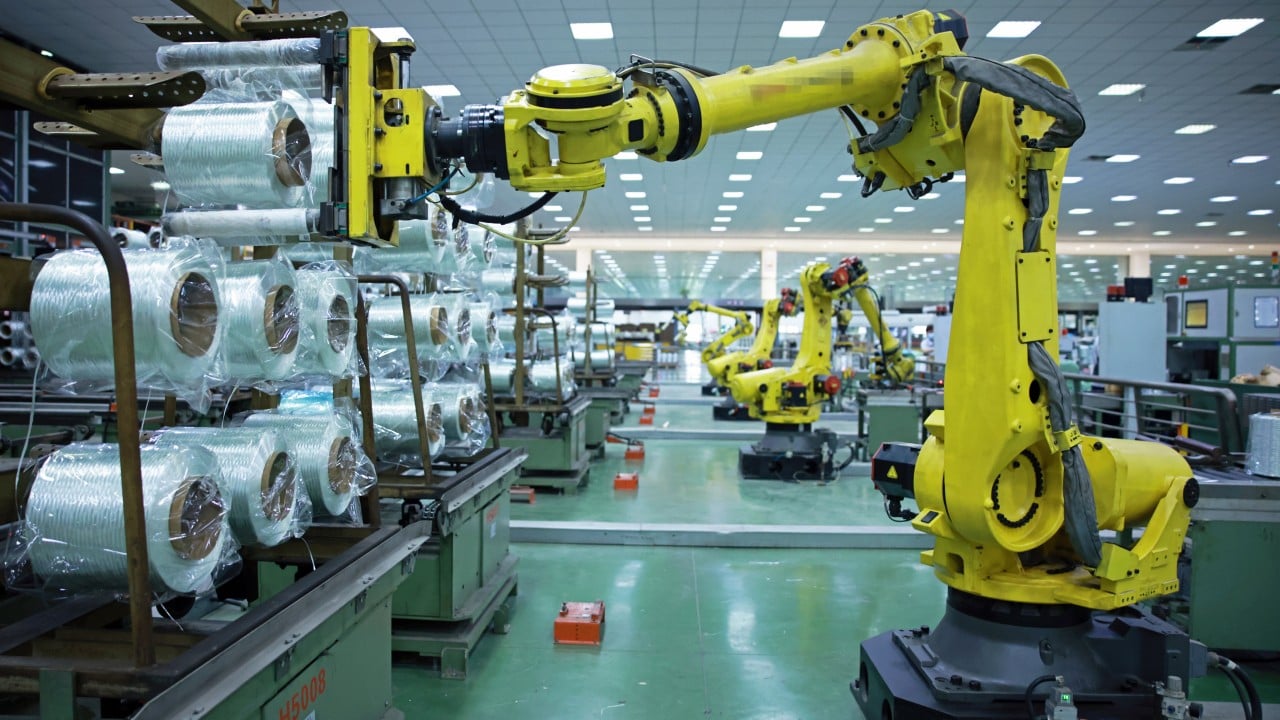
To understand the scale, look at the "Lighthouse Factories" popping up across the Pearl River Delta. These aren't the sweatshops of the 1990s. They are automated, data-driven environments where digital twins simulate every movement of a robotic arm before it ever touches a piece of metal.
By creating a digital replica of a physical asset, engineers can predict failures before they happen. This reduces downtime and saves billions in maintenance costs. For a country facing a shrinking workforce and rising wages, automation is the only way to remain competitive. The integration of Enterprise Resource Planning (ERP) with real-time shop floor data allows for "mass customization." A factory can switch from making blue shirts to red jackets without stopping the assembly line, driven entirely by software algorithms.
However, the transition is messy. Small and medium-sized enterprises (SMEs) are the backbone of Chinese manufacturing, and most of them lack the capital to digitize. They are being dragged into the future via government subsidies and "industrial clusters" where they share access to expensive cloud-computing resources.
The Sovereignty of the Source Code
Washington’s tightening grip on high-end chips has taught Beijing that hardware is a liability if you don't control the software instructions. The push for "industrial software autonomy" is now a matter of national security.
- Operating Systems: Developing domestic alternatives to Windows and Linux for industrial controllers.
- Database Management: Moving away from Oracle and toward homegrown distributed databases.
- Design Tools: Incentivizing engineering firms to switch from AutoCAD to Chinese-made equivalents.
This isn't just about trade. It's about data sovereignty. In a fully connected factory, every click and every vibration is recorded. If that data sits on a server in California or Munich, the Chinese state views it as a vulnerability. By "fusing" software and steel locally, they ensure the data stays within their borders, feeding their own domestic AI models and optimization loops.
The Human Cost of Efficiency
We often talk about these shifts in terms of trillions of dollars, but the shop floor reality is starker. As software takes over the decision-making process, the role of the traditional worker is being erased. The "fusion" requires a different kind of laborer—someone who understands Python as well as they understand hydraulic pressure.
There is a massive skills gap. China is churning out millions of graduates, but many lack the hands-on technical expertise required for advanced smart manufacturing. The government is attempting to pivot the education system toward vocational training, but cultural stigmas against "factory work" persist, even when that work involves sitting at a computer terminal in a cleanroom.
Hidden Risks in the Digital Vault
The biggest threat to this $14 trillion ambition isn't foreign interference; it's internal fragmentation. China's industrial landscape is a patchwork of competing provincial interests and proprietary standards.
If a factory in Jiangsu uses one software standard and a supplier in Guangdong uses another, the "fusion" fails. The government is trying to force a unified national standard, but history shows that top-down mandates often lead to "ghost" projects—software that is purchased to meet a quota but never actually used to improve productivity.
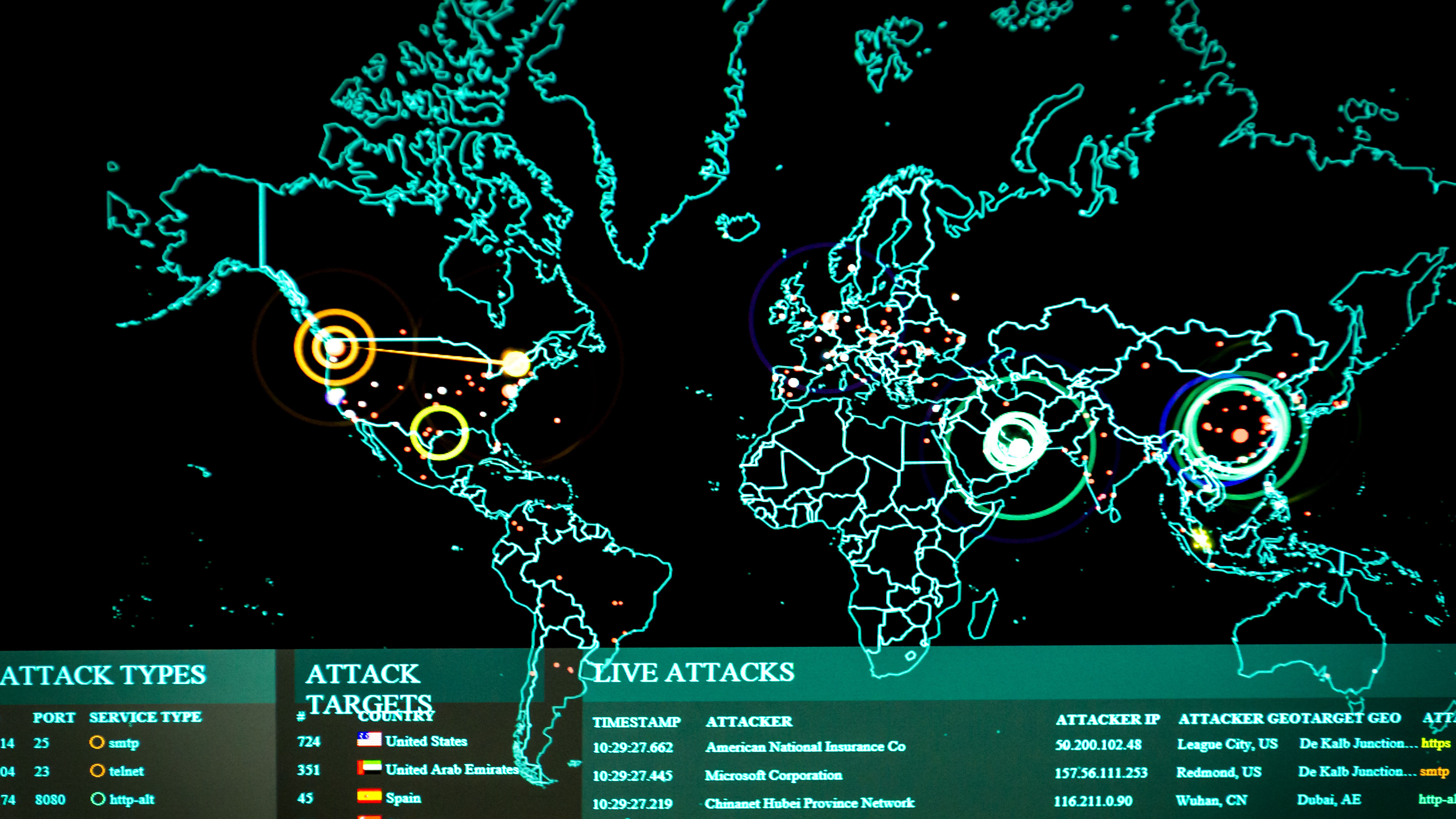
Furthermore, the cybersecurity risks are astronomical. A traditional steel mill is hard to "hack." A software-defined steel mill is a target. As China moves its entire industrial base onto the cloud, it creates a massive attack surface. A single vulnerability in a widely used industrial operating system could theoretically freeze the country's manufacturing output overnight.
The Global Ripple Effect
If China succeeds in this transition, the global trade dynamic shifts permanently. The West has long relied on China for the "dumb" work of manufacturing while keeping the "smart" design work for itself. If China masters the software layer, it no longer needs the West for anything.
This would lead to a "de-coupling" that is much deeper than just tariffs and trade wars. We are looking at two entirely different technological ecosystems that cannot speak to each other. One built on Western open-source and proprietary standards, and another built on a closed, state-monitored Chinese stack.
For global companies, the choice will be binary. You either adopt Chinese industrial standards to play in their market, or you stay out. There is no middle ground in a world where software defines the physical reality of production.
Why the $14 Trillion Number Matters
Critics argue the US$14 trillion figure is inflated, a mix of actual investment and projected economic activity. They aren't entirely wrong. Much of this value is "on paper," representing the theoretical gains from increased efficiency and new service-based business models.
But even if only half of that value is realized, it represents a seismic shift. The goal isn't just to make things better; it's to make them differently. By embedding software into the very fabric of the manufacturing process, China is attempting to create an "agile" industrial base that can pivot to new technologies—like hydrogen fuel cells or solid-state batteries—faster than any other nation.
The fusion of software and steel is the final stage of China's industrial evolution. It is a move from being the world’s hands to being the world’s brain. Whether the software is actually good enough to handle the complexity of modern global supply chains remains the multi-trillion dollar question.
The real test will come during the next global economic downturn. In the past, China would simply build more infrastructure to stimulate growth. This time, they are betting that a more efficient, software-driven factory can innovate its way out of a crisis. If the code holds, the global manufacturing map will be rewritten in Beijing's image. If it fails, the "world's factory" will find itself stuck with a lot of expensive, idle hardware and no way to turn it back on.
Stop looking at the export numbers and start looking at the code repositories. That is where the real war is being fought.