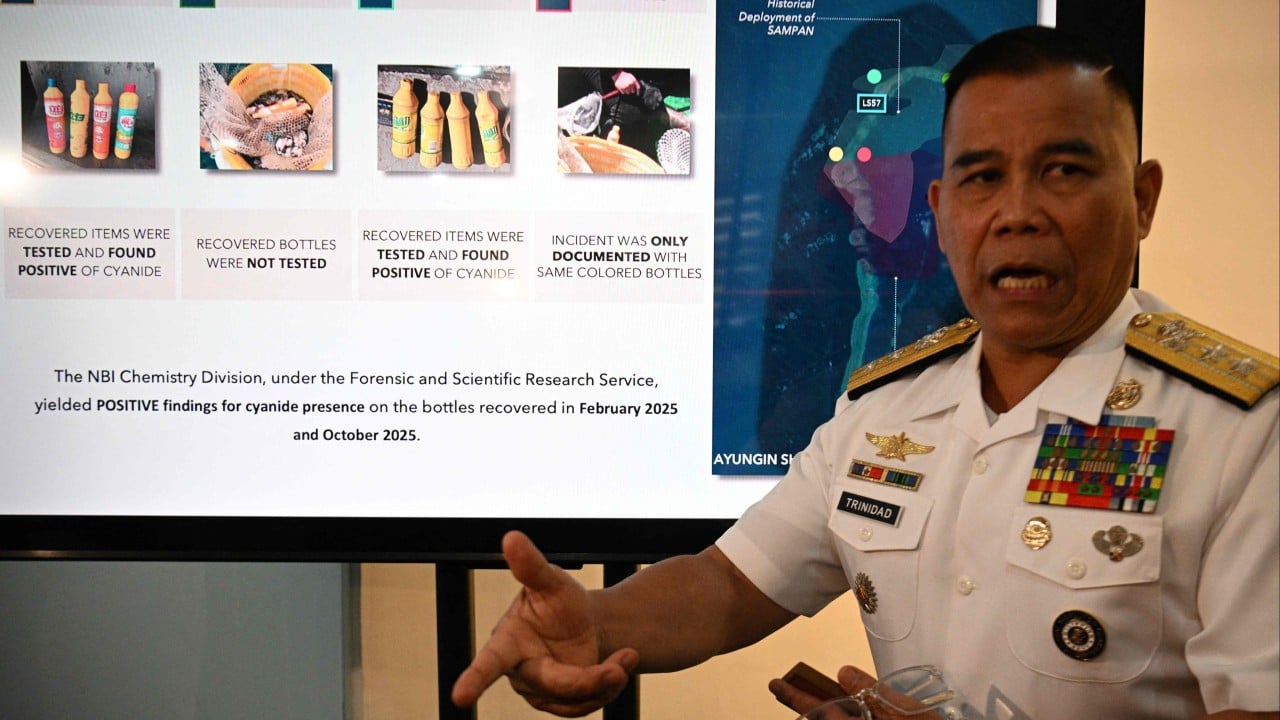
The maritime spat between Manila and Beijing just hit a new level of toxic. It’s not just about water cannons and laser pointers anymore. Now, we’re talking about the literal destruction of the seabed. The Philippine Bureau of Fisheries and Aquatic Resources (BFAR) recently dropped a bombshell, accusing Chinese fishermen of using cyanide to destroy the reef at Scarborough Shoal, or Bajo de Masinloc. China’s response was predictable. They called the evidence "staged." Honestly, it’s a classic deflection tactic we’ve seen for years.
The Philippine government isn't backing down. They’ve rejected Beijing's denial as baseless. If you’ve been following the South China Sea saga, you know this isn't just a minor disagreement over fishing rights. It’s an ecological war. Using cyanide to catch fish is a scorched-earth policy. It kills the coral, kills the larvae, and ensures that nothing grows back for decades. For China to suggest the Philippines would fake this kind of environmental suicide is a massive stretch of the imagination.
The evidence on the ground at Scarborough Shoal
When BFAR officials conducted their inspections, they didn't just find a few empty bottles. They found a graveyard. Divers reported clear signs of intentional reef destruction in areas frequently occupied by the Chinese maritime militia. Cyanide fishing involves squirt bottles filled with sodium cyanide. The goal is to stun high-value fish for the live reef food fish trade. It’s fast. It’s efficient. It’s also incredibly illegal under international law and Philippine domestic law.
The Philippine Coast Guard (PCG) and BFAR have been documenting these changes. They’ve seen the transition from vibrant coral systems to bleached, skeletal remains. This isn't just natural degradation. The patterns of death follow the paths of the Chinese vessels. When the Philippines presented this, China’s foreign ministry spokesperson Mao Ning dismissed it as a "political circus." But dead reefs don't lie. Scientists from the University of the Philippines Marine Science Institute have long warned that the biodiversity in this region is at a breaking point.
Why China claims the Philippines is faking it
Beijing’s strategy is simple. If you can’t disprove the science, attack the messenger. By claiming the evidence was "staged," China is trying to paint the Philippines as a puppet of Western interests, specifically the United States. They want the global community to think Manila is fabricating a crisis to justify a larger military presence. It’s a gaslighting move.
Think about the logistics of "staging" cyanide damage. You’d have to transport thousands of gallons of chemicals, kill off your own territorial resources, and somehow do it all while Chinese Coast Guard ships are watching your every move with high-powered cameras and drones. It makes no sense. Why would the Philippines destroy the very fishing grounds their local communities depend on? Filipino fishermen from Pangasinan and Zambales are the ones losing their livelihoods here. They aren't in on some grand conspiracy. They’re just trying to find enough fish to feed their families.
The environmental cost of the maritime militia
The Chinese maritime militia operates in a gray zone. They aren't officially "military," but they act under the direction of the People’s Liberation Army. These "fishermen" often don’t even bother to fish. Their job is to sit there and occupy space. However, when they do fish, they use the most destructive methods available.
Beyond cyanide, we’ve seen massive scarring from giant clam harvesting. This involves using boat propellers to churn up the reef to find high-value shells. It leaves giant circular scars on the ocean floor that you can see from space. The cyanide claims are just the latest chapter in a long history of environmental neglect. The 2016 Permanent Court of Arbitration ruling already called out China for its failure to prevent environmental harm in these waters. Beijing ignored that ruling then, and they’re ignoring the reality of the situation now.
Real impact on Filipino fishing communities
I’ve talked to people who have spent their lives on these waters. They describe a sea that is becoming a desert. Ten years ago, a single trip to Scarborough Shoal could sustain a family for months. Now, they’re lucky to come back with enough to cover the cost of fuel.
- Fishermen report seeing Chinese vessels dumping chemicals directly into the water.
- The catch size has plummeted by nearly 70% in some specific areas near the shoal.
- Local divers are reporting skin rashes and respiratory issues after swimming in areas recently occupied by foreign fleets.
The Philippines is currently considering a formal legal complaint before an international tribunal regarding this environmental destruction. This isn't just about sovereignty. It's about the right to a healthy environment. If the reefs die, the entire ecosystem of the South China Sea collapses. That affects everyone, including China. But the short-term greed of the militia seems to outweigh long-term survival.
Geopolitical chess and the transparency strategy
The Marcos administration has shifted the game. They’ve adopted a "transparency strategy." They bring journalists along on resupply missions. They release high-definition drone footage of every encounter. This is what's driving China crazy. In the past, these incidents happened in the dark. Now, the whole world sees the water cannons in 4K.
By calling the cyanide evidence "staged," China is trying to undermine this transparency. They want to create enough doubt so that neutral countries stop paying attention. It’s the "fake news" defense applied to international relations. But the Philippines has invited international observers to see the damage. Manila isn't hiding anything. They want the world to look at the reef. China, on the other hand, blocks any independent investigation. If they have nothing to hide, they’d let a neutral third-party scientific team into the shoal to test the water and the coral. They won't.
Taking the next steps for maritime protection
The Philippines needs to move beyond just verbal rejections. Documents and videos are a start, but legal action is the only thing that carries weight in the international community. The Department of Justice is already working with the Office of the Solicitor General to build a case. This case should focus on the violation of the United Nations Convention on the Law of the Sea (UNCLOS), specifically the parts regarding the protection of the marine environment.
You can help by staying informed and supporting organizations that monitor maritime health. Watch the reports from the PCG and BFAR closely. Don't let the "staged" narrative take root without looking at the actual data. If you're a consumer, ask where your seafood comes from. Avoiding the live reef food fish trade—which often relies on cyanide-caught fish—is a direct way to hit the profit margins of those destroying these reefs. The battle for the South China Sea is being fought in the water, but the battle for the truth is happening in the news cycle. Don't let the noise drown out the reality of a dying ocean.
Keep a close eye on the upcoming reports from the Department of Environment and Natural Resources (DENR). They’re expected to release a comprehensive mapping of the damage soon. That data will be the final word in this argument. If the chemical signatures of cyanide are found in the coral tissue samples, China's "staged" theory will fall apart completely. Manila isn't just fighting for rocks and water; they're fighting for the future of the regional food supply. That's a fight worth winning.