The headlines are breathless. They read like the script of a B-grade disaster movie. "Missiles near Chornobyl." "The risk of a major accident." "Nuclear catastrophe." The media loves a nuclear bogeyman because it sells. It taps into the deepest, most irrational fears embedded in the collective psyche since the Cold War. It is the perfect narrative tool: easy to sell, hard to disprove, and guaranteed to stop critical thinking dead in its tracks.
Here is the truth: The panic regarding Russian missiles flying near the Chornobyl exclusion zone is pure, unadulterated theater.
It is time to strip away the hysteria and look at the physical reality of the site, the engineering behind modern containment, and the political games being played with your anxiety. The narrative of an imminent, missile-induced meltdown is a fabrication that serves specific geopolitical ends. It is not based on physics, it is not based on engineering, and it is certainly not based on a sober assessment of risk.
The Architecture of False Fear
To understand why the missile scare is nonsense, you have to understand what the Chornobyl site actually is today. It is not the open, glowing wound of 1986. It is not a pile of unstable graphite waiting for a spark.
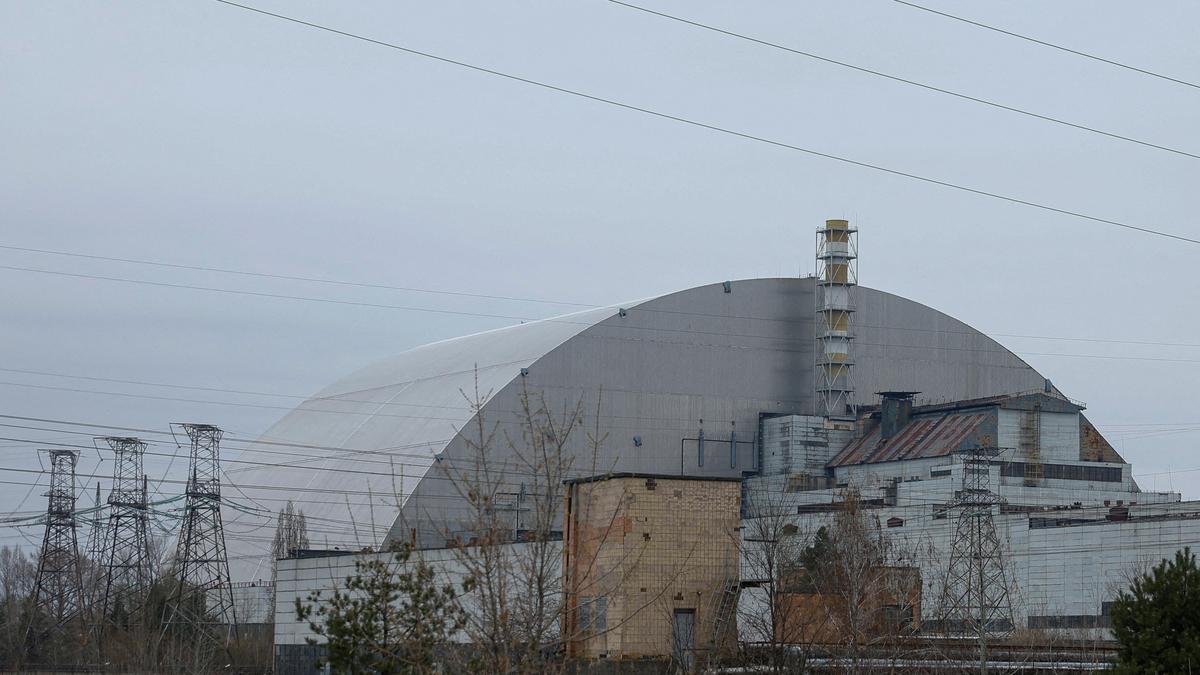
In 2016, the New Safe Confinement (NSC) structure was slid into place. This is not a shed. This is a massive, engineered fortress. We are talking about 25,000 tons of steel, a specialized ventilation system, and a shell designed to withstand everything from extreme weather events to a direct plane crash.
When you hear reporters hyperventilating about a cruise missile flying "near" the site, ask yourself what they think that missile is going to do. Are they imagining the missile strikes the sarcophagus, pierces the multi-layered steel and concrete, and somehow forces a re-criticality event?
That is not how radiation works. That is not how nuclear reactors function.
Even in a hypothetical scenario where a cruise missile—typically carrying a conventional warhead designed for kinetic impact—strikes the NSC, the result would be localized structural damage, not a radioactive plume engulfing Europe. The reactor core, what remains of it, is a solidified, degraded mass of corium. It is not sitting there like a loaded gun. It is dead. It is entombed. It needs a massive, sustained, and specific injection of energy and chemical instability to cause a release on the scale of the original accident. A cruise missile does not have the payload to turn that tomb into a fountain of fallout.
Physics Beats Propaganda
The people shouting the loudest about the "risk of a major accident" are relying on your scientific illiteracy. They assume that if you hear the word "Chornobyl" and "missile" in the same sentence, you will stop asking questions.
Let’s apply some basic physics. A cruise missile is a precision weapon. It is designed to navigate terrain and strike a specific target. The Russian military, for all its documented failures in this conflict, is not in the business of nuking itself. The fallout from a significant disruption of the Chornobyl site would drift across the border into Belarus and Russia just as easily as it would drift west.
Beyond that, the strategic value of the site is zero. It is a tourist attraction and a scientific graveyard. There is no military objective to be gained by targeting it. When missiles fly near it, they are doing so because of the geography of the flight path, not because someone is aiming for the reactor.
The media insists on framing these flyovers as "nuclear signaling" or "reckless endangerment." It is a convenient framing. It allows them to paint the adversary as a cartoon villain intent on global annihilation. The reality is far more mundane: military planners choose flight paths that avoid heavy air defense batteries. If the Chornobyl zone happens to be a "blind spot" or a corridor with less radar coverage, that is where the missiles go. It is navigation, not malice.
The Real Threat Is Bureaucracy
If you want to talk about real risks at Chornobyl, stop looking at the sky and look at the administration of the site itself. The true danger to the containment of nuclear waste is not the external kinetic threat; it is internal decay and administrative failure.
I have spent time analyzing large-scale infrastructure projects, and I know exactly what happens when attention shifts away from maintenance. The NSC requires constant monitoring. It requires power to run its ventilation and sensors. It requires a dedicated, experienced workforce that is paid on time and kept safe.
When you turn a nuclear site into a frontline news story, you distract from the boring, grindy work of maintenance. You create an environment where international funding and oversight become chaotic. The actual risk at Chornobyl is not a missile hitting the roof. The risk is a power failure due to grid instability, the degradation of the ventilation systems that keep the dust from becoming airborne, and the loss of the technical staff who actually know how to run the place.
The hysteria over missiles is a distraction from the slow-motion decay that occurs when a site of such complexity is treated like a pawn in a geopolitical argument. Every minute spent worrying about a missile flyover is a minute stolen from the logistical requirements of keeping that site stable for the next hundred years.
Nuclear Exceptionalism as a Weapon
Why is this narrative so sticky? Because of "nuclear exceptionalism." We have been conditioned to believe that anything involving a nuclear reactor exists outside the laws of logic. We treat the word "radiation" as a magic spell that instantly renders any rational discussion moot.
This is a specific form of intellectual laziness. By treating Chornobyl as an untouchable, terrifying sacred site, we allow politicians to use it to control airspace and demand international intervention.
Think about the incentives. If you are a government official, how do you get the world to care about your airspace violations? You don't talk about the tactical reality of the conflict. You scream "Chornobyl." You create a scenario where the world feels the heat of a potential nuclear catastrophe. It is an effective tactic for securing international support and creating pressure on the adversary.
But it comes at a cost. It feeds the cycle of panic. It teaches the public that every time a missile flies over, they should prepare for an apocalypse. It creates a populace that is reactive rather than informed.
Challenging the Experts
You will see "experts" cited in mainstream pieces claiming that the situation is "unprecedented." They will talk about "unknown variables." They will use vague language about "potential consequences."
Demand specifics. Ask these experts for the exact mechanism of a radiological release. If they cannot describe the chain of events—from impact to containment breach to atmospheric dispersal—they are not giving you analysis; they are giving you a sales pitch for fear.
The reality is that we have data on what happens when heavy ordinance impacts nuclear structures. We have decades of research on containment systems. A missile strike would be a massive security breach, yes. It would be a violation of international norms, certainly. But it would not be a nuclear catastrophe.
To suggest otherwise is to ignore the actual engineering specifications of the site. It is to pretend that the billions of dollars spent on the NSC were wasted on a structure that can be defeated by a single cruise missile. That is an insult to the engineers who built it.
The Misdirection
The media is not trying to inform you; they are trying to keep you engaged. Fear is the most effective engagement tool in the book. If they told you the truth—that the site is stable, the missiles are just navigation, and the real threat is boring bureaucratic neglect—you would stop clicking. You would move on to the next story.
But if they convince you that you are one errant missile away from a new Chornobyl, they have you. You will come back for the updates. You will share the articles. You will participate in the communal anxiety.
Do not be the pawn in this game.
The missiles in the sky are not the problem. The problem is the information you are being fed. You are being conditioned to accept a narrative that ignores physics, discards engineering reality, and serves a political agenda of fear.
Stop watching the sky for the radioactive plume that isn't coming. Start looking at the structural, administrative, and logistical reality of our energy infrastructure. That is where the real story is. That is where the work needs to be done. Everything else is just noise designed to keep you in the dark.
The sarcophagus stands. The world is not ending. Turn off the television, ignore the alarmist headlines, and look at the facts. You might find that the terror you were sold is nothing more than a ghost story told in the light of day.