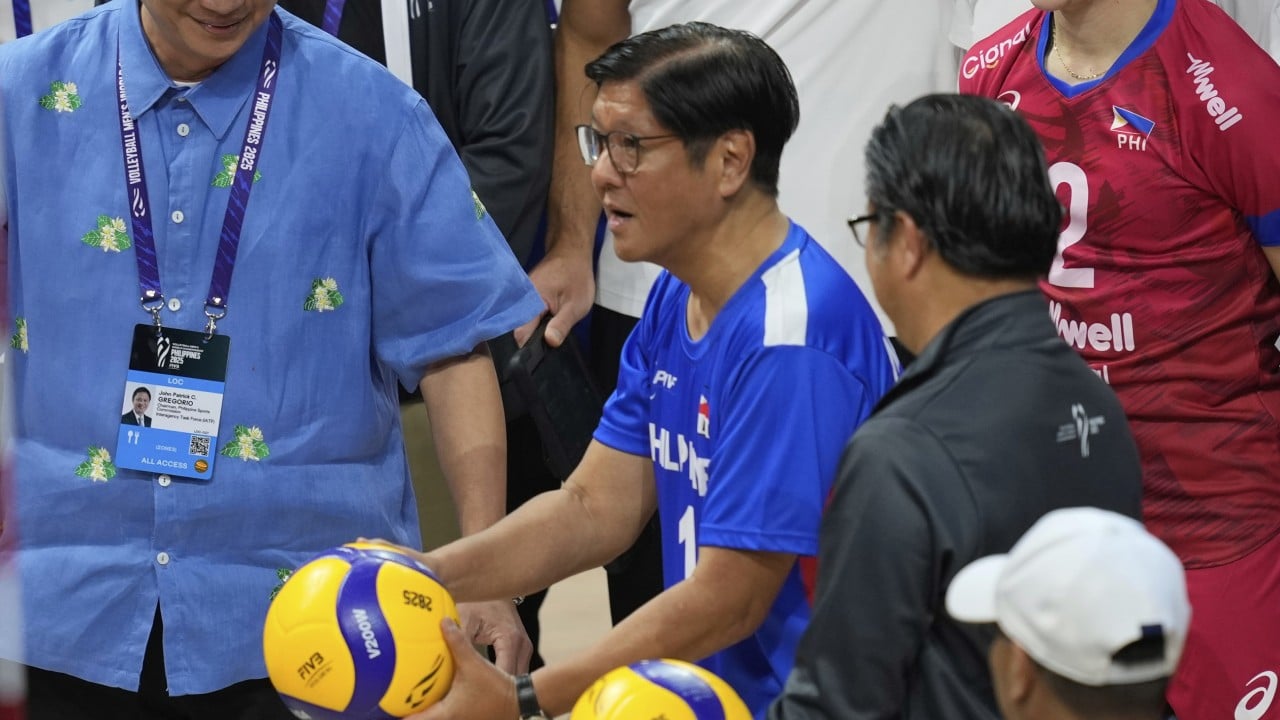
The Philippine judiciary just ignited a political firestorm by demanding transparency regarding President Ferdinand Marcos Jr.’s medical records, a move that challenges the long-standing tradition of executive opacity in Manila. This court order does more than just ask for a doctor's note; it forces a direct confrontation between a citizen’s right to know and the president’s right to privacy. At its core, the issue isn't just about whether the leader is fit to serve, but whether the 1987 Constitution has the teeth to compel an unwilling Malacañang to reveal the truth.
For decades, the health of Philippine presidents has been treated as a state secret, protected by a wall of loyalist aides and vague press releases. However, the current legal challenge pulls back the curtain on a specific constitutional mandate: Section 12 of Article VII. This clause explicitly states that the public must be informed of the President's health in case of "serious illness." The friction arises because the Constitution fails to define what constitutes "serious" or who, exactly, gets to make that determination. For an alternative look, consider: this related article.
The Sovereignty of Secrets
In the Philippines, the physical body of the President is inextricably linked to the body politic. When a leader disappears from the public eye for more than a few days, the rumor mill in Manila spins at a velocity that can destabilize markets and embolden political rivals. We have seen this play out repeatedly across different administrations.
The current legal petition argues that the public should not have to rely on curated social media posts or brief appearances to gauge the President's stamina. This isn't just about curiosity. It is about the continuity of government. If a President is incapacitated, the Vice President must step in, but the transition can only happen if the incapacity is acknowledged. By keeping the President’s health status in a black box, the administration effectively bypasses the line of succession's trigger mechanism. Further insight regarding this has been published by USA Today.
The Problem with Executive Privilege
Malacañang’s legal team typically leans on executive privilege to swat away these inquiries. They argue that the President, as the head of state, deserves a sphere of privacy to conduct business without the constant distraction of medical scrutiny.
But privilege has its limits.
The petitioners are betting that the Supreme Court will see health as a matter of public interest rather than a personal secret. If the court rules that the medical records must be released, it sets a precedent that strips away a layer of protection every future Philippine leader has enjoyed. It transforms the presidency from a quasi-monarchical figure into a transparent public servant.
Historical Scars and Medical Misdirection
The obsession with presidential health in the Philippines is rooted in the trauma of the 1980s. Ferdinand Marcos Sr., the current president’s father, suffered from debilitating lupus during the twilight of his regime. His administration went to extraordinary lengths to hide his condition, using makeup, staged photos, and flat-out lies to convince the world he was in control while the country drifted into economic and social chaos.
The framers of the 1987 Constitution wrote Section 12 specifically to prevent a repeat of that era. They wanted to ensure that no leader could hide behind a wall of silence while the gears of government ground to a halt.
- Marcos Sr. era: Documented kidney transplants were hidden from the public.
- Duterte era: Frequent absences were brushed off as "rejuvenation" or simple rest.
- Current era: Questions about travel fatigue and physical appearance have reignited the debate.
The problem is that the "serious illness" threshold is a moving target. Is a chronic but managed condition serious? Is a brief hospitalization for a non-life-threatening issue enough to trigger the disclosure? Without a clear legal framework, the administration holds all the cards, choosing to disclose only what serves their narrative.
The Role of the Medical Community
Physicians are caught in the middle of this constitutional tug-of-war. A doctor’s primary duty is to their patient, and the President is, first and foremost, a patient. However, when that patient holds the fate of 115 million people in their hands, the ethics of confidentiality become murky.
If the court compels a disclosure, which medical professionals would be trusted to provide the report? A government-appointed doctor might be seen as biased, while an independent panel could be viewed as a political tool for the opposition. The logistics of a forced medical disclosure are a nightmare that the Philippine legal system is not yet equipped to handle.
The Risk of Political Weaponization
There is a danger that medical transparency could be used as a blunt instrument to remove a sitting president. If every minor ailment becomes a matter of public record, the opposition can use a "death by a thousand cuts" strategy, questioning the leader’s fitness over every cold or bout of exhaustion.
This is likely the administration's strongest defense. They will argue that the petition is not a search for truth, but a politically motivated fishing expedition designed to weaken the President's mandate. In a country as polarized as the Philippines, even a blood pressure reading can be weaponized in a smear campaign.
The Gap Between Law and Reality
The 1987 Constitution is a reactive document. It was designed to fix the holes exposed by the Marcos dictatorship, but it often lacks the procedural depth to handle modern political brinkmanship.
The court now faces a choice. It can take a literalist approach, demanding a specific list of ailments that qualify as "serious," or it can take a broader view of public right-to-know. If the court retreats, Section 12 remains a dead letter—a well-intentioned rule with no power. If the court moves forward, it enters uncharted territory where the judiciary begins to dictate the personal disclosures of the executive branch.
Comparing Global Standards
The Philippines is not alone in this struggle, but it is one of the few nations with an explicit constitutional requirement for health disclosure.
- United States: No constitutional requirement; disclosure is a matter of tradition and political pressure.
- France: Presidents often release health bulletins, though the level of detail is frequently criticized.
- Philippines: Explicit constitutional mandate, yet zero successful enforcement in nearly four decades.
The lack of enforcement in Manila creates a vacuum. When the government refuses to speak, the public turns to social media influencers and unsourced rumors. This environment is ripe for disinformation, which can be more damaging to national stability than the truth about a leader’s health could ever be.
Moving Toward a Disclosure Protocol
The solution isn't a one-time court order, but a standardized protocol that removes the "discretion" from the administration's hands. Such a system would require a non-partisan board of physicians to conduct annual reviews and issue a summary of the President’s fitness to the public.
This would protect the President’s detailed medical privacy—his specific prescriptions or minor private issues—while satisfying the constitutional requirement to report "serious" conditions. It moves the conversation away from partisan bickering and toward a stable, institutionalized process.
The current legal challenge serves as a wake-up call for a government that has long relied on the "trust us" model of leadership. In a modern democracy, trust is a poor substitute for verified information. If the administration wants to end the rumors and stabilize the political climate, the most effective tool at their disposal isn't a legal brief—it's a clean bill of health signed by an independent authority.
The Philippine Supreme Court has a history of deferring to the executive on matters of national security and "political questions." However, health is not a secret military strategy. It is a biological reality that affects the execution of every law and the stability of every state institution.
If the court fails to act now, it effectively signals that the President is above the very transparency laws meant to protect the republic from the shadows of its past. The petition isn't just about a man; it's about whether the Constitution is a living shield for the people or a decorative backdrop for the powerful.
The ruling will define the balance of power for a generation. It will decide if the "health of the President" is a personal matter or a public asset. For a nation that has already paid the price of hidden illnesses and secret successions, the stakes couldn't be higher.
Demand for transparency usually peaks during times of crisis. Waiting for a crisis to define the rules of disclosure is a strategy for disaster. The time to establish the boundaries of presidential privacy is while the government is still functioning, not when it is on the brink of a succession panic.
The court must decide if the "right to know" is a fundamental pillar of Philippine democracy or merely a suggestion that the executive can ignore at its convenience. Transparency shouldn't be a gift from the palace; it should be the price of the seat.