Viktor Orbán has spent fourteen years building a political structure designed to be permanent. Through a combination of state-funded media dominance, a redrawn electoral map, and a relentless "us versus them" narrative, the Hungarian Prime Minister appeared untouchable. However, the recent European Parliament and local elections have delivered a shock to the system that cannot be ignored. For the first time since his return to power in 2010, Orbán’s Fidesz party has faced a legitimate domestic challenger who managed to strip away the veneer of invincibility. This was not a defeat in the sense of losing a majority, but it was a definitive psychological and strategic blow that changes the math of Hungarian politics.
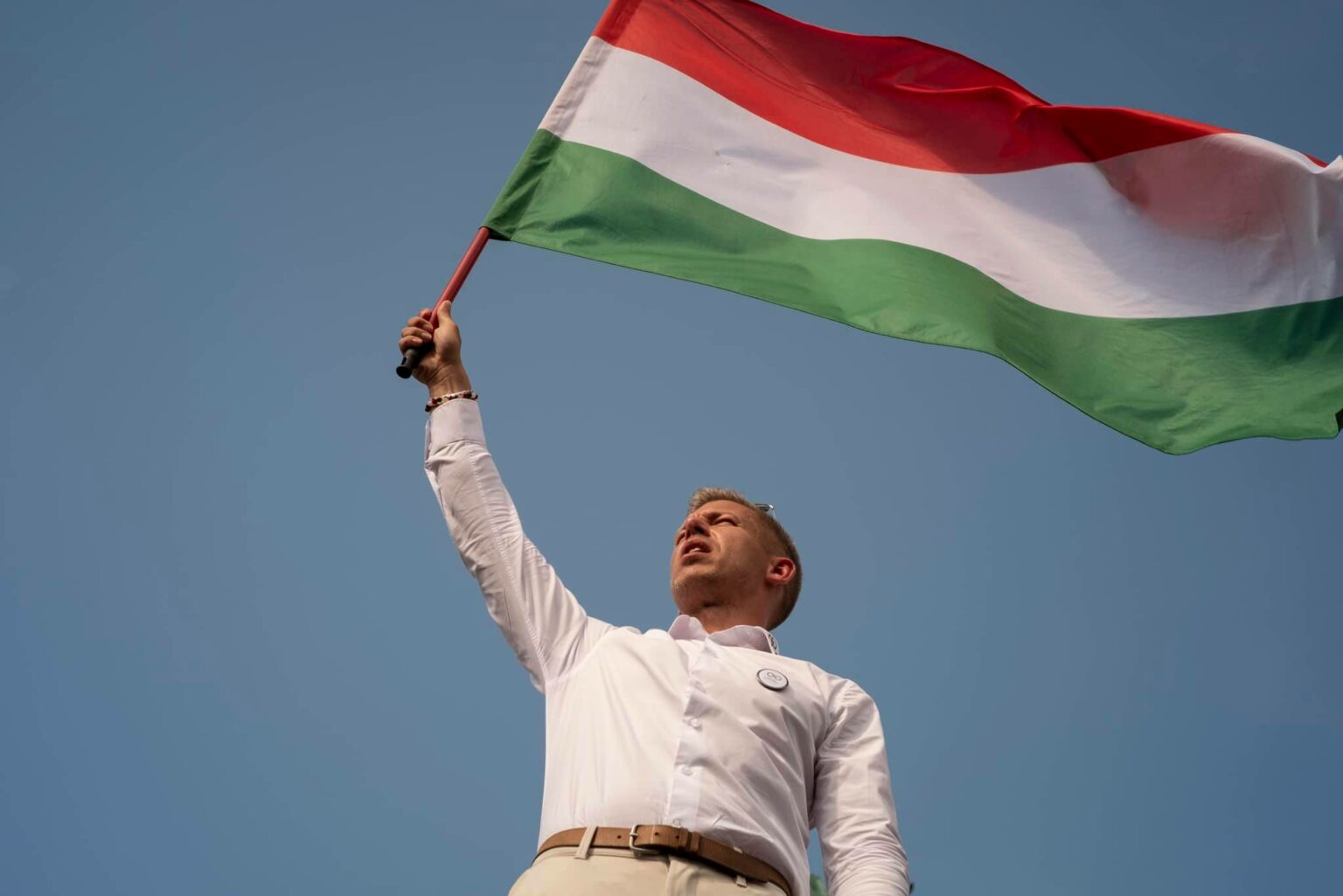
The catalyst for this shift is Péter Magyar, a former insider who knows exactly where the bodies are buried. Magyar’s Tisza party secured nearly 30% of the vote despite being only weeks old. To understand why this matters, one must look past the surface-level percentages. Orbán has always relied on a fragmented opposition—a collection of left-wing and liberal parties that he could easily paint as "foreign agents" or "remnants of the failed past." Magyar, a conservative who emerged from the very heart of the Fidesz establishment, cannot be dismissed so easily. He speaks the language of the Fidesz base, yet he has turned their own rhetoric against the corruption and stagnation of the current administration.
The end of the monopoly on patriotism
For over a decade, Fidesz maintained a total grip on the concept of national identity. If you were a "good Hungarian," you voted for Orbán. If you opposed him, you were a traitor or a puppet of Brussels. This binary choice has been the bedrock of his power.
The rise of a center-right alternative has shattered this dynamic. Magyar did not campaign on a platform of dismantling Hungarian sovereignty or adopting every dictate from the European Union. Instead, he campaigned on the idea that one can be a patriot while also demanding a transparent government. This subtle shift in the political spectrum has created a safe harbor for disillusioned Fidesz voters who are tired of the systemic cronyism but remain uncomfortable with the traditional left.
The data from rural districts—traditionally Orbán’s stronghold—shows a slow but steady migration of support. While the Prime Minister still commands a formidable machine, the aura of inevitability has evaporated. When voters realize that there is a viable alternative that doesn't require them to abandon their core values, the fear that keeps a populist regime in power begins to dissolve.
Economic stagnation and the price of isolation
While the political drama grabs the headlines, the underlying cause of this discontent is financial. Hungary has struggled with some of the highest inflation rates in the European Union. The government’s habit of freezing prices on basic goods like flour and fuel was a temporary bandage that eventually led to shortages and deeper market distortions.
Orbán has blamed these woes on "war-torn" sanctions and the European Commission’s decision to withhold billions in funding over rule-of-law concerns. But the public is starting to see the holes in this argument. They see their neighbors in Poland and Romania making faster recoveries. They see a small circle of business leaders close to the Prime Minister becoming extraordinarily wealthy while the average Hungarian's purchasing power shrinks.
The withholding of EU funds is no longer an abstract legal dispute in Brussels; it is a tangible loss for the Hungarian village. Without that capital, the infrastructure projects that used to buy local loyalty have dried up. The Prime Minister is finding that "sovereignty" is a hard sell when the grocery bill doubles.
A war of nerves in the media
The Hungarian media environment is an echo chamber. Nearly 500 outlets are controlled by a single pro-government foundation, ensuring that the Prime Minister’s message is repeated from every radio station and local newspaper.
Magyar bypassed this. He utilized social media and massive, grassroots rallies to speak directly to the people, rendering the state's billion-euro media machine strangely ineffective. This is a significant development for any analyst watching the rise of "illiberal democracies." It proves that while you can buy the airwaves, you cannot force people to believe what they hear if the reality on their dinner table contradicts the broadcast.
The government’s response was predictable. They launched a massive smear campaign, labeling Magyar as a "war-monger" and a tool of international interests. In the past, this tactic worked with surgical precision. This time, it backfired. The intensity of the attacks suggested panic rather than strength, and for the first time, a large portion of the electorate stopped listening.
The geopolitical tightrope
Orbán’s foreign policy has long been a game of "peacock dancing"—making small concessions to the West while maintaining lucrative ties to Moscow and Beijing. He positioned himself as the bridge between East and West, a role he claimed was essential for Hungary’s survival.
The invasion of Ukraine changed the stakes. Hungary’s refusal to allow weapons transit and its continued reliance on Russian energy have alienated its closest allies, particularly the Visegrád Four. Poland, once Hungary’s most reliable partner in defying Brussels, has moved in a different direction. Hungary is now isolated within the very union it seeks to influence.
This isolation has a cost. When Orbán goes to a summit, he no longer carries the weight of a regional bloc. He is a lone voice, often ignored or sidelined. Domestically, this is harder to spin as a victory. The image of the "strongman" who commands respect on the world stage is being replaced by the image of a stubborn leader who is keeping his country in the dark while the rest of the continent moves forward.
The demographic shift
Time is not on the side of the current regime. The Fidesz core is aging, and the younger generation is overwhelmingly supportive of the new opposition. These are voters who do not remember the pre-2010 era and are not moved by ghosts of the past. They are mobile, tech-savvy, and increasingly frustrated by a system that prioritizes loyalty over merit.
Orbán’s response has been to double down on "family values" and subsidies for married couples. While these policies are popular with some, they do not address the brain drain of young professionals leaving for Vienna, Berlin, or London. Each departure is a lost vote and a lost contributor to the Hungarian economy.
The Prime Minister’s strategy has always been to win the "now" at the expense of the "later." By focusing so heavily on maintaining his current base, he has failed to build a bridge to the future. The recent election results are a warning that the "later" is arriving sooner than expected.
The structural trap
Despite the setback, Orbán is not going anywhere today. The Hungarian electoral system is heavily weighted in favor of the largest party. To actually unseat him in a general election, the opposition would need a landslide, not just a strong showing.
The Prime Minister still controls the courts, the tax authorities, and the secret services. He has spent years building a "deep state" that can survive even if he loses a vote. Any newcomer, including Péter Magyar, faces a monumental task in dismantling these structures. It is one thing to win a protest vote in a European election; it is quite another to win a national election where every lever of power is tilted against you.
However, the psychological barrier has been broken. The fear that Orbán is an unstoppable force of nature is gone. For the first time in a generation, there is a sense of political competition in Budapest. The Prime Minister is no longer fighting against a ghost; he is fighting for his political life against an opponent who knows his playbook by heart.
The fortress still stands, but the foundations are showing deep, jagged lines. Whether the building collapses or undergoes a radical renovation depends on whether the opposition can maintain its momentum and whether the Hungarian public decides that the cost of "illiberalism" has finally become too high to pay.