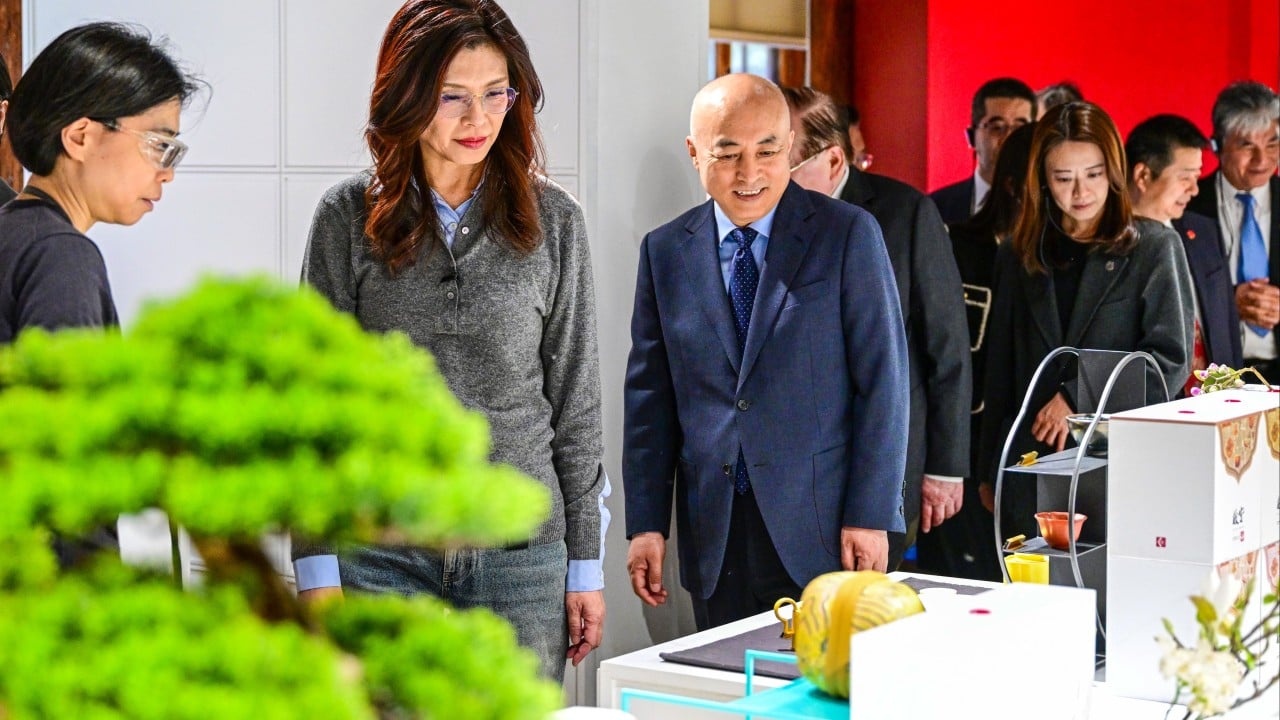
Beijing is playing a long game with Taiwan’s logistics that has nothing to do with vacationers and everything to do with structural dependency. The recent announcement of expanded air links and eased travel restrictions—unveiled just as Kuomintang (KMT) Chairperson Cheng Li-wun concluded a high-stakes mainland tour—is being framed as a "gift" to the Taiwanese people. In reality, it is a masterclass in asymmetric integration, designed to bypass the elected government in Taipei while making the island’s economy physically inseparable from the mainland’s infrastructure.
The 10-point policy package, which includes the restoration of direct flights to hubs like Xi’an, Harbin, and Kunming, is not a restoration of the status quo. It is an invitation into a cage. By offering Kinmen residents "shared" use of Xiamen’s new international airport and proposing physical bridges to link Matsu to Fujian province, Beijing is effectively attempting to annex Taiwan’s outlying islands through civil engineering. If you liked this article, you might want to check out: this related article.
The Weaponization of Logistics
For years, the Democratic Progressive Party (DPP) administration has maintained that cross-strait travel must be handled through official government-to-government channels to ensure security and reciprocity. Beijing’s latest move surgically removes that agency. By negotiating these "concessions" with an opposition party rather than the sitting government, the Chinese Communist Party (CCP) is sending a blunt message to the Taiwanese electorate: Prosperity is a reward for political compliance, and the KMT is the only authorized dealer.
The proposed aviation expansion is particularly telling. It targets 30 mainland cities, many of which are strategic industrial hubs. This isn't just about tourism; it’s about ensuring that Taiwan’s high-tech talent and agricultural exports remain tethered to mainland supply chains. When a government unilaterally opens flight paths—as the CAAC did with the M503, W122, and W123 routes—it isn't just "optimizing" airspace. It is eroding the median line of the Taiwan Strait, forcing Taiwan’s air defense to choose between tracking a civilian airliner or a potential military threat hidden in its shadow. For another perspective on this event, see the latest coverage from The New York Times.
The Illusion of Reciprocity
The "generosity" of allowing residents from Shanghai and Fujian to visit Taiwan as individual tourists is a calculated valve. Beijing knows that the Taiwanese travel and hospitality sectors are starving for the volume that only the mainland can provide. By turning the tap on and off at will, Beijing exerts a level of economic pressure that no military exercise can match.
- Infrastructure Creep: The proposal to supply water, gas, and electricity to Kinmen and Matsu "when conditions permit" creates a literal lifeline that Beijing can sever at any moment.
- Youth Co-option: The pledge to invite 20 youth delegations annually is a transparent attempt to groom the next generation of Taiwanese professionals, offering them "opportunities" that are contingent on accepting the "1992 Consensus."
- Market Access as a Tether: Easing restrictions on Taiwanese pomelos and fishery products sounds like a win for farmers, but it reinforces a dangerous reliance on a single, politically volatile market.
A Sovereignty Squeeze in Plain Sight
The most dangerous element of this package is the proposed Taipei-Xiamen airport sharing. This is not a standard code-share agreement. It is an attempt to domesticate what should be an international logistical border. If Kinmen residents begin using Xiamen as their primary international gateway, the administrative line between the two territories becomes a legal fiction.
The KMT frames this as a pragmatic "ice-breaker" that lowers the temperature in a region on the brink of conflict. They aren't entirely wrong; a reduction in immediate military posturing is a relief to a weary public. However, the price of this cooling is the steady dismantling of Taiwan’s institutional defenses.
Beijing has realized that it doesn't need to fire a shot if it can simply build a bridge. By the time the "peaceful development" is complete, the logistical cost of decoupling would be so high that independence becomes an economic impossibility. This is not diplomacy; it is an acquisition.
The hard truth is that every new flight route and every eased visa requirement comes with an invisible tax on Taiwan’s autonomy. Beijing is no longer waiting for a seat at the table; it is building a new table and inviting only those who agree to the house rules. For the residents of Taiwan, the "gift" of easier travel might eventually cost them the very country they are traveling from.