Stop treating the war in Ukraine like a morning box score.
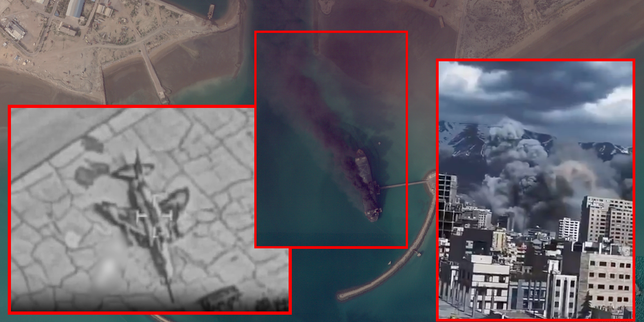
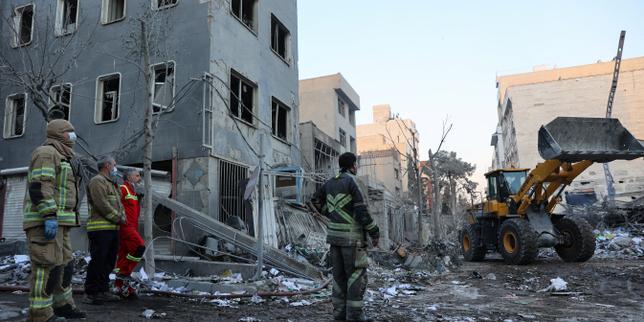
The legacy media has fallen into a predictable, rhythmic trap. A missile hits an apartment block in Sumy, a drone strikes a power substation in Odesa, and the headlines immediately pivot to a grim tally of the dead and the displaced. Eight dead today. Twelve yesterday. We consume these numbers as if they are the primary metric of the conflict. They aren’t.
By focusing on the immediate carnage of individual strikes, Western reporting misses the structural reality of the war. It’s a classic case of seeing the trees and ignoring the forest fire. We are obsessed with the "what" of Russian strikes while completely ignoring the "why" and the "what next."
If you want to understand where this war is going, stop looking at casualty counts. Start looking at the logistics of attrition and the psychological weaponization of the mundane.
The Attrition Trap
The competitor's reporting suggests that Russian strikes are haphazard acts of cruelty. That is a comforting lie. It suggests an enemy that is disorganized, emotional, and failing.
The reality is far more clinical.
Russia isn't just trying to kill people; they are trying to kill the viability of the Ukrainian state. When a strike hits a residential area, the headline focuses on the tragedy. The strategic reality, however, is often the depletion of Ukraine’s air defense interceptors. Every $2 million Patriot missile used to down a $20,000 Iranian-designed Shahed drone is a net loss for the West.
The Math of Exhaustion
Military analysts like Michael Kofman have pointed out for years that this is a war of industrial capacity. We are witnessing a systemic attempt to force Ukraine into a "zero-sum" defense.
- Frontline Defense: Keeping the Russian army from breaking through the Donbas.
- Infrastructure Protection: Keeping the lights on in Kyiv.
- Civilian Shielding: Preventing the very headlines we saw this morning.
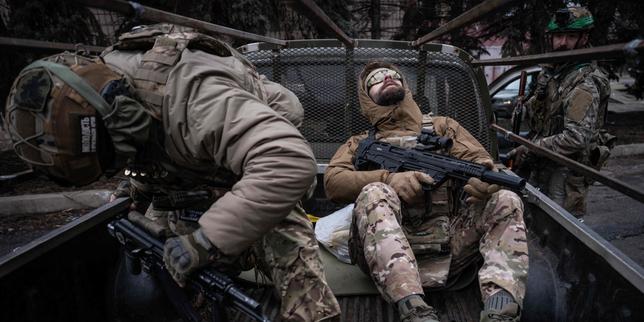
Ukraine cannot do all three simultaneously with the current level of Western supply. When Russia strikes "several regions," as the latest reports highlight, they are probing for the holes. They are forcing Kyiv to choose between protecting a power plant or protecting a city square.
The tragedy isn't just the eight lives lost. The tragedy is the strategic thinning of the line.
Why The Human Interest Angle Fails Us
I’ve spent years watching how data is manipulated in conflict zones. The "human interest" story—the heartbreaking interview with a survivor—is essential for empathy, but it is toxic for strategy. It creates a "reactive" public consciousness.
When the public sees a strike on a school, they demand immediate, symbolic retaliation. They want a "game-changer" (to use a term the pundits love) sent to the front. But war isn't won on symbolism. It’s won on the boring stuff: 155mm artillery shells, demining equipment, and secure communications.
By hyper-focusing on the "Live" updates of every explosion, we treat the war as a series of isolated events. This prevents us from asking the hard questions:
- What is the current intercept rate of Ukrainian AD systems compared to six months ago?
- Is the Russian "glide bomb" strategy effectively neutralizing the Ukrainian trench advantage?
- How much of the "eight dead" is a result of failed interception vs. direct hits?
If we don't ask these, we aren't reporting. We're just narrating a funeral.
The Fallacy of the Turning Point
Every time a major strike happens, the "consensus" media suggests we are at a "pivotal" moment. We aren't. We are in a grind.
Imagine a scenario where the West doubles its aid tomorrow. The headlines would claim the war is over in a month. They’d be wrong. The Russian defense-in-depth, the Surovikin line, and the massive mobilization of their domestic economy mean that no single strike—on either side—is the end.
The "Live Update" culture creates a false sense of momentum. If Russia hits a civilian target, the media says they are desperate. If Ukraine hits a ship in the Black Sea, the media says the tide has turned. Both are usually wrong.
The Truth About Russian Capability
We have been told for two years that Russia is running out of missiles. "They only have enough for two more major barrages," the experts claimed in late 2022.
Look at the sky today. They aren't out.
Russia has successfully moved to a full-scale war economy. They are bypassing sanctions through third-party intermediaries in Central Asia and the Caucasus. They are producing more hardware now than they were at the start of the invasion.
To report on "eight dead in several regions" without mentioning the massive industrial ramp-up behind those missiles is journalistic malpractice. It’s like reporting on a sinking ship by describing the color of the water entering the cabin.
The Infrastructure of Despair
The real story isn't the death toll. It's the un-living.
War is won when the cost of continuing becomes higher than the cost of surrender. Russia’s current strategy is to make life in Ukraine technically impossible. Not just dangerous—impossible.
- The Energy Grid: Constant repair cycles lead to "maintenance fatigue."
- The Economy: Foreign investment won't flow into a country where a missile can hit any "region" at any time.
- Demographics: Every strike on a civilian center encourages the next wave of brain drain.
The competitor's article mentions strikes in "several regions." This is a map of psychological exhaustion. If you live in Lviv, you should feel as unsafe as someone in Kharkiv. That is the Russian goal.
Correcting the "People Also Ask" Nonsense
People often ask: "Is Russia targeting civilians on purpose?"
The answer is more brutal than "yes" or "no." They are targeting the concept of safety.
Another common question: "Can Ukraine win the air war?"
No. Not in the way you think. No amount of F-16s or Patriots creates a 100% "iron dome" over a country the size of Ukraine. The goal isn't "winning" the air; it's making the cost of Russian flight prohibitive.
The Professionalism of Pessimism
Being a contrarian in this space isn't about being pro-Russian. It’s about being pro-reality.
The "lazy consensus" is that Ukraine is winning because its cause is just. I have seen the same logic applied to dozens of geopolitical conflicts, and it fails every time. Justice does not manufacture shells. Empathy does not intercept ballistic missiles.
We need to stop reporting on the war as a moral play and start reporting on it as a logistical equation.
The Risks of the Realist Stance
The downside to my perspective? It’s grim. It doesn’t provide the dopamine hit of a "heroic underdog" narrative. It acknowledges that Russia has a deeper bench and a higher pain tolerance than the West currently wants to admit.
But if we don't acknowledge the strength of the adversary, we cannot defeat them. By minimizing Russian strikes as "desperate attacks on civilians," we underestimate the strategic intent behind them.
Stop Watching the Ticker
The "Live" blog is the enemy of understanding.
When you see a headline about "eight dead," do not just feel sad. Ask yourself what was around those eight people. Was it a rail node? A power station? Or was it a deliberate terror strike designed to drain the West’s waning attention span?
The war in Ukraine will not be decided by the number of people who died this morning. It will be decided by the ability of the North Atlantic industrial base to outproduce a mobilized Russia.
If we keep focusing on the blood on the pavement, we’re going to miss the moment the floor falls out from under the entire house.
Put down the casualty list and look at the factory output. That’s where the war is actually being fought.
Stop looking for a hero to save the day and start looking for the truck that’s bringing the spare parts.
History doesn't care about your "Live Updates." It only cares who is still standing when the noise stops.