Foreign policy observers are obsessed with the "shadow envoy." They treat every back-channel meeting between a Beijing official and a Trump ally like a secret decryption key to the next decade of global trade. The lazy consensus suggests these private dialogues are stabilizing forces—safety valves that prevent two nuclear powers from sliding into a hot war.
They are wrong.
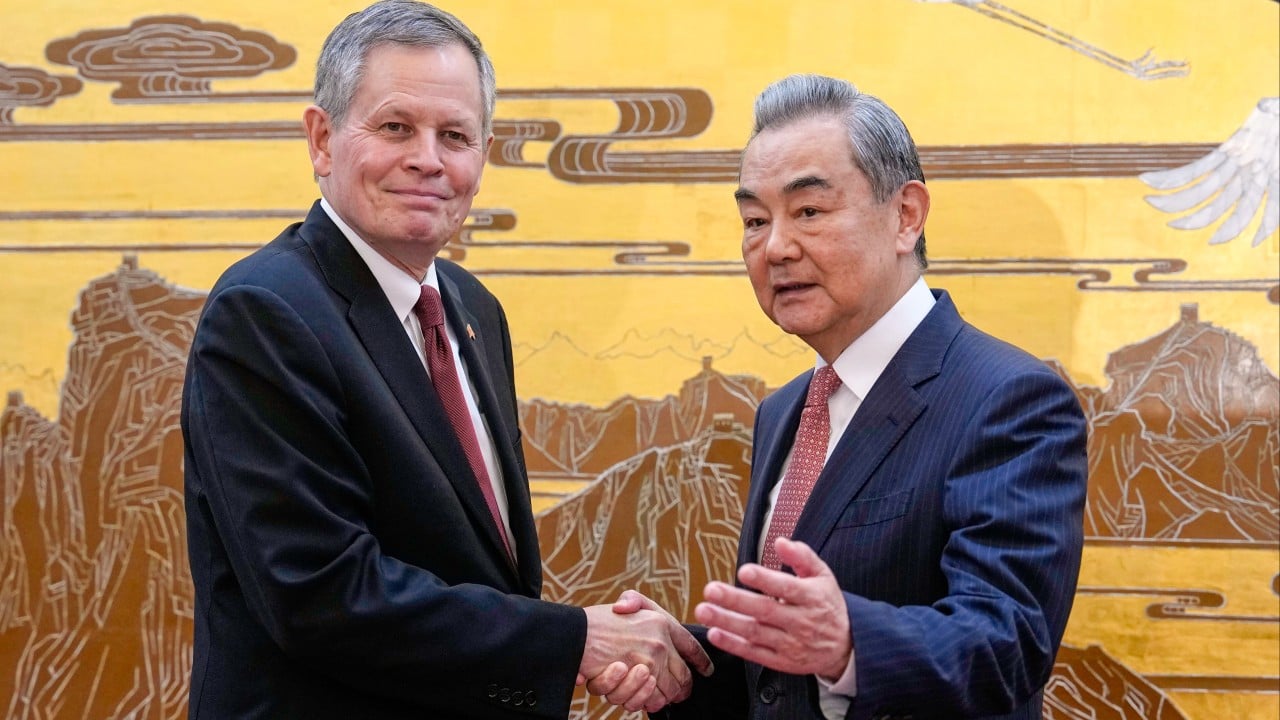
These meetings aren't about stability. They are about exploitation. When a high-ranking Chinese official sits down with a "close ally" of a U.S. leader, they aren't exchanging olive branches. They are performing a precision-engineered stress test on American institutional memory. They are looking for the cracks in the wall.
The Back-Channel Fallacy
The standard narrative paints these pre-summit whispers as necessary "groundwork." The theory is that by speaking to a trusted advisor outside the rigid confines of the State Department, Beijing can deliver unvarnished truths that bypass the "bureaucratic sludge" of D.S. or the NSC.
In reality, these private channels create a dangerous information asymmetry. In my years watching trade negotiations stall and pivot, I’ve seen how this plays out. Beijing uses these informal chats to sow "strategic ambiguity" within an administration. They tell the ally one thing, tell the sitting Secretary of State another, and leave the President caught between a contradictory "consensus" that doesn't actually exist.
When China reaches out to a specific figure—like a Steve Wynn or a Blackstone executive—they aren't honoring that person's influence. They are weaponizing it. They know that a private citizen lacks the briefing depth of a career diplomat but possesses a far louder megaphone to the President’s ear. It is a classic divide-and-conquer maneuver, and Washington falls for it every single time.
Why "Personal Relationships" are a Liability
Pundits love to talk about the "chemistry" between leaders or the "direct line" an advisor has to the Great Hall of the People. This is a fundamental misunderstanding of how the CCP operates. In the U.S., personal loyalty can drive policy. In Beijing, the Party is the policy.
There is no "friend of China." There are only assets who haven't realized their expiration date yet.
By engaging with "allies" instead of institutions, Beijing effectively bypasses the safeguards meant to protect U.S. interests. Formal diplomatic notes are recorded, analyzed, and archived. A steak dinner in a private club is a ghost. When the "ally" returns to D.C. to whisper what they "really heard" from the Chinese side, they become an unwitting agent of influence, pushing a narrative that hasn't been vetted for deception.
Imagine a scenario where a private envoy is told that China is "ready to make a massive purchase of soybeans" if certain tech sanctions are dropped. The envoy sees a win-win. The President sees a win-win. But the career analyst at the Department of Commerce knows that China’s domestic storage is already full and the "offer" is a mathematical impossibility designed solely to buy six months of time. By the time the lie is uncovered, the sanctions are gone, and the leverage is vaporized.
The Myth of the "Beijing Moderate"
The competitor article, and most like it, relies on the tired trope of the "pro-reform" Chinese official reaching out to save the relationship. This person does not exist in the current political climate. There is no hidden faction of liberalists waiting for a Trump or a Biden to give them an excuse to pivot toward Western norms.
Every "message" sent through a back channel is approved at the highest levels of the Central Committee. If a Chinese official is telling a U.S. businessman that they want to "avoid conflict," it is because they have calculated that convincing the U.S. of that desire will delay necessary American defensive measures.
We need to stop asking "What did China tell them?" and start asking "Why did China want this specific person to hear it?"
The High Cost of Bypassing the State Department
The drive to "get things done" through private channels is an admission of institutional weakness. When a leader relies on a close ally to handle Beijing, they signal that the official government apparatus is irrelevant. This guts the morale of the people who actually understand the nuances of the South China Sea or semiconductor supply chains.
- Data Vulnerability: Private envoys rarely use secure government communication. Their phones are gold mines for signals intelligence.
- Lack of Reciprocity: The U.S. sends a businessman with a direct line to the President. China sends a disciplined Party official who wouldn't sneeze without a script. It’s an amateur playing a professional at a game where the stakes are the global economy.
- The "Sunk Cost" of Access: Once a private citizen is granted "special access" to Beijing, they become protective of that access. They start softening their advice to the President to ensure they get invited back. They aren't representing the U.S.; they are representing their own relevance.
Stop Reading the Tea Leaves
The obsession with what was said in a hotel room in Beijing is a distraction. The real signals are not in the whispers to "allies." They are in the industrial subsidies, the naval maneuvers, and the legislative crackdowns.
If you want to know what China thinks about a U.S. leader's visit, look at their five-year plan, not the readout from a private dinner. The former is a roadmap; the latter is a script for a play where the American side is the only one who doesn't realize they are an actor.
Washington’s greatest mistake is believing that the "real" diplomacy happens in the shadows. The shadows are where leverage goes to die. If an offer is too sensitive to be put on official letterhead, it isn't an offer. It's a trap.
The next time a headline screams about a "secret message" delivered to a political insider, understand it for what it is: a successful operation by the CCP to bypass the adults in the room. We don't need better back-channels. We need a front-channel that isn't so easily distracted by the shiny object of "exclusive access."
Diplomacy isn't about making the other side feel comfortable enough to tell you the "truth." It’s about making the cost of lying so high that the truth is their only viable option. Every private meeting that bypasses our institutions lowers that cost.
Burn the back-channels. Talk in the light, or don't talk at all.