The American library is currently a battlefield. If you think book banning is a dusty relic of the 1950s or something that only happens in distant autocracies, you haven’t looked at the 2025 data. We’re seeing a coordinated, high-stakes surge in attempts to scrub specific titles from public and school shelves. It’s not just a few parents worried about a single chapter. It’s an organized movement.
According to the American Library Association (ALA), 2025 has seen book challenges remain at record highs. We’re talking about thousands of unique titles being targeted across the country. The shift is massive. A few years ago, a challenge usually meant one person complaining about one book. Today, it’s often a single individual or group demanding the removal of dozens—sometimes hundreds—of books in one go. Recently making headlines recently: Why Israel Wont Leave South Lebanon Before the Thursday Washington Talks.
This isn’t accidental. It’s the result of digital lists being shared across state lines. If a book gets flagged in Florida, you can bet it’ll face a challenge in Iowa or Texas within the week.
The Titles Under Fire Right Now
The list of the most challenged books in 2025 tells a very specific story. While the specific rankings fluctuate month to month based on local school board meetings, the themes are consistent. Most of these books share a common thread: they deal with LGBTQ+ identities, racial injustice, or "difficult" history. Further insights into this topic are explored by The New York Times.
Gender Queer by Maia Kobabe remains the most lightning-rod title in the country. It’s been at the top for years, and 2025 isn't an exception. Critics call it "pornographic" because of its illustrations, while defenders see it as a vital resource for non-binary youth. The gap between those two viewpoints is where the war is fought.
Then you have All Boys Aren’t Blue by George M. Johnson. It’s a "memoir-manifesto" that explores growing up Black and queer. It’s frequently pulled for its descriptions of sexual experiences. But when you look at the statistics, it’s clear that removing this book often leaves a vacuum where there’s no other representation for the students who need it most.
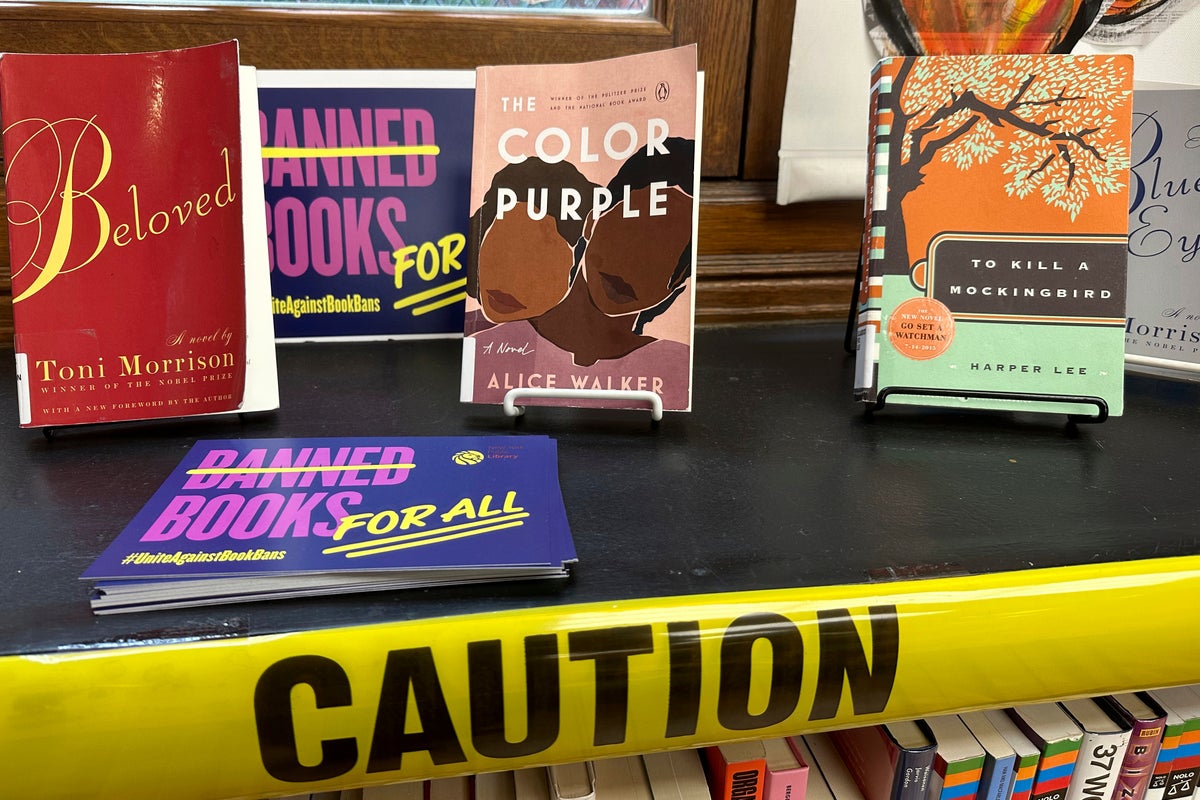
The Bluest Eye by Toni Morrison is still being targeted. It’s a Nobel Prize-winning classic. It’s decades old. Yet, because it deals with the trauma of racism and sexual abuse in a raw, unflinching way, it’s labeled "unsuitable" for the very age groups it was written to educate.
Why the Numbers Are Skyrocketing
You’ve got to understand the mechanics of how this works. It’s no longer about a parent walking into a library and talking to a librarian. It’s about legislation. In states like Florida and Utah, new laws have made it easier for people to file formal objections. In some cases, books have to be removed during the review process, meaning they’re off the shelves for months before a decision is even made.
The PEN America reports for 2025 highlight that the sheer volume of "mass challenges" is what’s driving the record numbers. A mass challenge is when one person uses a pre-made list to challenge 50 or 100 books at once. It’s a DDOS attack on the library system. Librarians don’t have the staff or the time to read and defend 100 books in a single month.
It’s an efficiency play. If you can’t win the argument on every book, you just overwhelm the system until the books are removed by default because the bureaucracy can’t keep up.
The Impact on Small Town Libraries
I’ve talked to librarians in rural districts who are terrified. They’re not just worried about losing books; they’re worried about losing their jobs or seeing their entire library lose its funding. In some towns, residents have voted to de-fund the library entirely rather than keep challenged books on the shelves.
It creates a "soft censorship" effect. Librarians might stop ordering books that they think might cause trouble. They’re self-censoring to survive. That’s arguably more dangerous than the formal bans because it happens in the shadows. You don’t know what books aren’t there if they were never ordered in the first place.
The Most Targeted Books of 2025
While the "top ten" lists change, these eleven titles are consistently seeing the most heat this year.
- Gender Queer (Maia Kobabe): High-frequency challenges for graphic content.
- All Boys Aren’t Blue (George M. Johnson): Targeted for LGBTQ+ themes and sexual descriptions.
- The Bluest Eye (Toni Morrison): Constant pressure due to depictions of sexual violence.
- Flamer (Mike Curato): A graphic novel about a boy at scout camp.
- Looking for Alaska (John Green): A staple of these lists for years because of a specific sexual scene.
- The Perks of Being a Wallflower (Stephen Chbosky): Often challenged for drug use and sexual content.
- Lawn Boy (Jonathan Evison): Faced intense scrutiny for its treatment of class and sexuality.
- Crank (Ellen Hopkins): This verse novel about addiction is frequently labeled "too dark."
- A Court of Mist and Fury (Sarah J. Maas): A newer addition to the "ban list" as "romantasy" hits the mainstream.
- Me and Earl and the Dying Girl (Jesse Andrews): Targeted for its use of profanity and humor regarding illness.
- Sold (Patricia McCormick): A harrowing look at human trafficking that some find too intense for high school.
What People Get Wrong About Book Bans
Most people think a "challenge" is just a complaint. It’s not. A challenge is a formal request to have a book restricted or removed. When that challenge is successful, the book is banned.
There's a common argument that "it's not a ban if you can buy it on Amazon." That’s a fundamentally flawed take. Public school libraries exist to provide equal access. If a student can’t afford to buy a book on Amazon, and it’s been removed from their school, that book is effectively banned for them. Access shouldn't depend on your parents' credit card balance.
We're also seeing a shift in who is doing the challenging. Historically, it was a mix of political leanings. Now, data from the ALA’s Office for Intellectual Freedom shows that the vast majority of challenges are coming from conservative-leaning groups targeting "diverse" content. It's become a partisan tool.
The Economic Cost of Censorship
Nobody talks about the money. Every time a book is challenged, it costs the school district money. They have to pay for review committees, administrative hours, and sometimes legal fees. In some cases, districts have spent tens of thousands of dollars to review a handful of books.
That’s money that isn’t going to teacher salaries or new computers. It’s a massive drain on public resources. We’re essentially paying a "censorship tax" in 2025.
Protecting Your Right to Read
If you care about this, you can't just sit back and watch the headlines. The most effective way to counter book challenges is at the local level. Show up to school board meetings. Actually read the books being challenged—you'll often find that the "outrageous" quotes being shared on social media are taken wildly out of context.
Write to your local librarian and let them know you support a diverse collection. They get plenty of emails from people who are angry; they rarely get emails from people who are happy they have access to a wide range of ideas.
Don't let the noise fool you. Most Americans—across the political spectrum—actually oppose book banning. But the loud minority is the one filling out the forms and showing up at the meetings.
The next step is simple: find out which books are being challenged in your specific district. Check the ALA website for their 2025 toolkit. Support your local library's "Banned Books Week" events. Access to information isn't a luxury; it's a right that requires constant maintenance.