The air in Limassol doesn't just sit; it weighs. It is a thick, salt-crusted humidity that smells of diesel, roasting lamb, and the ancient, tired dust of a crossroads that has seen every empire from the Romans to the British come and go. For the tourists sipping frappes on the boardwalk, the horizon is a shimmering blue void. For the families huddled in the shadow of the Sovereign Base Areas, that same horizon is a source of vibrating, low-frequency anxiety.
When the news broke that Sir Keir Starmer had confirmed the deployment of HMS Dragon to Cyprus, it wasn't just a headline in a briefing room. It was a physical shift in the atmosphere of the Eastern Mediterranean.
Steel has a way of changing the conversation without saying a word.
Consider a young logistics officer stationed at Akrotiri. Let’s call him Elias. He isn’t a strategist in Whitehall, and he isn’t a politician looking for a soundbite. He is a man who spends his afternoons tracking the movement of C-17 transport planes and calculating the calories needed to keep thousands of displaced people alive. For Elias, the arrival of a Type 45 destroyer isn’t about "projecting power" in a textbook sense. It is about the terrifying, practical reality of what happens when the land routes disappear.
Cyprus has always been the unsinkable aircraft carrier. But as tensions in the Middle East boil over into a chaotic, unpredictable slurry of regional skirmishes, the island has transformed into something else: a lifeboat.
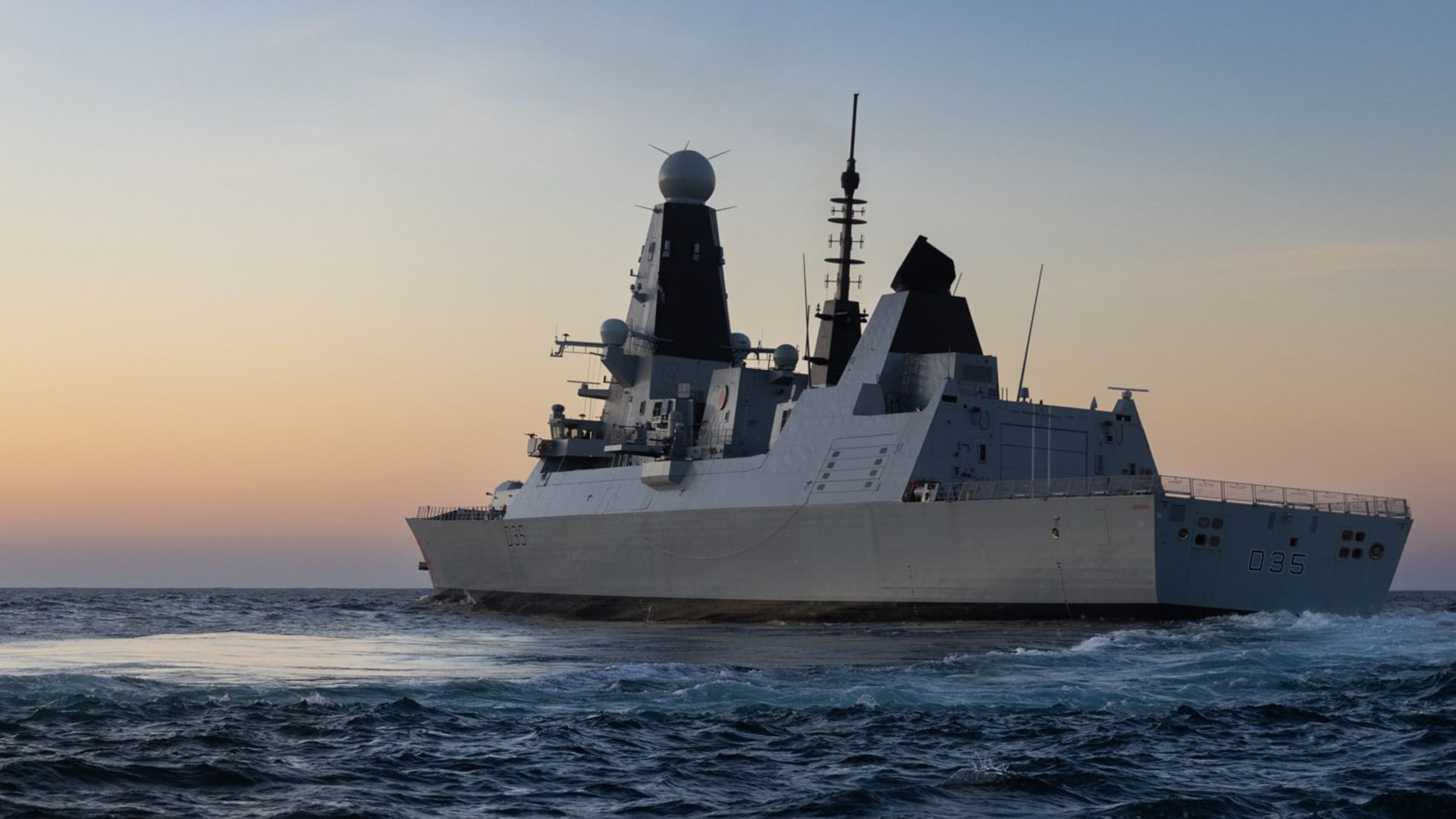
The British government’s decision to send HMS Dragon is, on paper, a standard military movement. The ship is a marvel of engineering, a spike-toothed predator designed to swat threats out of the sky before they even register on a conventional radar. Its "Redbeard" crest and the massive Welsh dragon emblazoned on its bow are symbols of a specific kind of British resolve. Yet, the true story isn’t about the missiles in the silos.
It is about the 700 troops currently sitting in Cyprus, waiting for a phone call they hope never comes. It is about the contingency plans for an evacuation that would dwarf anything seen in recent memory.
When Starmer stood before the cameras to confirm the ship's trajectory, he was addressing a nation weary of foreign entanglements. But for the thousands of British nationals living in Lebanon—teachers, NGO workers, dual-citizens with deep roots in the Levantine soil—the Dragon is the only bridge back to safety. If the airport in Beirut shuts down, if the roads to the south become a gauntlet of fire, the sea becomes the only exit.
The Mediterranean is a beautiful graveyard of intentions.
Sending a destroyer of this caliber is an admission of gravity. You don't send a Dragon to patrol a peaceful pond. You send it when the sky might fall. The Type 45’s primary job is air defense. It creates a "bubble" of protection, a digital shield that stretches for hundreds of miles. Inside that bubble, transport ships can move. Inside that bubble, civilians can breathe.
The logistics are staggering. To move ten thousand people across a stretch of water during a regional conflict requires more than just boats. It requires a command of the electromagnetic spectrum. It requires the ability to see a threat three hundred miles away and decide, in a heartbeat, whether it is a stray drone or a coordinated strike.
We often talk about military hardware in the abstract, as if these ships are pieces on a chessboard. They aren't. They are floating cities. Onboard HMS Dragon, there are sailors who haven't seen their kids in months, mechanics who know the temperamental soul of a gas turbine engine better than their own heartbeats, and cooks who have to figure out how to feed an extra thousand hungry, terrified evacuees at a moment's notice.
The tension in Cyprus is palpable in the quiet moments. Walk through the streets of Paphos or the winding alleys of Nicosia, and you’ll hear it in the way people discuss the flight paths overhead. The island is a sanctuary, but it is a small one. It feels the tremors of the Levant. When a British Prime Minister confirms a naval deployment of this scale, he is signaling to the world that the "red line" has moved from the sand to the surf.
There is a specific kind of silence that happens just before a storm. It’s the silence of a busy port when the cranes stop moving. It’s the silence of a radar room when a blip disappears. The presence of HMS Dragon is meant to fill that silence with a deterrent hum.
But deterrence is a ghost. You only know it worked when nothing happens. If the Dragon spends its weeks in the Mediterranean sunning its gray hull and the sailors spend their shore leave buying overpriced magnets in Limassol, the mission is a triumph. If the guns stay cold, the strategy won't make the front pages, and the public will grumble about the cost of fuel.
The invisible stakes are the lives of people who will never know how close they came to disaster.
Think of a grandmother in a suburb of Beirut. She has a British passport tucked in a drawer next to her wedding photos. She watches the news with the sound turned down, looking for shapes in the water. For her, the Dragon isn’t a geopolitical asset. It is a promise. It is the physical manifestation of the idea that she has not been forgotten by a country thousands of miles away.
The UK's role in Cyprus has always been complicated, a vestige of a colonial past that has evolved into a modern necessity. The bases at Akrotiri and Dhekelia are sovereign British territory, strange little pockets of Middle England dropped into the Mediterranean scrub. They have their own police, their own schools, and now, they have a massive, dragon-adorned guardian looming offshore.
Starmer’s confirmation wasn't just a military update; it was a pivot. It acknowledges that the era of "soft power" and polite letters of concern has been eclipsed by the need for heavy steel. The Eastern Mediterranean is currently the most crowded piece of real estate on the planet, swarming with Russian frigates, American carrier groups, and Turkish patrol boats. Each one is a sentence in a long, dangerous argument.
The Dragon is a period at the end of that sentence.
The ship carries the Sea Viper missile system. It can track and engage multiple targets at speeds that defy the human mind’s ability to process. This isn't about the glory of the British Empire; it's about the terrifying precision of 21st-century survival. The technology is so advanced it feels like magic, yet the reason for its existence is as old as the Iliad. We are still fighting over the same shores, still looking to the horizon for the ships that will either save us or destroy us.
The sun sets over the Akrotiri peninsula, turning the Mediterranean into a sheet of hammered gold. For a moment, the political noise fades. The debates in Parliament about budgets and "global Britain" feel small. What remains is the silhouette of a ship.
It sits there, a dark, jagged tooth against the orange sky. It is a machine designed for the end of the world, tasked with the mundane job of keeping the peace. The sailors on deck are likely thinking about cold beer or the heat of the sun on their necks. But below deck, in the glowing blue light of the Ops Room, the Dragon is awake. It is listening. It is watching the air for any sign that the silence is about to break.
We live in a time where the distance between a holiday and a humanitarian crisis is measured in a few miles of seawater. The deployment of HMS Dragon is the bridge across that distance. It is a gamble, a shield, and a warning, all wrapped in a hull of Welsh steel.
The Dragon has arrived, and for the first time in a long time, the Mediterranean feels very, very small.