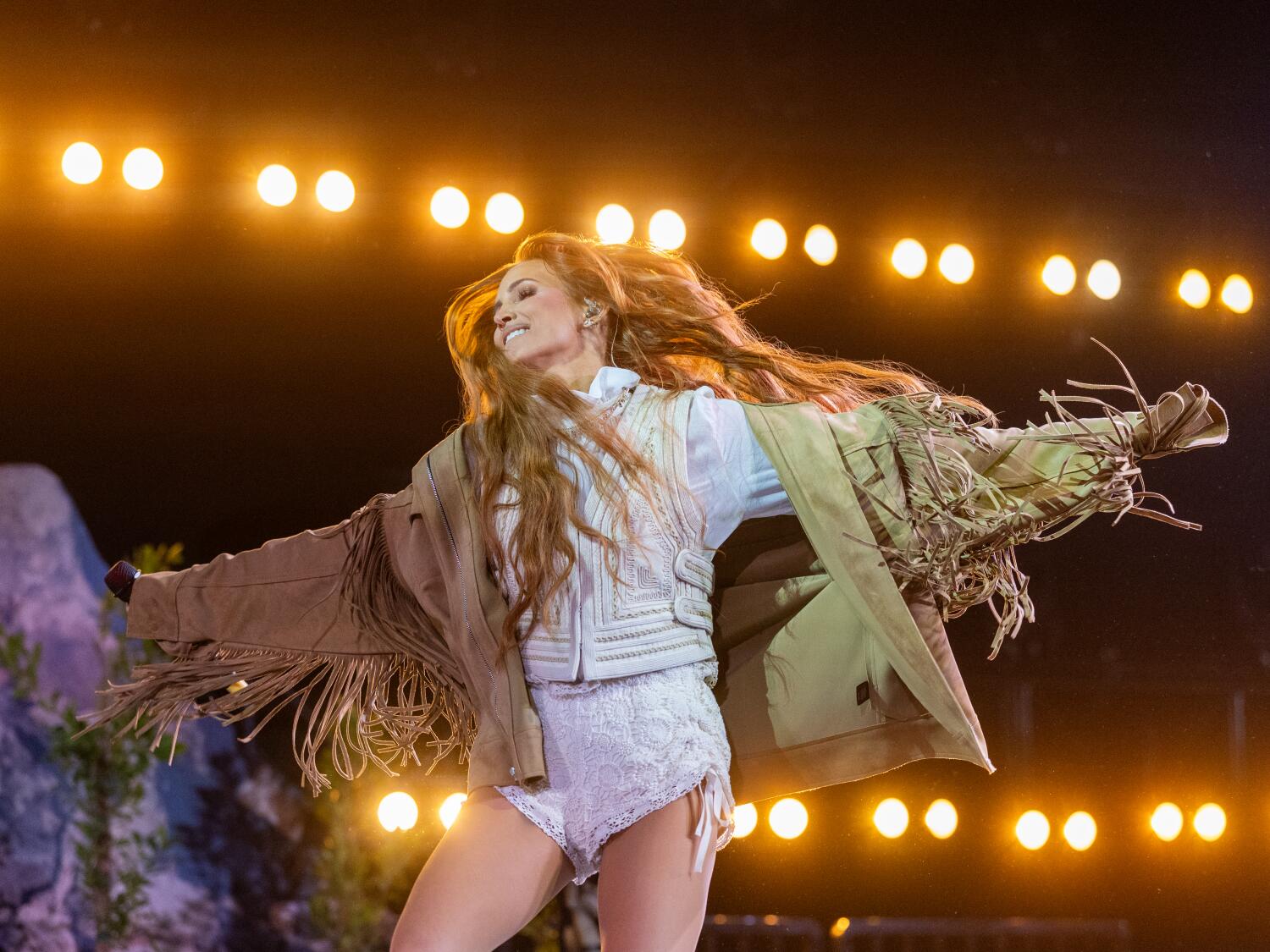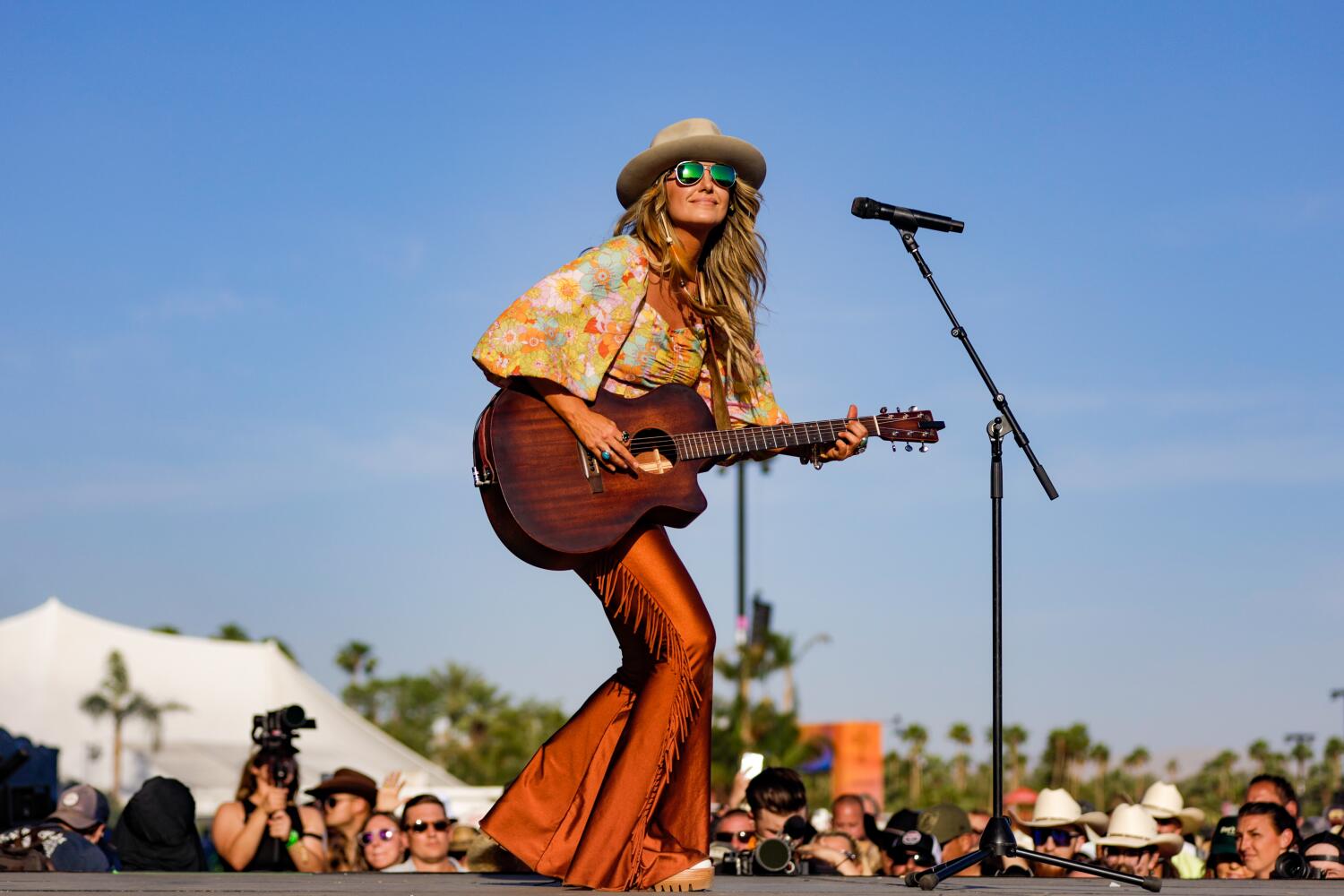
The desert is a cruel host. By Saturday afternoon in Indio, the Empire Polo Club has transformed from a manicured emerald dream into a grit-toothed endurance test. The wind kicks up, carrying the scent of dry sage and expensive sunscreen, and the heat begins to press against your temples like a physical weight. Your lungs feel lined with fine silt. Yet, tens of thousands of people are currently standing in that heat, vibrating with a singular, desperate energy.
They are there because Stagecoach isn't just a music festival. It is a pilgrimage of the soul for those who find god in a steel guitar.
But maybe you aren't there. Maybe you are sitting on a couch three states away, the air conditioning humming a steady rhythm that mimics the heartbeat of the crowd you’re watching through a screen. You might feel like a voyeur, an outsider looking through a digital keyhole. You aren't. In the modern era, the livestream has become the campfire. It is the way we bridge the gap between the physical dust of California and the emotional resonance of a song that reminds us of home.
Watching Stagecoach from a distance requires a different kind of preparation than the boots-on-the-ground reality. You don’t need the bandana to filter the dust, but you do need the map to navigate the digital terrain.
The Saturday Surge
The second day of Stagecoach 2026 carries a specific tension. Friday was the introduction, the high-energy burst of arrival. Sunday is the exhausted victory lap. Saturday? Saturday is the deep water. It is the day where the lineup stretches across genres, challenging the very definition of what "country" is supposed to sound like.
Consider a hypothetical fan named Sarah. She’s watching from a laptop in a darkened kitchen in Tennessee. She doesn’t care about the logistics of the shuttle pass or the $15 bottles of water. She cares about the moment Lainey Wilson steps onto the Mane Stage. For Sarah, and for millions like her, the livestream isn’t a convenience. It is a lifeline.
The broadcast begins its descent into the desert evening via Amazon Music’s channels on Twitch and Prime Video. This isn't the grainy, buffering nightmare of a decade ago. It is a multi-camera, high-definition immersion that captures the beads of sweat on a performer's forehead and the way the purple shadows stretch across the San Jacinto Mountains.
The Order of the Evening
To catch the lightning, you have to know when the storm hits. The Saturday schedule is a curated collision of styles.
Early in the afternoon, the vibes are eclectic. You have the soulful, genre-bending presence of Teddy Swims. He doesn’t fit the traditional mold of a cowboy, but his voice carries the same weight of heartbreak and redemption that has fueled country music since the Carter Family. His set is the bridge—the reminder that soul and country are merely two different branches of the same weathered tree.
Then comes the pivot. Bush takes the stage, bringing a mid-nineties grit that feels like a fever dream in the middle of a country festival. It works because the desert thrives on contradictions. The distorted guitars cut through the dry air, a sonic palate cleanser before the night turns back toward the heartland.
As the sun begins its final dip behind the palms, Pitbull arrives. "Mr. Worldwide" in the middle of a rodeo. On paper, it sounds like a mistake. In practice, it is a masterclass in energy. The livestream captures the sheer absurdity and brilliance of thousands of people in Stetson hats dancing to Miami bass. It is a reminder that we are all just looking for a reason to move.
The Bell of the Ball
Everything on Saturday leads to Lainey Wilson.
If you are watching the stream, pay attention to her eyes. Wilson represents a shift in the industry—a return to the "bell-bottom country" roots that feels authentic because it is authentic. She is the character at the center of this narrative, the one who spent years living in a camper trailer before the world decided she was an overnight success.
When she plays "Watermelon Moonshine," the digital barrier disappears. You aren't watching a broadcast anymore. You are feeling the collective exhale of a crowd that sees themselves in her lyrics. This is why we tune in. We want to see the moment someone earns their crown.
How to Access the Mirage
Navigating the stream is a matter of digital geography. You don’t need a ticket, but you do need a plan.
The primary artery for the weekend is the Amazon Music channel on Twitch. It is free, accessible, and comes with a live chat that functions as a digital grandstand. There is something profoundly human about seeing thousands of fire emojis scroll past as a guitar solo peaks. It is the closest we can get to a shared roar.
For those who prefer a more cinematic experience, the Prime Video app carries the same feed. It allows you to throw the desert onto your biggest screen, turning your living room into a VIP cabana without the $2,000 price tag.
The broadcast usually kicks off around 4:00 PM PT. This timing is deliberate. It catches the transition from the harsh light of day to the "Golden Hour," that fleeting window where the desert looks like a painting and every performer looks like a legend.
The Stakes We Don't See
We often treat these livestreams as background noise—something to have on while we fold laundry or scroll through our phones. But there is a silent battle happening behind the scenes.
Engineers are fighting the heat to keep servers cool. Camera operators are battling the wind to keep shots steady. Producers are making split-second decisions on which angle captures the emotion of the moment. When the feed stutters for a second, it isn't just a technical glitch; it is the desert trying to reclaim its silence.
For the artists, the stakes are even higher. They know they aren't just playing to the people in the front row who are covered in dust and beer. They are playing to the kid in a bedroom in Ohio, the nurse on a break in London, and the farmer in Nebraska. The lens is a bridge, and the performance has to be strong enough to cross it.
The Ghost in the Machine
There is a specific kind of loneliness in watching a festival from afar, but there is also a specific kind of clarity. You see the scale of it. You see the way the lights of the Ferris wheel create a neon halo over the valley. You see the sheer volume of humanity gathered in one place to celebrate nothing more than a melody and a rhyme.
As the final notes of the Saturday headliner ring out and the stream begins to fade to black, the dust in Indio is still swirling. The people there will head to their tents or their air-conditioned hotels, their ears ringing and their skin glowing with sunburn.
You, the digital traveler, will simply close your laptop or turn off your TV. The room will be quiet again. But for a few hours, you weren't in your house. You were standing in the dirt, breathing in the sagebrush, watching the sky turn from orange to deep indigo, reminded that music is the only thing that can truly beat back the silence of the desert.
The screen goes dark, but the rhythm remains, a ghost of the desert lingering in the cool air of your room.