The federal inflation report scheduled for release on May 12, 2026, is no longer a standard economic scorecard. It is a war dispatch. As the military conflict involving the U.S., Israel, and Iran grinds into its third month, the primary driver of domestic price instability has shifted from post-pandemic cooling to a violent, external supply shock. April’s Consumer Price Index (CPI) is expected to show a headline jump toward 3.8% or 4.0%, a sharp reversal of the downward trend seen just six months ago.
While surface-level analysis focuses on the price at the pump, the structural damage runs deeper. The closure of the Strait of Hormuz has essentially removed 20% of the world’s oil trade from the board. This is not a temporary dip in production; it is a systemic severance of the global energy artery. The result is a "cost-push" inflation cycle that the Federal Reserve cannot simply interest-rate away without risking a deep, protracted recession.
The Diesel Tax on Everything
When the average American sees gasoline hitting $4.50 or $5.00 a gallon, the psychological impact is immediate. However, the true inflationary poison is found in the 48% surge in diesel prices since February. Unlike gasoline, which largely impacts personal discretionary spending, diesel powers the industrial backbone of the country.
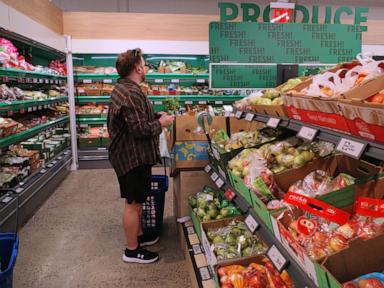
Trucking firms, shipping lines, and rail operators do not absorb these costs. They apply fuel surcharges. Those surcharges then filter into the price of every head of lettuce, every gallon of milk, and every piece of construction equipment. This is known as "indirect pass-through," and it ensures that even if you don't drive a car, you are paying the "Iran war tax" at the grocery store checkout.
The Fertilizer and Food Connection
The Middle East conflict has disrupted more than just crude oil. Natural gas—the essential feedstock for ammonia-based fertilizers—has seen spot prices in some regions surge by over 140%.
- Fertilizer Shortages: Damage to facilities like Qatar’s Ras Laffan complex has taken 17% of that nation's LNG capacity offline.
- Planting Season Pressure: U.S. farmers entering the 2026 planting season are facing a dual crisis of high fuel for machinery and skyrocketing costs for soil nutrients.
- Lagged Inflation: The food price hikes resulting from today's fertilizer costs won't fully hit the CPI for another six to nine months, suggesting that even if a ceasefire were signed tomorrow, food inflation is already "baked in."
The Federal Reserve's Impossible Choice
For much of 2025, the Fed was preparing for a "soft landing." Those plans are now in the shredder. Before the war began in late February, markets were betting on multiple interest rate cuts to stimulate a cooling labor market. Now, the CME FedWatch tool shows traders have completely priced out any cuts for the remainder of 2026.
Central banks are traditionally taught to "look through" energy shocks, treating them as volatile, short-term noise. But this shock is different. When inflation has already been sitting above the 2% target for years, a massive energy spike risks "unanchoring" inflation expectations. If businesses and workers begin to expect 4% or 5% inflation as the new permanent reality, they will raise prices and wage demands accordingly, creating a self-fulfilling spiral.
The Stagflation Ghost
We are seeing the early symptoms of stagflation: stagnant economic growth coupled with high inflation.
- Consumer Pullback: As households spend $1.50 more per gallon than they did in January, they have less money for retail, travel, and dining.
- Manufacturing Slowdown: High energy costs act as a tax on production, forcing factories to scale back hours or delay expansions.
- Sticky Prices: Service-sector inflation remains high, and the added energy costs make it nearly impossible for the headline number to drop back to the Fed's "comfort zone."
Regional Disparities and Economic Friction
The pain is not distributed evenly. Data shows the American Midwest is bearing the brunt of the crisis, with states like Ohio seeing gas price hikes of 72% since the conflict began. This regional volatility creates friction in the national economy, as transportation hubs in the center of the country become significantly more expensive to operate than coastal ports that may have different energy sourcing or shorter supply lines for specific goods.
Even the tech sector is not immune. Investigative look into the supply chain reveals that the Persian Gulf is a major exporter of aluminum and sulfur, the latter being a byproduct of the refining process. Shortages in these base materials are already causing "micro-shocks" in industries ranging from aerospace to AI data center construction.
Moving Beyond the Headline Number
The May 12 report will likely be dominated by the "headline" figure, but the real story lies in the Core CPI—which excludes food and energy. If the Core CPI begins to climb alongside energy, it means the war is no longer just a "gas station problem." It means the war has successfully infected the broader pricing structure of the American economy.
Watch the "Transportation Services" and "Food at Home" categories in the upcoming data. These are the front lines of the pass-through effect. If these numbers show month-over-month acceleration, the Fed may be forced to do the unthinkable: raise interest rates into a slowing economy to defend the value of the dollar.
The era of "transitory" excuses is over. The transition we are currently navigating is not toward lower prices, but toward a war-footing economy where energy security is the only metric that truly matters. Governments can release strategic reserves or offer temporary subsidies, but these are band-aids on a severed artery. Until the Strait of Hormuz reopens to full capacity and the risk premiums for global shipping drop, the American consumer will remain the primary financier of the conflict in the Middle East.
Every time you tap your card at the pump, you aren't just buying gas. You are paying for the fragility of a globalized energy system that proved far more brittle than the experts claimed. This isn't just an inflation report. It’s a reality check.
Prepare for the June and July data to be worse.
The logistical delays in global shipping mean the full weight of the April price spikes hasn't even reached the final retail shelf yet. We are currently living in the gap between the explosion and the shockwave.
Audit your supply chains. Tighten your household budgets. The "new normal" of 2026 is an economy defined by the price of a barrel of oil and the length of a ceasefire.
Don't wait for the Fed to save the day. They are just as trapped by the data as you are.