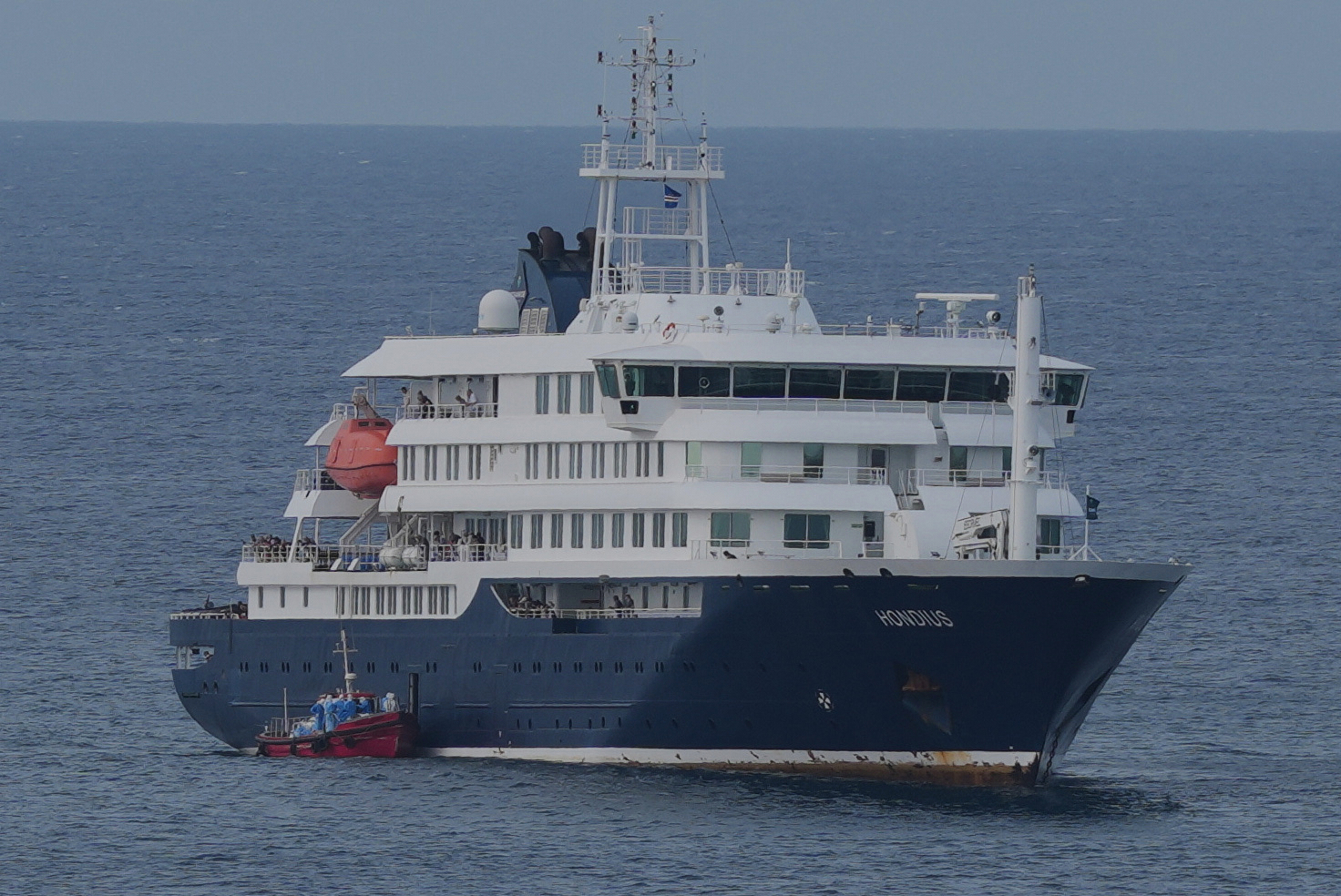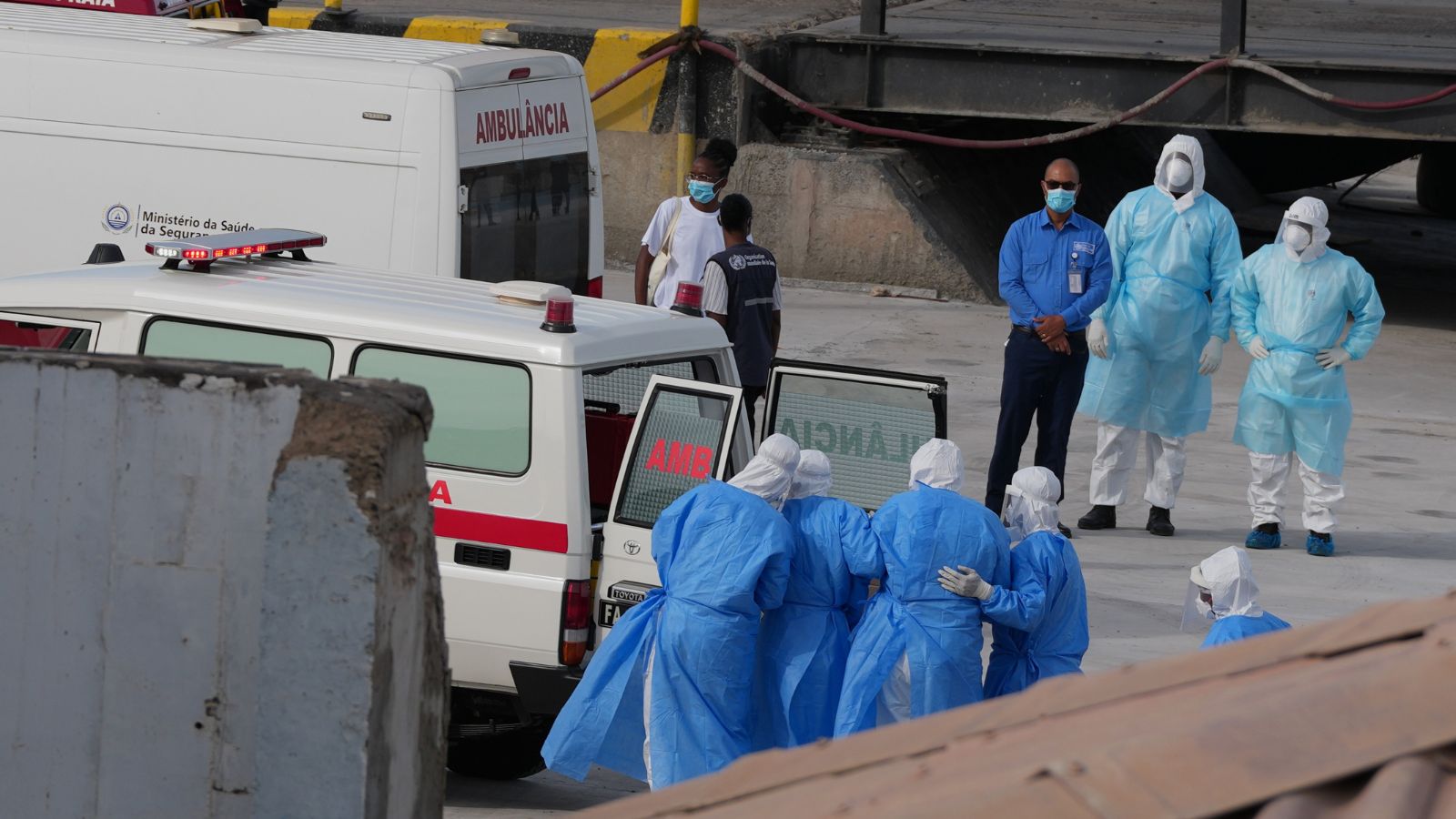
The containment of a viral outbreak within a closed maritime environment is governed by the speed of initial detection relative to the pathogen's incubation period. When a Hantavirus Pulmonary Syndrome (HPS) fatality occurs on a cruise ship, the event represents a failure of primary prevention and the immediate onset of a complex surveillance crisis. Hantaviruses are not typically associated with maritime environments; they are zoonotic, primary-host-specific viruses carried by rodents. The presence of such a pathogen on a vessel indicates a breach in the structural integrity of the ship’s supply chain or docking protocols, transforming a luxury environment into a high-density incubator for respiratory distress.
The Mechanistic Path of Hantavirus Transmission
Understanding the risk to the remaining passengers requires a precise deconstruction of how Hantavirus moves from a rodent host to a human lung. Unlike norovirus, which dominates cruise ship health discourse through fecal-oral transmission, Hantavirus is contracted through the inhalation of aerosolized viral particles found in rodent excreta, saliva, or urine.
In the confined geography of a cruise ship, this transmission usually occurs through the Heating, Ventilation, and Air Conditioning (HVAC) systems or during the cleaning of dormant storage areas. The virus remains viable in the environment for several days depending on temperature and humidity. Once inhaled, the virus targets the pulmonary endothelial cells. This triggers an immune response that increases capillary permeability, leading to the rapid accumulation of fluid in the lungs. The clinical progression from flu-like symptoms to acute respiratory failure can occur in less than 24 hours, leaving a narrow window for intervention once the prodromal phase ends.
Structural Vulnerabilities in Cruise Ship Logistics
The introduction of Hantavirus into a vessel is rarely an accident of passenger biology; it is an infrastructure failure. Three specific vectors facilitate this entry:
- Provisioning Chains: Large-scale food and supply loading in ports where rodent control is sub-standard allows for the introduction of infected deer mice or similar carriers into the ship's dry storage.
- Maintenance Cycles: Vessels undergoing dry-docking or extensive renovations in coastal shipyards are susceptible to rodent infestations when hull integrity is temporarily compromised.
- HVAC Sourcing: If a rodent nest is established near primary air intakes or within the ductwork, the mechanical ventilation system becomes a delivery mechanism for aerosolized viral loads across multiple decks.
The "First Death" referenced in the timeline is the sentinel event. Because the incubation period for Hantavirus ranges from one to eight weeks, a death occurring mid-voyage suggests the exposure likely happened at the beginning of the cruise or during the preceding embarkation window. This creates a massive "at-risk" cohort of passengers who may have already dispersed or are currently asymptomatic while carrying a lethal viral load.
The Surveillance Bottleneck: Tracking the Cohort
The strategy for tracking dozens of exposed individuals is hindered by the non-specific nature of early HPS symptoms. Fever, myalgia, and fatigue are indistinguishable from common influenza or even seasickness in its early stages. This diagnostic ambiguity creates a "surveillance bottleneck" where medical staff cannot effectively triage the population without laboratory confirmation, which is rarely available shipboard.
The logic of the tracking timeline must be categorized into three distinct phases of operational response:
The Retrospective Trace
Investigators must identify every location the deceased passenger frequented during the suspected window of infection. If the exposure was a localized event—such as a specific cabin or a storage locker—the risk is contained. If the exposure was systemic—such as the main dining hall's ventilation—the entire passenger manifest must be treated as potentially exposed.
The Clinical Monitoring Window
Public health officials utilize the 56-day maximum incubation rule to define the monitoring period. For a cruise ship, this involves a global coordination effort, as passengers often fly to different continents immediately upon disembarkation. The logistical difficulty of "tracking dozens" lies in the latency of the virus; a passenger may feel perfectly healthy during their post-cruise flight only to enter critical respiratory failure 48 hours later in a city with no experience treating HPS.
The Environmental Forensic Audit
Simultaneous to passenger tracking, the vessel must undergo a systematic search for the "source" rodent. This involves high-intensity infrared scanning and bait-station monitoring to confirm the presence and species of the rodent. Identifying the specific species is critical, as different Hantaviruses have varying mortality rates and host specificities.
Quantifying the Risk Function
The probability of a secondary outbreak ($P_o$) on the vessel is a function of three variables:
$$P_o = \frac{V_l \cdot E_t}{C_m}$$
Where:
- $V_l$ is the Viral Load present in the environment (determined by the extent of the infestation).
- $E_t$ is the Exposure Time of the passenger population.
- $C_m$ is the Containment Margin (the speed and efficacy of the disinfection protocols).
The primary risk to the maritime industry is not the virus itself, but the "Information Asymmetry" between the cruise line and the public. If the ship continues to operate while the trace is ongoing, the $E_t$ increases, potentially leading to a cluster of cases that could trigger a complete industry shutdown in the affected region.
The Failure of Standard Sanitation Protocols
Standard maritime sanitation focuses heavily on surfaces (fomites) to combat norovirus. However, these protocols are insufficient for Hantavirus. Bleach solutions are effective at neutralizing the virus on contact, but they do not address the airborne risk.
The immediate tactical requirement is a shift to HEPA-filtered air purification and the cessation of "dry" cleaning methods (sweeping or vacuuming without HEPA) which only serve to re-aerosolize the virus. Furthermore, the use of Personal Protective Equipment (PPE) for crew members must be elevated to N95 respirators or higher. The common surgical masks often found in shipboard medical centers provide inadequate protection against the fine mist of viral particles associated with Hantavirus.
Operational Constraints in Maritime Law and Health
Tracking passengers across international borders introduces legal friction. Sovereign states have varying reporting requirements, and cruise lines—often flagged in "open registry" nations—may face conflicting mandates regarding data privacy and public health disclosure.
The bottleneck in tracking "dozens" of individuals often stems from:
- Manifest Accuracy: Real-time location data for passengers on large vessels is often imprecise.
- Post-Disembarkation Dispersal: The speed of modern air travel means an exposed individual can be anywhere in the world within 24 hours of leaving the gangway.
- Resource Scarcity: Small local health departments in port cities may lack the specialized reagents required for Hantavirus IgM and IgG antibody testing.
Immediate Strategic Reorientation for Maritime Operators
Operators facing a Hantavirus event must abandon the "wait and see" approach characteristic of standard viral outbreaks. The high mortality rate of HPS—historically near 38%—necessitates an aggressive, pre-emptive posture.
The vessel must be removed from service immediately for a comprehensive environmental overhaul. This is not a "deep clean" in the marketing sense, but a mechanical engineering project. Every inch of the HVAC ductwork must be inspected for rodent ingress. Sourcing protocols must be audited to identify the specific port of entry for the vector.
For the tracked individuals, the focus must shift from passive monitoring to active diagnostic testing. Relying on self-reporting is a failed strategy due to the rapid onset of the "leakage" phase of the disease. Any individual from the identified high-risk cohort presenting with even a mild fever must be hospitalized with the capacity for Extracorporeal Membrane Oxygenation (ECMO), which remains the only viable support for severe HPS cases.
The maritime industry must integrate rodent-borne pathogen screening into their standard Safety Management Systems (SMS). This requires the installation of permanent, monitored rodent exclusion barriers at all gangways and loading docks, and the mandate of HEPA-integrated ventilation in all supply handling areas. The "First Death" is a trailing indicator of a system that has already failed; the goal of the modern operator is to move the detection point to the "First Sight" of a vector, long before a passenger enters the incubation window.