Marie-Claire’s morning routine in Miami is a rhythmic dance of normalcy. She brews coffee, ensures her daughter’s backpack contains exactly one juice box and one granola bar, and checks the weather. But for the last few months, every time she looks at the calendar, she sees more than just dates. She sees a countdown.
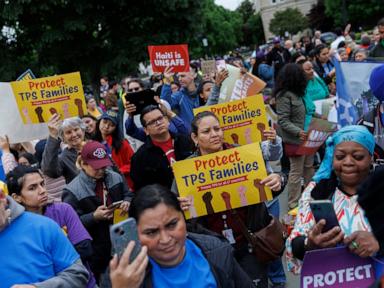
She is one of the thousands of people currently living under Temporary Protected Status, or TPS. To most, it is an acronym buried in the dense thicket of immigration law. To Marie-Claire, it is the thin membrane between her current life—working as a nurse, paying a mortgage, watching her American-born child grow—and a return to a country that, for all intents and purposes, no longer exists as she knew it.
The Supreme Court of the United States is now weighing the fate of this program. At its core, the legal battle centers on a singular, chilling question: Does the executive branch have the unilateral power to end protections that have allowed people from nations like Haiti and Syria to build lives here for decades?
The Architecture of Limbo
TPS was never meant to be a permanent solution. It was a handshake. A promise made in the wake of catastrophe. When a massive earthquake leveled Port-au-Prince or when civil war turned Syrian cities into skeletal remains, the United States offered a reprieve. The logic was simple: we cannot send people back to a graveyard.
But "temporary" is a flexible word. In the eyes of the law, it denotes a brief pause. In the reality of human experience, ten or fifteen years is a lifetime. You cannot tell a person to "integrate" and "contribute" while simultaneously reminding them that their presence is a clerical error waiting to be corrected.
Consider the logistics of a life built on a shifting foundation. Under TPS, you are allowed to work. You pay into Social Security. You pay federal and state taxes. You can get a driver's license. But you cannot plan for a retirement you might never see in this country. You cannot easily visit a dying relative abroad because "Advance Parole" travel documents are a bureaucratic gamble.
The legal arguments currently before the Court are dry. They focus on the Administrative Procedure Act and whether the previous administration’s attempt to terminate these protections was "arbitrary and capricious." Lawyers argue over footnotes and the precise definition of executive discretion.
The real argument, however, is happening in the kitchens of Little Haiti and the suburbs of Ohio.
The Invisible Economy of Protection
If you stripped away the labor provided by TPS holders tomorrow, the American healthcare and construction sectors would feel an immediate, sharp pain. This isn't a hypothetical. Statistical data shows that Haitian TPS holders alone contribute billions to the GDP. They are not "draining" resources; they are the people changing the linens in hospitals and framing the houses in expanding zip codes.
When the government moves to end these protections, it isn't just deporting individuals. It is dismantling a workforce.
Imagine a small construction firm in Florida. The foreman, let’s call him Elias, has been here since the 2010 earthquake. He knows the local building codes better than the inspectors. He has trained a dozen younger workers. If the Court rules that the administration can end TPS without a granular, country-by-country justification, Elias disappears. The firm loses its institutional memory. The projects stall. The local economy stutters.
This is the invisible stake. We often talk about immigration as a ledger of costs, but we rarely account for the cost of removal—not just the price of the planes and the agents, but the loss of the tax revenue, the vacant homes, and the shattered community networks.
The Geography of Fear
For a Syrian family in Allentown, Pennsylvania, the news from the Supreme Court feels like a weather report for a storm that never ends. Syria remains a landscape of fractured power and scorched earth. To suggest that the "temporary" conditions that necessitated their flight have been resolved is to ignore the reality on the ground.
The law requires the Secretary of Homeland Security to review these countries periodically. If the conditions have improved, the status is supposed to end. But "improved" is a relative term. Is a country safe because the bombs have stopped, even if the secret police remain? Is it safe because the rubble has been cleared, even if there is no clean water or electricity?
The current legal challenge suggests that the government didn't look closely enough at these nuances. It argues that the decision to end the program was driven by a political desire to reduce immigration numbers rather than an honest assessment of whether a father can take his kids back to Damascus without them stepping on a landmine.
The Human Toll of the Gavel
We tend to view Supreme Court cases as intellectual exercises. We wait for the "Opinion" to drop on a Tuesday morning, read the headlines, and move on.
But for the person holding the juice box in the Miami kitchen, the ruling is an earthquake of a different kind.
If the Court finds that the administration has the absolute right to terminate TPS at will, nearly 400,000 people face an impossible choice. They can return to a "home" they no longer recognize, leaving behind their children who are U.S. citizens. Or they can stay, retreating into the shadows of the undocumented world, losing their right to work, their right to drive, and their sense of security.
They go from being "essential workers" to "fugitives" with the stroke of a pen.
The psychological weight of this uncertainty is a slow-motion trauma. It affects how people invest in their homes. It affects whether a student applies for a college loan. It affects the very heart of the American Dream—the idea that if you work hard and play by the rules, you can earn your place.
These individuals played by the rules. They registered with the government. They gave their fingerprints. They paid their fees. They lived their lives in the light. Now, that very transparency is being used as a map for their removal.
The Weight of the Wait
The justices will sit in their high-backed chairs and deliberate. They will look at the statutes. They will weigh the power of the President against the rights of the individual.
Outside, the world continues. Marie-Claire will go to her shift at the hospital. She will check the vitals of patients who have no idea that their nurse is wondering if she will be allowed to stay in the country by Christmas. She will smile, she will provide care, and she will wait for the news.
We are a nation of laws, yes. But we are also a nation of people who have been told that we value stability, family, and the dignity of work.
When the ruling finally arrives, it won't just be a victory for one legal theory over another. It will be the moment we decide whether a decade of contribution can be erased by a change in the political wind, or if the roots these families have grown are deep enough to hold.
The calendar keeps turning. The clock keeps ticking. In thousands of homes across the country, the lights are on, the coffee is brewing, and a whole population is holding its breath.
Justice is often depicted as blind, but in this case, the consequences are staring us right in the face.