Stop mourning the goose.
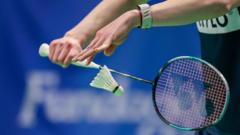
The badminton world is currently gripped by a collective panic over a "feather shortage," acting as if the soul of the sport is tied to the wing of a bird. Major manufacturers and international bodies are conducting "trials" for synthetic alternatives with the somber tone of a funeral procession. They treat the transition to synthetic shuttles as a necessary evil—a desperate pivot forced by supply chain fragility. Don't miss our recent article on this related article.
They are wrong.
The obsession with the C-grade goose feather isn't about performance or "feel." It is an expensive, elitist habit that has stifled the growth of the sport for decades. We shouldn't be "trialling" synthetics because feathers are scarce; we should have burned the feather monopoly to the ground ten years ago because it is objectively inferior technology for 99% of the planet. If you want more about the context here, The Athletic provides an informative summary.
The Aerodynamic Lie
Purists will tell you that a synthetic shuttle can’t mimic the "decrescendo" of a feather shuttle—the way it slows down sharply after the initial hit. They point to the way feathers overlap to create a specific drag coefficient that plastic skirts haven't perfectly replicated.
I’ve spent twenty years on the court, from humid regional halls to climate-controlled professional arenas. I have seen thousands of dollars literally shredded in the name of "authentic flight." Here is the reality: the "perfect" flight of a feather shuttle lasts for approximately three minutes.
After three heavy smashes, a feather shuttle begins to degrade. A single spine cracks. A barb frays. The moment that happens, the aerodynamic profile changes. It becomes unpredictable. It wobbles. In a high-level match, players swap shuttles every two to four points.
We are worshiping a piece of equipment that is broken for 80% of its lifespan.
When people ask, "Why don't synthetic shuttles feel right?" they are asking the wrong question. The real question is: "Why have we conditioned players to believe that a fragile, inconsistent, and decaying projectile is the gold standard?" We’ve built the mechanics of the sport around a flaw, not a feature.
The Hidden Cost of Elitism
Badminton is the second most popular sport in the world by participation, yet it struggles for commercial airtime and professional prestige in the West compared to tennis. Why? Because the barrier to entry isn't just a racket; it’s the recurring tax of the bird.
If you are a serious club player, you are burning through a $30 tube of shuttles every single session. In a year, your shuttle bill dwarfs the cost of your rackets, shoes, and court fees combined. This is a massive drain on grassroots development.
The "feather shortage" isn't a crisis; it’s an intervention. By forcing the hand of organizations like the BWF (Badminton World Federation), the market is finally being pushed toward a sustainable, durable, and—most importantly—consistent product.
Imagine a scenario where a single shuttle lasts an entire three-set match without changing its flight characteristics.
- Tournament costs plummet.
- Entry fees for juniors drop.
- The "luck" factor of a slightly ruffled feather affecting a net tumble disappears.
The industry isn't "testing" synthetics to save the sport; they are testing them because the old business model of selling disposable trash to players is finally hitting a wall.
The Engineering Myth
Critics claim that synthetic shuttles are "too fast" or "too bouncy." This isn't a limitation of physics; it’s a failure of imagination.
We can put a rover on Mars, but you want me to believe we can't calibrate the drag of a nylon polymer? The problem is that manufacturers have spent forty years trying to copy the goose feather instead of surpassing it. They’ve been trying to make "fake feathers" instead of making a "better shuttle."
Look at the Yonex Carbonex or the newer synthetic prototypes. The resistance to these tools isn't based on data; it's based on nostalgia. We see this in every sport. Tennis moved from wood to graphite, and the "purists" screamed that the touch was gone. They were wrong then, and the purists in badminton are wrong now. Graphite made tennis faster, more athletic, and more accessible. Synthetic shuttles will do the same for badminton.
Stop Asking if it’s "As Good As"
The "People Also Ask" sections of the internet are filled with queries like: "Are synthetic shuttles as good as feather?"
This is a losing frame. Feather shuttles are terrible. They are ecologically expensive, ethically questionable, and mechanically inconsistent. If we invented badminton today, no engineer in their right mind would suggest using the feathers of a bird held together by thread and glue as the primary projectile.
The goal shouldn't be to match the feather. The goal should be to create a projectile that is:
- Indestructible: Lasting 100+ smashes without a change in flight.
- Standardized: Every shuttle in every tube performs exactly the same regardless of humidity or altitude.
- Visible: Using materials that allow for better tracking on high-definition broadcasts.
The Brute Truth About the "Feel"
When a pro player says a synthetic shuttle "feels weird," what they mean is "I have spent 15,000 hours practicing with a specific type of broken equipment and I don't want to relearn my timing."
I sympathize with the battle scars of a career professional. I really do. But the sport cannot be held hostage by the muscle memory of the top 0.001%.
The downside of the synthetic shift is real: the game will change. It will likely become faster. Defense might become harder. The "slice" at the net might behave differently. But these are tactical evolutions, not the end of the world. The sport survived the move from 15-point sets to the rally point system. it survived the transition from steel to carbon fiber frames. It will survive the death of the goose feather.
The Actionable Reality
Stop buying "cheap" feathers. If you can’t afford the $40-per-tube tournament-grade shuttles, do not waste your money on the mid-tier feathers that last for two hits before they start to spiral. You are literally throwing money into a trash can.
Instead, demand better synthetics. Pressure the brands. Use the high-end nylon shuttles in your club matches. Force yourself to adapt to the new flight paths. The "feather shortage" is going to get worse as global logistics and animal welfare regulations tighten. The era of the bird is over.
You can either spend the next five years complaining that the game "doesn't feel the same," or you can be the player who masters the new physics before everyone else.
The shuttle of the future isn't going to come from a farm; it’s going to come from a lab. It’s time we stopped acting like that’s a bad thing.
Pick up a synthetic, hit it as hard as you can, and realize that for the first time in your life, the bird didn't break. That isn't a compromise. That's progress.