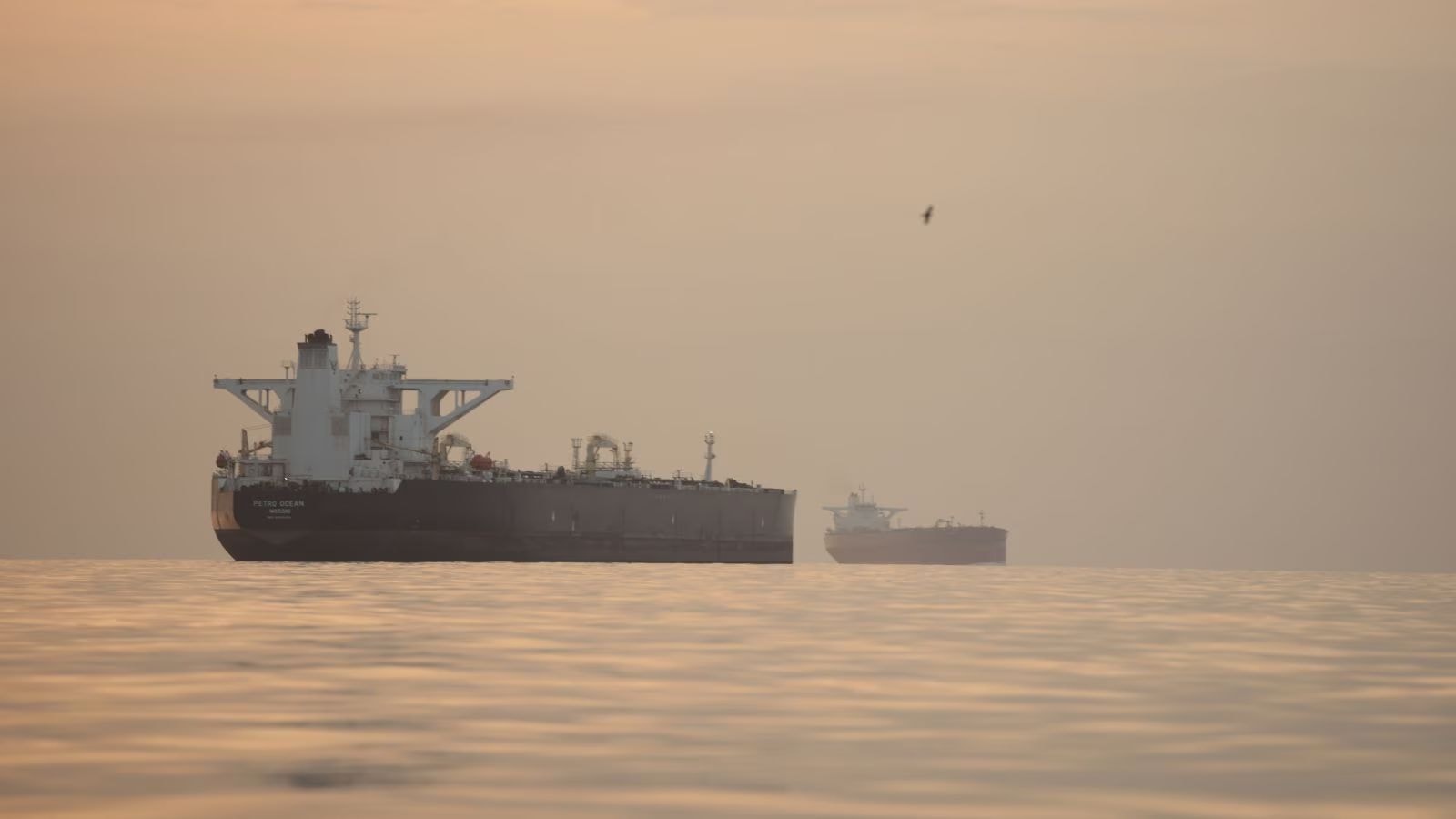
The sea does not care about diplomacy. When the first shell whistled across the choppy turquoise waters of the Strait of Hormuz, hitting the hull of an Indian-flagged tanker, the sound wasn't just steel meeting fire. It was the sound of a carefully constructed geopolitical tightrope beginning to fray.
In the control rooms of New Delhi, the air likely grew thin. For the merchant sailors aboard those vessels—men who measure their lives in knots and nautical miles—the abstract concept of "India-Iran relations" suddenly became very concrete. It smelled like burning oil and salt.
The Strait of Hormuz is a choke point. That is the technical term. But for the global economy, it is more like a jugular vein. Imagine a corridor so narrow that nearly a fifth of the world’s oil consumption must pass through it daily. Now, imagine that corridor becoming a shooting gallery.
The Representative and the Reassurance
Shortly after the smoke cleared, a representative from Tehran stood before a bank of microphones. The message was practiced. It was polished. He spoke of "strong ties" and "unshakable bonds" between the two nations. He spoke as if the fire on the water was merely a misunderstanding, a glitch in a centuries-old friendship.
History tells a different story. India and Iran share a civilizational memory that stretches back to the Silk Road, long before modern borders were drawn in the sand. They share Persian poetry, linguistic roots, and a mutual need for energy and trade. Yet, the modern world is messier than a Rumi poem. India is a rising power trying to maintain a delicate balance between the West and the Middle East. Iran is a nation often at odds with that same West, navigating a maze of sanctions and regional rivalries.
When an Indian tanker is fired upon, the representative’s words act as a cooling agent. They are designed to prevent a spark from becoming a conflagration. But for the families of the crew waiting in Kerala or Punjab, "strong ties" don't repair a charred bulkhead or erase the trauma of a midnight alarm.
The Invisible Stakes at Sea
Consider a hypothetical captain. We will call him Rajesh. Rajesh has spent twenty years on the water. He knows the rhythm of the tides and the specific hum of his engine. For him, the Strait of Hormuz isn't a line on a map in a briefing room. It is a place where he has to double his watch, where every small boat on the horizon looks like a threat, and where the "strong ties" mentioned in news reports feel very far away.
When his ship is targeted, it isn't just an attack on a vessel. It is a stress test for an entire nation's foreign policy. India imports over 80% of its crude oil. Most of that comes from the Persian Gulf. If the Strait becomes impassable, the price of petrol at a pump in a small village in Bihar doesn't just go up—the entire machinery of the Indian dream slows down.
The representative in Tehran knows this. Delhi knows this. This is why the rhetoric remains calm even when the situation is volatile. Neither side can afford a divorce.
The Architecture of a Relationship
The bond between these two giants is built on more than just oil. It is built on the Chabahar Port, India’s gateway to Central Asia, bypassing a hostile Pakistan. It is built on the International North-South Transport Corridor. These are massive, multi-billion dollar bets on a shared future.
But those bets are placed on a table that is constantly shaking.
The firing on the tankers represents a terrifying variable: the "rogue" element. In the complex web of Iranian internal politics, different factions often have different agendas. A diplomat might be shaking hands in a boardroom while a paramilitary unit is pulling a trigger in the Gulf. This creates a haunting uncertainty. How do you hold a friend accountable when the friend claims they didn't mean to hit you?
India’s response has been a masterclass in strategic patience. It deployed naval warships to escort its merchant vessels—a move called Operation Sankalp. It sent a message: We trust your words, but we are keeping our hand on our sword.
Why the Silence Matters
There is a specific kind of silence that follows a maritime incident. It is the silence of back-channel negotiations. While the public hears about "strong ties," the private conversations are likely much sharper. Indian officials have to demand safety for their citizens without alienating a partner that provides a crucial strategic buffer.
It is a grueling way to run a country.
The human cost of this tension is often buried in the business section of the newspaper. We talk about "tonnage" and "barrels per day." We rarely talk about the anxiety of a young deckhand who realizes his job has suddenly placed him in the middle of a shadow war. We don't talk about the sleepless nights of the diplomats who have to write the scripts that keep the peace.
The reality of 2026 is that geography is destiny. India cannot move itself away from the Middle East. Iran cannot change its neighbors. They are locked in a room together, and sometimes, the furniture gets broken.
The Long View
If we look past the immediate smoke of the tankers, we see a relationship that is maturing through crisis. True strength in diplomacy isn't the absence of conflict; it is the ability to survive it. By reaffirming their ties immediately after a military incident, both Tehran and Delhi are signaling to the world that their long-term interests outweigh their short-term friction.
But the sailors on the water don't have the luxury of the long view. For them, the world is only as large as the ship they stand on and the horizon they watch.
The representative’s speech ended, the cameras were packed away, and the tankers continued to move through the narrow, dangerous water. The fires were extinguished, but the heat remained. In the end, the "strong ties" between nations are only as durable as the trust between the people who sail the ships and the leaders who command the silence.
The sea remains indifferent. It waits for the next ship, the next shell, and the next carefully worded reassurance. Somewhere in the middle of the Strait, a captain watches the radar, waiting for the dawn, hoping that the diplomats are as good at their jobs as he is at his.