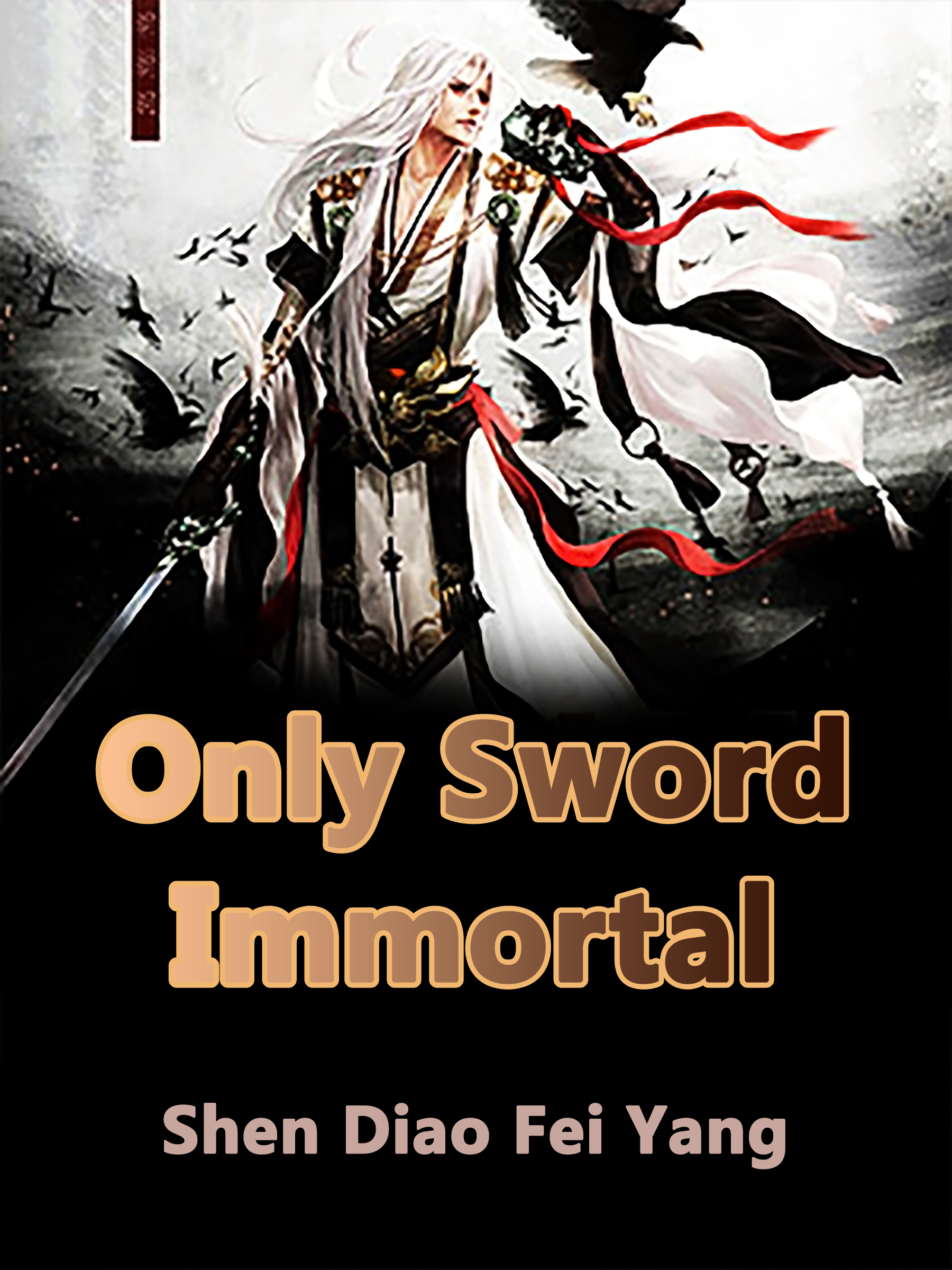
If you’ve spent any time on web novel platforms lately, you’ve likely bumped into a name that keeps surfacing: Su Yi. He is the protagonist of First Immortal of the Sword, and honestly, he’s kind of a breath of fresh air in a genre that sometimes feels like it’s just repeating the same three tropes. People are obsessed. The story, written by the prolific Xiao Jintian, has climbed the rankings on sites like Wuxiaworld and various translation hubs for a very specific reason. It isn't just about hitting things harder. It’s about the weight of memory and the sheer, unadulterated arrogance of a man who actually has the skills to back it up.
Most cultivation stories start with a loser. You know the drill. A kid gets bullied, finds a magic bead, and suddenly he’s a god. First Immortal of the Sword flips that script. Su Yi starts at the top—or at least, he was at the top. He was the Nine Provinces’ legendary Sword Master, the guy who sat above everyone else. Then he decided to reincarnate. Why? Because he reached a bottleneck. He realized that to go further, he had to start over. It’s a classic "New Game Plus" scenario, but with much higher stakes and a lot more sword-fighting. Discover more on a similar topic: this related article.
What First Immortal of the Sword Gets Right About Reincarnation
Let’s be real for a second. The "reincarnated master" trope is everywhere. But Su Yi feels different because he isn't trying to hide who he is out of fear. He hides it because most people simply aren't worth his time. The story begins in the Qinghe City, where Su Yi is a "crippled" son-in-law. Yeah, the son-in-law trope is in here too, but it’s handled with a level of stoicism that makes the eventual payoff incredibly satisfying.
When Su Yi finally draws a sword, it isn't a struggle. It’s a massacre. The author, Xiao Jintian, does a great job of describing the "intent" of the sword. In this world, cultivation isn't just about how much energy you have in your dantian. It’s about your understanding of the "Dao." Since Su Yi already understands the Dao of the Sword better than anyone in the mortal realm, he’s basically playing a high-level character in a low-level zone. Further journalism by GQ delves into similar perspectives on this issue.
You’ve got these antagonists who think they are geniuses. They show up, flex their power, and demand respect. Su Yi usually just looks at them and tells them to get lost. It’s hilarious. But underneath the power fantasy, there’s a real sense of world-building. The Nine Provinces aren't just a flat backdrop; there’s history there, and Su Yi’s fingerprints are all over it from his past life.
The Mechanics of Su Yi’s Power
A lot of readers ask: if he’s so strong, where’s the tension?
That’s a fair point. If a guy can kill everyone with a toothpick, why keep reading? The tension in First Immortal of the Sword comes from the mystery of the Nine Hells and the secrets of the sword itself. Su Yi is searching for a path that exceeds his previous life. He isn't just trying to get back to where he was; he’s trying to surpass the "immortal" label entirely.
He uses the Abstruse Origin Lock, a cultivation technique that is essentially the hardest possible way to level up. It requires a perfect foundation. While other characters are rushing to break through to the next realm, Su Yi is constantly compressing his power. He’s building a skyscraper on a foundation of solid diamond while everyone else is building on sand.
- The Nine Provinces: The main setting, divided into various territories with their own sects.
- Sword Intent: Not just a move, but a spiritual manifestation. Su Yi’s intent is "vast like the ocean."
- The Reincarnation Secret: Why did he really come back? It’s teased slowly throughout the first 500 chapters.
Why the Web Novel Community is Hooked
Honestly, the translation quality for First Immortal of the Sword has been a huge factor in its success. Bad translations kill good stories. But the current English versions do a solid job of capturing Su Yi’s "I don't care" attitude without making him sound like a cardboard cutout.
There's also the "face-slapping." We have to talk about it. It’s a staple of the genre. Someone insults the protagonist, the protagonist reveals he's a god, everyone's jaw drops. This novel does it better because Su Yi doesn't look for these confrontations. He’s just trying to have a nice drink of wine or organize his library, and some idiot inevitably bothers him.
The pacing is fast. Short chapters. Cliffhangers. It’s designed to be addictive. If you’re a fan of Desolate Era or I Shall Seal the Heavens, you’ll find a lot to love here. But Su Yi is less "relatable" than those protagonists. He’s more like an ancient force of nature trapped in a young man’s body. He doesn't have the "shonen" energy of wanting to protect his friends; he has the energy of a retired veteran who just wants people to stop being stupid.
The Problem With Modern Cultivation Novels
Many stories in this category fall into the trap of "power creep." A character gets strong, moves to a new map, and suddenly they are the weakest again. It feels like a treadmill.
First Immortal of the Sword handles this by making the "past life" lore actually matter. Su Yi encounters his old disciples. He finds weapons he used 500 years ago. He visits ruins he built. This creates a sense of continuity. You aren't just moving to a new map; you’re reclaiming an old empire. It makes the world feel lived-in.
The magic system is also surprisingly grounded for a high-fantasy setting. There are clear rules about how alchemy works, how talismans are drawn, and why sword-spirituality is the peak of combat. It’s not just "energy goes boom." There’s a logic to why Su Yi can beat someone two realms above him. It’s technique over raw power.
How to Read First Immortal of the Sword Without Getting Overwhelmed
With over a thousand chapters (and still going in the original Chinese), this is a massive commitment. You shouldn't try to binge it all in a weekend. You’ll fry your brain.
Start with the first 100 chapters. This covers the Qinghe City arc and the initial revelation of Su Yi’s talent. If you aren't hooked by the time he leaves his "in-laws" behind, then this probably isn't the story for you.
Keep an eye on the side characters. While Su Yi is the star, characters like Ling Zhao and the various disciples he picks up along the way add some much-needed humanity to the story. They provide the perspective of how terrifying Su Yi actually is. To them, he isn't just a master; he’s an enigma.
Key Things to Look For:
- The Sword Seed: Watch how Su Yi develops his primary weapon. It’s not just an object; it’s an extension of his soul.
- The Mystery of the Nine Hells: This is the overarching plot that connects his past to his present.
- The Alchemy Sub-plots: Su Yi is a master of basically everything, and his knowledge of pills often gets him out of resource-depleted situations.
People often compare this to The Unrivaled Tang Sect or Library of Heaven’s Path. It shares that "genius protagonist" DNA. However, Su Yi is much more ruthless. He won't hesitate to eliminate a threat permanently. There’s a certain "Old World" morality to the writing that feels more in line with traditional Wuxia than modern, soft-reboot Isekai.
Moving Forward With the Story
If you're looking for a deep, philosophical exploration of the human condition, look elsewhere. This is a story about a guy who is better at swords than everyone else, and he knows it. It’s fun. It’s cathartic. It’s the ultimate "what if I could do it all over again but keep my brain" fantasy.
The best way to enjoy it is to follow the official translations. This supports the author and ensures you aren't getting a machine-translated mess where names change every three paragraphs.
Practical Steps for New Readers:
- Find a reputable host: Use Wuxiaworld or similar platforms that have high-quality editors.
- Track the realms: Keep a small note of the cultivation ranks (Qi Transformation, Origin, Spirit, etc.) because they get complicated fast.
- Don't skip the lore: The "boring" history chapters usually pay off 200 chapters later when Su Yi finds a specific artifact.
Su Yi is more than just a character; he’s a power fantasy refined to its purest form. Whether he’s drinking wine under a moonlit sky or decapitating a sect leader who overstepped his bounds, he remains one of the most consistent and entertaining protagonists in the current web novel scene. Dig in, but don't say I didn't warn you about the "just one more chapter" syndrome. It’s real.