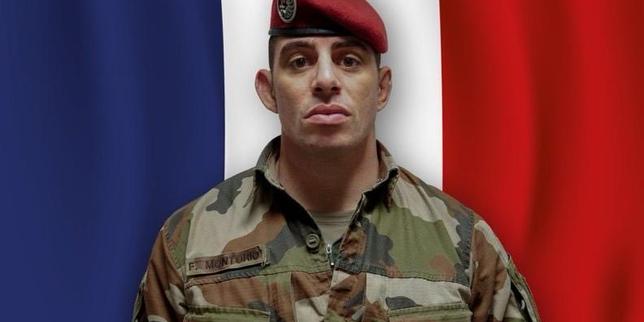
The death of a French peacekeeper in South Lebanon marks a catastrophic failure of international deterrence. For months, the United Nations Interim Force in Lebanon (UNIFIL) has operated in a tightening vise between Israeli airstrikes and Hezbollah’s tactical maneuvers. This latest fatality, linked to an attack widely attributed to Hezbollah, is not merely a localized tragedy. It is the definitive proof that the diplomatic buffer established by UN Resolution 1701 has effectively collapsed. The incident reveals a stark reality: the "Blue Helmets" are no longer viewed as neutral observers by the combatants, but as obstacles to be intimidated or targets of convenience in a high-stakes war of attrition.
The Myth of the Neutral Buffer
The geopolitical architecture of South Lebanon was built on a premise that has long since rotted. Following the 2006 war, Resolution 1701 was intended to create a zone between the Litani River and the Blue Line free of any armed personnel, assets, and weapons other than those of the Lebanese government and UNIFIL. For nearly two decades, the international community pretended this was the case.
The reality on the ground told a different story. Hezbollah spent those years weaving a sophisticated military infrastructure into the very fabric of southern villages, often right under the noses of UN patrols. When peacekeepers tried to investigate suspicious sites or enter private property, they were met with "local residents" blocking roads, seizing equipment, and occasionally turning violent. The death of the French soldier is the violent culmination of this long-term strategy of obstruction.
France has historically been the primary Western stakeholder in Lebanon. By targeting a French contingent, the perpetrators are sending a clear signal to Paris and the European Union: your presence is conditional, and your safety is no longer guaranteed if you interfere with our operational freedom. This isn't just about one attack. It is about the systematic dismantling of the UN’s authority to monitor the border.
Tactical Shifts and the End of Restraint
Since October 2023, the rules of engagement in South Lebanon have been rewritten in blood. What began as a "support front" for Gaza has evolved into a full-scale territorial conflict. Hezbollah has shifted from hit-and-run tactics to using advanced anti-tank guided missiles and explosive drones with surgical precision. On the other side, Israel has expanded its target bank, moving from border outposts to deep-state assassinations and infrastructure strikes.
In this environment, UNIFIL’s white SUVs are a relic of a different era. They are designed for monitoring a ceasefire that no longer exists. Peacekeepers find themselves trapped in a theater where both sides utilize their presence for tactical leverage. Israel often points to UNIFIL’s inability to disarm Hezbollah as justification for its own incursions. Conversely, Hezbollah uses the presence of international troops to complicate Israeli targeting, knowing that a strike hitting a UN bunker carries immense diplomatic blowback.
The French soldier’s death occurred during a period of heightened sensitivity. Intelligence suggests that movements in the sector were being tracked with more scrutiny than usual. This was not a stray bullet. It was a calculated message delivered through kinetic means. When an elite force like the French military takes a loss in a peacekeeping capacity, the internal pressure to withdraw or radically change the mandate becomes overwhelming.
The Lebanese Armed Forces Powerless Spectators
The grand strategy of the West has always relied on the Lebanese Armed Forces (LAF) to eventually take control of the south. Billions of dollars in aid and training have been poured into the LAF with the hope that they would become a viable counterweight to Hezbollah. This has proven to be a strategic fantasy.
The LAF is currently an institution on life support, mirroring the collapse of the Lebanese state. Soldiers are underpaid, and the military’s leadership is paralyzed by the country’s sectarian political gridlock. In the south, the LAF operates in a de facto partnership with Hezbollah, or at the very least, stays out of their way to avoid a civil confrontation.
Expecting the LAF to secure the border after a UN withdrawal is like asking a lifeguard to stop a tsunami with a whistle. Without a functional government in Beirut to provide political cover, the Lebanese army will continue to be a secondary actor in its own territory. This leaves UNIFIL as the only remaining international witness, and as the French casualty shows, witnesses are increasingly unwelcome.
Risks of a Total International Withdrawal
The immediate reaction to the death of a peacekeeper is often a call for "re-evaluating the mission." In diplomatic speak, this is a prelude to retreat. If France or other major contributors like Italy or Spain decide the cost of remaining in South Lebanon is too high, the entire mission could unravel.
A UNIFIL withdrawal would remove the last thin layer of friction between the Israel Defense Forces (IDF) and Hezbollah. Without the white-painted outposts and the constant radio chatter of UN patrols, the border becomes a "black zone." This would likely lead to:
- Unrestricted Israeli Ground Incursions: Without the diplomatic risk of hitting UN personnel, the IDF would have a much freer hand to conduct "cleansing" operations in the border villages.
- Hezbollah’s Total Integration: The group would no longer need to maintain the charade of civilian-only areas, turning every village into a fortified firing position.
- The Loss of De-escalation Channels: Currently, the UNIFIL commander often acts as the only indirect link between the two militaries to prevent minor incidents from spiraling into total war.
The irony is that while both sides complain about UNIFIL, both sides also use them as a convenient shield when they aren't ready for a total conflagration. The death of the French soldier threatens to break this equilibrium.
The Failure of Diplomacy in New York
While soldiers die on the hills of South Lebanon, the UN Security Council remains a theater of the absurd. Every year, the mandate for UNIFIL is renewed with minor tweaks to the language, but without any real teeth. The mission lacks a Chapter VII mandate, which would allow it to use force to implement its objectives. Instead, it operates under Chapter VI, which requires the consent of the parties involved.
How do you keep peace when the parties no longer consent to it? You don't. You merely manage the decline.
The international community has avoided the hard conversations about what a post-1701 reality looks like. They have ignored the massive buildup of precision-guided munitions and the sophisticated tunnel networks being dug into the limestone. This negligence has a human cost. The French soldier paid the price for a decade of diplomatic cowardice that prioritized "stability" over the actual enforcement of international law.
Intelligence Gaps and Local Hostility
Investigating the "how" behind the attack reveals a troubling gap in situational awareness. Hezbollah’s intelligence apparatus in South Lebanon is arguably superior to that of the UN. They monitor every patrol, every shift change, and every local contractor. They have cultivated a narrative among the southern population that the UN is an agent of Israeli intelligence.
This narrative makes it impossible for peacekeepers to gather reliable human intelligence. They are operating blind in a landscape where every hilltop has eyes. When an attack happens, the crime scene is often cleaned or blocked before UN investigators can arrive. Forensic evidence is lost, and the "investigations" promised by the Lebanese government invariably lead nowhere.
The death of the French soldier will likely follow this pattern. There will be an expression of regret from Beirut, a promise of a full inquiry, and then a deafening silence. This cycle of impunity ensures that the next attack is only a matter of time.
The Geopolitical Fallout for France
For President Emmanuel Macron, this death is a significant political blow. France has positioned itself as the "protector" of Lebanon, but it is a protector with no real leverage. Macron’s various initiatives to solve the Lebanese political crisis have all hit a brick wall of local intransigence.
Domestically, the French public is increasingly skeptical of overseas deployments that result in casualties without clear strategic gains. If more coffins return to Paris draped in the Tricolour, the pressure to bring the troops home will become irresistible. Hezbollah knows this. They are playing a long game designed to exhaust the patience of the West until they are left alone to settle scores with Israel.
No Way Back to the Status Quo
The assassination or "accidental" killing of peacekeepers marks a point of no return. You cannot simply go back to patrolling the same roads and waving at the same villagers as if nothing happened. The psychological barrier has been breached.
The mission in South Lebanon is currently operating on inertia. It is a multibillion-dollar enterprise that continues to exist because the alternative—admitting that 1701 is dead—is too terrifying for the world to contemplate. But you cannot wish away a war with a blue beret.
The soldiers on the ground know what the politicians refuse to admit: the buffer zone is a combat zone. The "Blue Line" is a tripwire that has already been snapped. Unless there is a fundamental shift in the mandate—one that allows for proactive enforcement rather than passive observation—the international presence in Lebanon will remain nothing more than a collection of high-value targets waiting for the next escalation.
Stop pretending the situation is "unstable." It is decided. The war is here, and the peacekeepers are just people caught in the middle of a fight they aren't allowed to win.