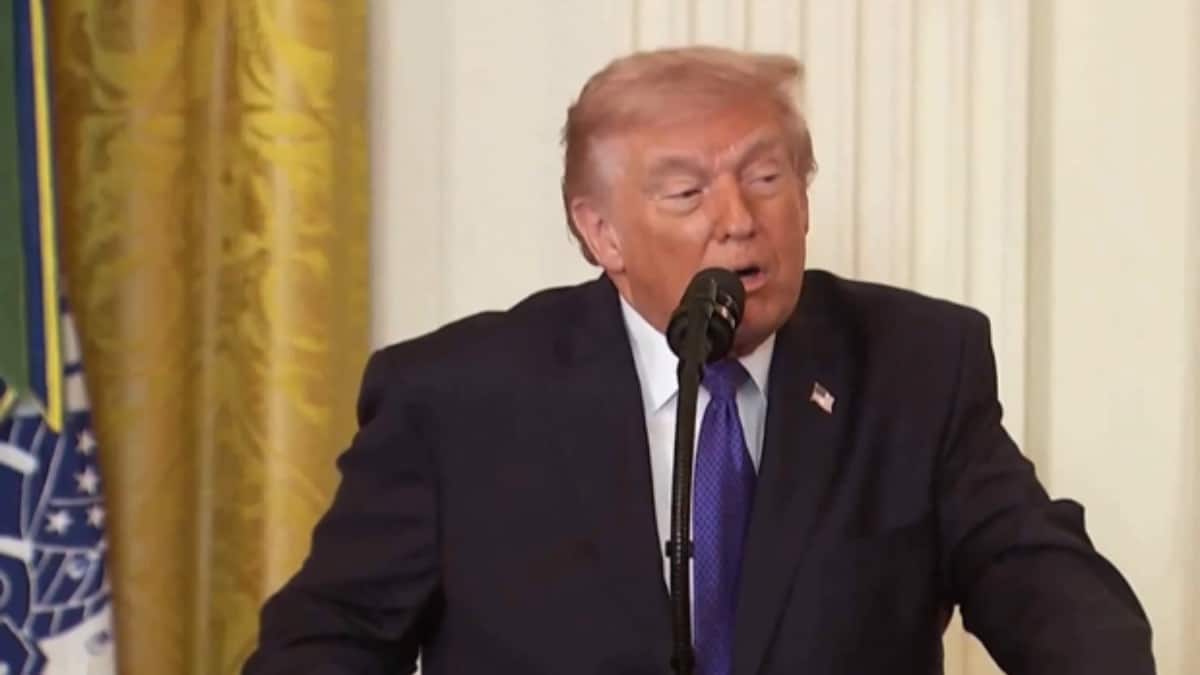
Emmanuel Macron’s announcement from the L’Ile Longue submarine base on March 2, 2026, marks the end of a thirty-four-year era of nuclear stagnation in Europe. By committing to an expansion of the French nuclear stockpile—the first since the end of the Cold War in 1992—and proposing the "temporary deployment" of nuclear-capable Rafale jets to allied soil, Paris is not just updating its doctrine. It is attempting to fill a vacuum left by the perceived erosion of the American security guarantee.
This move toward what Macron calls "forward deterrence" aims to integrate French atomic power into the European defense architecture more deeply than ever before. However, the proposal carries a sharp, non-negotiable caveat that preserves the Gaullist tradition: France will expand the umbrella, but it will not share the handle. The decision to launch remains the exclusive, sovereign prerogative of the French President. This tension between European solidarity and national sovereignty is the defining friction of a new, multipolar nuclear age.
The End of the Post-Cold War Peace Dividend
Since 1992, France has steadily reduced its arsenal, settling at a "just sufficiency" of fewer than 300 warheads. The reversal of this trend is a direct response to the "high-intensity" reality of 2026. With Russia’s continued aggression in Ukraine and the persistent volatility of U.S. foreign policy under the second Trump administration, the "strategic autonomy" Macron has championed for years has shifted from a philosophical preference to a desperate logistical necessity.
The 2024–2030 Military Programming Law (LPM) laid the financial groundwork with a €413.3 billion envelope. But the March 2 announcement goes further, signaling that the "European dimension" of French vital interests is now a concrete operational plan. By offering to station the Strategic Air Forces (FAS) in countries like Poland, Germany, and even Britain, France is attempting to "complicate the calculations" of adversaries. In the cold logic of deterrence, ambiguity is a weapon. If a French nuclear-capable aircraft is stationed in Poznań or Leeuwarden, the threshold for a Russian miscalculation rises exponentially.
The Northwood Alignment and the British Connection
While much of the media focus has landed on the "umbrella" over the EU, the most significant shift is the deepening coordination with the United Kingdom. The 2025 Northwood Declaration and the "Lancaster House 2.0" agenda have created a de facto Franco-British nuclear axis. For the first time, London and Paris have stated that their respective deterrents—though independent—can be coordinated.
This is a monumental shift in the "strategic backstop" of Europe. Consider the divergence in their systems:
- The UK Model: Entirely sea-based (Vanguard-class submarines) and deeply integrated with U.S. technology, specifically the Trident II D5 missiles.
- The French Model: A dual-leg triad consisting of Triomphant-class ballistic missile submarines (SSBNs) and the airborne component (Rafale with ASMP-A cruise missiles), entirely indigenous in its supply chain.
By synchronizing these two distinct philosophies, Europe’s only two nuclear powers are creating a "two-key" system that does not actually require two keys. If the U.S. pulls back, the combined 500-warhead potential of the Northwood partners represents a formidable, self-contained deterrent.
The Sovereignty Trap
The "forward deterrence" model is already hitting resistance in the hallways of Brussels and Berlin. Macron’s refusal to join NATO’s Nuclear Planning Group (NPG) or offer any form of "nuclear sharing" similar to the U.S. B61 bomb arrangements remains a point of contention. Under the American model, German or Dutch pilots fly the planes that carry U.S. bombs. Under the French model, French pilots fly French planes carrying French missiles from allied bases.
This distinction is not merely bureaucratic. It is a fundamental statement of power. Allied nations are being asked to host French nuclear assets to enhance their own security, yet they will have zero say in the rules of engagement. For Poland or the Baltic states, this is a price they seem willing to pay. For Germany, currently led by Chancellor Friedrich Merz, the debate is more tortured. There are already whispers in Berlin about "co-financing" the French deterrent in exchange for a seat at the table—a proposal that would require a radical amendment to the French Constitution.
Hard Math and Hardware
The expansion of the stockpile requires more than just political will; it requires industrial mass. The French defense industry, particularly the "Entente Industrielle" formed with the UK, is pivoting toward the production of the ASMPA-R (renovated) missile and the future ASN4G hypersonic cruise missile.
The logistical reality of "temporary deployments" to the UK or Poland involves significant infrastructure upgrades:
- Hardened Aircraft Shelters (HAS): Existing allied bases must be retrofitted to meet French nuclear security standards.
- C2 Integration: Command and control systems must be "coordinated" without being "integrated," a technical tightrope that requires specialized communication links.
- The Human Element: Deploying the FAS abroad means moving French "Special Elements"—the elite units responsible for warhead custody—onto foreign soil, a move that hasn't happened on this scale in decades.
A Continent Under Pressure
The move is ultimately a gamble on the psychology of the Kremlin. By spreading the "atomic umbrella" across the continent, Macron is betting that Russia will view any strike on a European ally as a strike on France itself. However, without a formal treaty obligation—which Macron has pointedly avoided—this remains a "discourse of deterrence" rather than a legal guarantee.
The risk is that this move could fragment NATO from within. If the U.S. views the Franco-British axis as a "competitor" to the NPG, it could accelerate the very American withdrawal that Paris fears. Conversely, if it is viewed as a "European pillar" within the alliance, it could finally solve the decade-long riddle of burden-sharing.
The brutal truth is that Europe is re-arming not because it wants to, but because it can no longer afford the luxury of being a "civilian power." The era of the "nuclear holiday" is over. France has laid its cards on the table, and the rest of Europe must now decide if they are willing to host the fire to avoid the flame.
If you want to understand how these deployments will physically alter the security landscape of Eastern Europe, I can break down the specific airbases in Poland and Romania currently being vetted for French Rafale rotations.