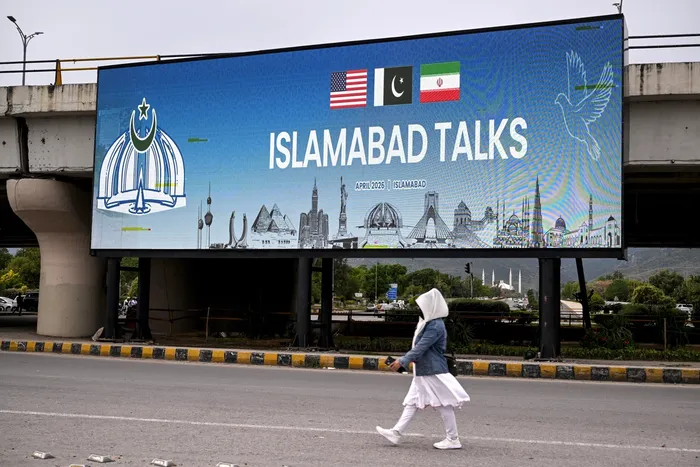
The insistence by Iranian Parliament Speaker Mohammad Bagher Ghalibaf that Lebanon must be integrated into any broader diplomatic resolution between Tehran and Washington reveals a shift from proxy management to formal geopolitical bundling. This strategy aims to prevent the decoupling of regional interests, ensuring that any relief of sanctions or diplomatic normalization for Iran is structurally tied to the security and political preservation of its non-state partners. By leveraging Pakistani mediation, Iran is attempting to institutionalize a "security package" that forces the United States to address the Levant not as a localized conflict, but as a mandatory variable in the Persian Gulf's stability equation.
The Logic of Strategic Linkage
Iran’s diplomatic posture operates on the principle of indivisible security. For Tehran, the survival of the "Axis of Resistance" is not merely a soft-power objective but a defensive necessity. Integrating Lebanon into a US-Iran deal serves three specific functions:
- Risk Diversification: If Iran reaches a bilateral agreement with the US that excludes Lebanon, its regional assets become vulnerable to targeted isolation. By bundling these interests, Iran creates a "poison pill" mechanism where any future breach of the agreement in the Levant triggers a collapse of the broader Persian Gulf framework.
- Asset Protection: Lebanon, specifically through the infrastructure of Hezbollah, provides Iran with Mediterranean reach and a direct deterrent against regional adversaries. Formalizing Lebanon’s status in a deal moves this deterrent from the shadows into a recognized diplomatic reality.
- Sanctions Bypass and Economic Integration: A deal that includes Lebanon opens pathways for Iranian energy and reconstruction capital to flow into Beirut without the immediate threat of secondary US sanctions, effectively widening Iran's economic breathing room.
The Pakistani Mediation Variable
The choice of Pakistan as a mediator is a tactical calculation based on Islamabad’s unique position as a "hinge state." Pakistan maintains a complex defense relationship with Saudi Arabia while sharing a volatile border and energy interests with Iran.
Ghalibaf’s engagement with Pakistani officials signals an attempt to utilize a third-party intermediary that the West perceives as a "rational" security actor. Pakistan’s involvement provides a layer of deniability for Iran while offering a channel to the US that is less ideologically charged than direct negotiations or traditional European intermediaries. This mediation focuses on the "Cost of Friction" vs. the "Dividend of Stability." Pakistan’s own interest in regional calm—driven by its domestic economic crisis—makes it a motivated broker for a deal that reduces the threat of cross-border spillover from Iranian-aligned activities.
Structural Constraints of the Lebanon-Iran-US Triad
The primary bottleneck in this proposed linkage is the divergence of state and non-state interests within Lebanon. The Lebanese state is effectively a bankrupt entity, while its dominant political and military actor, Hezbollah, remains a direct extension of Iranian strategic depth.
The Sovereignty Gap
For the United States, a deal that includes Lebanon under Iranian terms is often viewed as a formal surrender of Lebanese sovereignty to Tehran. This creates a binary friction point:
- The US Position: Requires the disarming or political neutering of non-state actors as a prerequisite for deep diplomatic engagement.
- The Iranian Position: Views the preservation of these actors as the non-negotiable floor of any negotiation.
The Economic Misalignment
Lebanon’s financial collapse necessitates IMF-led reforms and Western capital. Iran’s proposed integration offers an alternative: an "East-facing" economic alignment. However, Iran’s own fiscal constraints, exacerbated by years of "Maximum Pressure," limit its ability to provide the hard currency required to stabilize the Lebanese Pound. Therefore, the Iranian demand for Lebanon’s inclusion is less about providing Iranian aid and more about lifting the US-led financial blockade that prevents Lebanon from engaging with Iranian-aligned economic blocs.
The Cost Function of Regional Decoupling
If the US attempts to negotiate with Iran while ignoring the Lebanese theater, the result is a "Security Leak." This phenomenon occurs when pressure relieved on one front is redirected toward another. For instance, a nuclear-only deal (similar to the original JCPOA) allowed Iran to reallocate frozen assets toward its regional network. Ghalibaf’s current rhetoric suggests that Iran is now willing to trade regional de-escalation for formal recognition of its spheres of influence.
The "Cost Function" for the US in this scenario includes:
- The Price of Containment: The ongoing military expenditure required to monitor and counter Iranian-backed groups in Lebanon and Syria.
- The Risk of Unintended Escalation: The high probability that a localized skirmish in Southern Lebanon could derail a global energy or nuclear agreement.
Iran is essentially betting that the US will eventually find the price of containment higher than the price of concession.
Mapping the Escalation Ladder
To understand the trajectory of these negotiations, one must analyze the "Escalation Ladder" that Iran uses to drive mediators toward its desired outcome.
- Phase One: Narrative Positioning: Utilizing figures like Ghalibaf to establish the "Indivisibility Doctrine"—the idea that no deal is possible without Lebanon.
- Phase Two: Kinetic Signaling: Small-scale regional disruptions that demonstrate the consequences of excluding Lebanon from the diplomatic table.
- Phase Three: Intermediary Pressure: Using Pakistan or Qatar to present "ready-made" frameworks to US State Department officials, framed as the only viable path to long-term regional peace.
The Geopolitical Forecast
The likelihood of the US accepting a formal "package deal" that includes Lebanon remains low in the short term due to domestic political pressures in Washington and the security requirements of regional allies. However, we are seeing the emergence of "Informal Synchronization." This is a state where the US and Iran do not sign a comprehensive treaty including Lebanon, but instead reach a series of "quiet understandings" where de-escalation in the Persian Gulf is mirrored by a reduction in tension along the Blue Line in Lebanon.
This "De Facto Linkage" achieves Iranian goals without the political cost of a formal treaty. For Lebanon, this means its fate remains tied to the temperature of the Tehran-Washington relationship. The strategic recommendation for regional stakeholders is to prepare for a "Managed Standoff" rather than a definitive "Peace Deal."
The final strategic play involves Iran utilizing the Pakistani channel to offer a "Grand Bargain" framework that specifically trades Lebanese border stability for specific US Treasury waivers. If successful, this creates a precedent where Iran’s regional presence is no longer a "problem to be solved" but a "variable to be managed" within the global financial and security architecture. Success for Tehran in this regard hinges on its ability to maintain a credible threat of regional instability while simultaneously offering a coherent path toward an Iranian-led "Regional Security Architecture" that excludes traditional Western dominance.