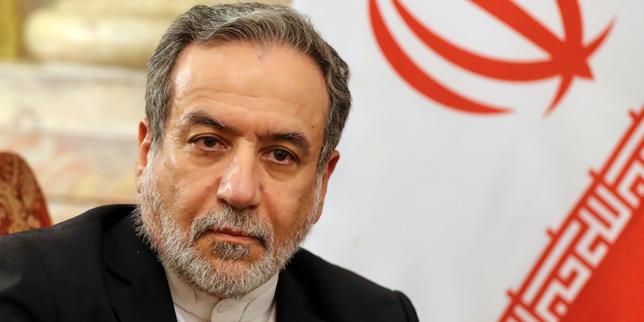
The extension of a ceasefire between Israel and Lebanon, coupled with the executive-led easing of federal medical marijuana restrictions in the United States, represents a dual shift in risk management across disparate sectors. While seemingly unrelated, both developments hinge on the strategic reduction of friction—one in a kinetic theater of war, the other in a domestic regulatory bottleneck. These shifts do not signal a permanent resolution of underlying tensions but rather a calculated recalibration of the "Cost of Maintenance" for established status quos.
The Israel-Lebanon Extension: An Equilibrium of Exhaustion
The decision to prolong the cessation of hostilities is a function of the Strategic Exhaustion Model. In this framework, the utility of continued kinetic engagement has fallen below the economic and political cost of sustaining it. For the Israeli Defense Forces (IDF), the extension buys time for logistical replenishment and intelligence gathering, while for the Lebanese state and its non-state actors, it prevents the total collapse of an already fragile domestic infrastructure.
The stability of this extension depends on three specific variables:
- The Sovereignty Gap: The Lebanese government’s inability to project authority in the south creates a power vacuum. The extension is an attempt to bridge this gap through international monitoring, though history suggests that monitoring without enforcement is a decaying asset.
- The Attrition Threshold: Both parties have reached a point where the marginal gain of a tactical victory—such as the seizure of a specific border village—is outweighed by the sovereign debt and civilian displacement costs.
- External Leverage Points: The United States and regional mediators are utilizing financial and diplomatic pressure to keep the parties at the table. This is "artificial stability" that lasts only as long as the external incentives outweigh internal ideological drivers.
The primary risk in this extension is the Zero-Sum Incentive. Because the underlying territorial and ideological disputes remain unaddressed, both sides view the ceasefire not as a peace process, but as a period of rearmament. The extension is a tactical pause, not a strategic pivot.
Federal Cannabis Rescheduling: Quantifying the Shift from Schedule I to Schedule III
The Trump administration's move to ease medical marijuana rules by moving cannabis from Schedule I to Schedule III under the Controlled Substances Act (CSA) is a structural shift in the American pharmaceutical and tax landscape. This change addresses a significant market distortion: the Section 280E Tax Penalty.
Under Schedule I, cannabis was classified alongside substances with "no currently accepted medical use." This classification triggered Section 280E of the Internal Revenue Code, which prevents cannabis businesses from deducting ordinary business expenses (rent, payroll, utilities) from their gross income. By moving to Schedule III, the federal government removes this "effective tax rate" which often exceeded 70% for legal operators.
The Institutional Liquidity Injection
The transition to Schedule III creates a cascade of financial shifts:
- Bankruptcy Protection Access: Currently, cannabis companies are largely denied access to federal bankruptcy courts because their operations are federally illegal. Rescheduling provides a path toward standard corporate restructuring, reducing the risk profile for institutional lenders.
- Research and Development Acceleration: Schedule III status drastically lowers the barrier for FDA-approved clinical trials. Previously, researchers faced a "circular logic" hurdle: they needed clinical data to prove medical utility, but the Schedule I status made obtaining the substance for research nearly impossible.
- Capital Cost Reduction: The removal of 280E and the potential for traditional banking access (pending further legislative action like the SAFER Banking Act) will lower the weighted average cost of capital (WACC) for the industry.
The Intersecting Logic of Managed De-escalation
Both the Middle Eastern ceasefire and the cannabis policy shift illustrate a Pivot toward Pragmatic Governance. In both instances, the previous policy—unlimited kinetic engagement in Lebanon and total prohibition of medical cannabis in the U.S.—reached a point of diminishing returns.
In Lebanon, the "Total Victory" narrative became too expensive to sustain against the backdrop of global economic pressure. In the U.S., the "Total Prohibition" narrative became untenable as state-level legalization created a multi-billion dollar economy that the federal government could no longer ignore without causing systemic financial instability.
Structural Bottlenecks in Implementation
Despite the high-level shifts, implementation faces significant friction. In the Israel-Lebanon context, the bottleneck is Verification. Without a neutral, empowered enforcement body, every minor skirmish risks a "cascading failure" where one violation triggers a full-scale return to war. The extension relies on the hope that both sides fear the cost of the next war more than they hate the terms of the current peace.
In the cannabis sector, the bottleneck is FDA Oversight. Moving to Schedule III does not mean cannabis becomes "over-the-counter." It means it enters the highly regulated world of prescription pharmaceuticals. This creates a new conflict: the "Medical vs. Recreational" divide. State-level recreational markets may find themselves at odds with new federal pharmaceutical standards, leading to a fragmented regulatory environment that favors large-scale pharmaceutical manufacturers over existing boutique operators.
The Cost of the "Middle Ground" Strategy
The strategy of extension and rescheduling is a "Middle Ground" approach. It seeks to avoid the extremes (war/prohibition) without committing to the finality of the alternatives (peace treaty/full legalization). This creates a Transition Risk Profile:
- Policy Reversibility: Both the ceasefire and the rescheduling are executive-driven. They lack the permanence of a treaty or a congressional statute. A change in political will or a sudden escalation in border tensions can instantly revert the progress.
- Market Uncertainty: Investors in the cannabis space must now navigate a "limbo" period where the old rules are fading but the new FDA-led rules are not yet defined. Similarly, businesses in northern Israel and southern Lebanon cannot commit to long-term infrastructure investment because the ceasefire has a visible expiration date.
- Compliance Costs: For cannabis, the shift to Schedule III will likely increase compliance costs as companies must meet more rigorous safety and labeling standards. This "compliance tax" may offset some of the gains from the removal of Section 280E.
The Mechanical Inevitability of Further Shifts
The current state of both issues is metastable. The Israel-Lebanon extension will likely hold only as long as the regional actors—primarily Iran and the United States—find it convenient to keep the theater quiet while focusing on other geopolitical priorities. Once the focus shifts, the "sovereignty gap" in Lebanon will again become a flashpoint.
In the U.S., rescheduling is the first domino in the Federal Normalization Cycle. Once the federal government admits to medical utility, the legal basis for maintaining any form of prohibition on the adult-use market weakens. We should expect a push for a "dual-track" system where medical cannabis is handled through the pharmacy channel (Schedule III) and recreational cannabis is regulated similarly to alcohol or tobacco, completely outside the CSA.
The immediate strategic move for stakeholders is to prepare for the Institutionalization Phase. In the Middle East, this means the IDF and international observers must move beyond "monitoring" toward a "hardened border" strategy that assumes the ceasefire will fail. In the cannabis sector, operators must pivot from "growth at any cost" to "pharmaceutical-grade compliance," as the entry of traditional Big Pharma into the space is now a matter of "when," not "if." The competitive advantage will shift from those who can navigate the grey market to those who can master the federal regulatory apparatus.