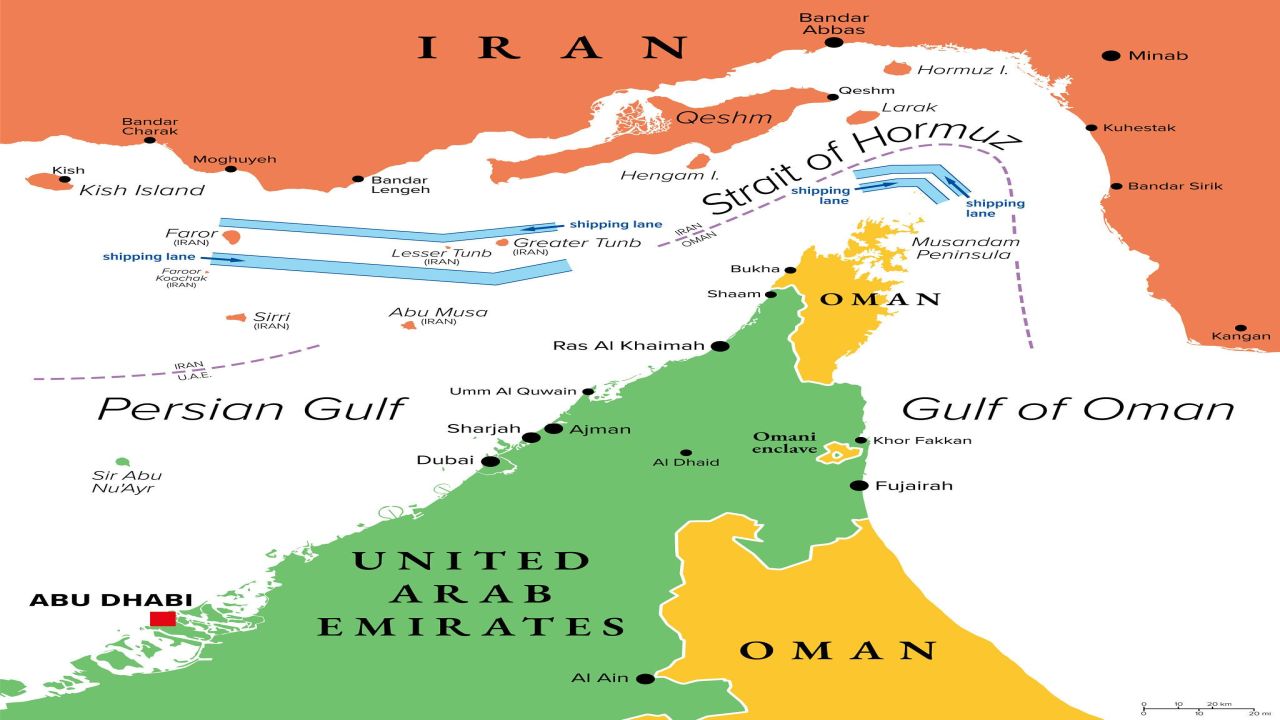
China's explicit demand for an un-tolled, unrestricted Strait of Hormuz—relayed by U.S. Trade Representative Jamieson Greer during the Beijing summit between President Donald Trump and President Xi Jinping—exposes the structural vulnerability at the heart of Beijing's economic model. While conventional commentary views China’s alignment with Iran as an ideological counterweight to American hegemony, a rigorous input-output analysis of China's energy supply chain reveals a different reality. Beijing's foreign policy is constrained by a brutal maritime cost function.
To maintain manufacturing competitiveness, China requires cheap, unhindered energy inflows. The threat of non-state or regional state actors imposing tolling, military checkpoints, or blockade mechanisms at the world’s primary oil transit chokepoint forces Beijing into a posture of transactional pragmatism. This operational shift drives China to curtail material and military support to Tehran in exchange for maritime stability guaranteed under a cooperative framework with Washington.
The Asymmetrical Elasticity of Energy Dependence
The strategic imperative to keep the Strait of Hormuz open is driven by a deep structural imbalance: the extreme inelasticity of China's short-term crude oil demand versus the high vulnerability of its supply lines. China imports over 10 million barrels of crude oil per day to feed its refining infrastructure and industrial base. Approximately 40% of these imports transit through the Strait of Hormuz.
This creates a rigid dependency loop. The physics of global supply chains mean that maritime transport cannot be replaced overnight by overland alternatives.
[Persian Gulf Oil Producers] ---> (Strait of Hormuz) ---> [Malacca Strait] ---> [Mainland China Refineries]
                                         |
                                  {Bottleneck Risk}
The Chinese economy operates under a highly sensitive energy cost function where a sustained 10% increase in crude oil prices can suppress GDP growth by an estimated 0.3 to 0.5 percentage points. If the Strait of Hormuz is subjected to militarized tolling or restriction, the economic shock transmits through three distinct vectors:
- The Insurance Premium Spike: Hull risk premiums and protection and indemnity (P&I) clubs automatically re-rate shipping lanes subject to military control or arbitrary tolling. This adds immediate, non-recoverable operational costs to every deadweight ton of cargo.
- The Refining Margin Squeeze: Chinese state-owned refiners operate on highly optimized margins. A disruption in the Persian Gulf forces reliance on spot-market purchases from Atlantic basin or Russian barrels, which carry higher freight-ton-mile costs.
- The Downstream Inflationary Loop: Higher input costs for petrochemicals undermine the price advantage of Chinese manufactured exports, which are already facing steep tariff pressures in Western markets.
The Myth of Strategic Depth: The Failure of Overland Substituted Capacity
A common miscalculation among geopolitical commentators is that China can leverage overland pipelines to bypass maritime vulnerabilities. This hypothesis ignores the sheer mathematical limits of pipeline infrastructure.
The combined throughput capacity of China’s major overland energy corridors—principally the East Siberia-Pacific Ocean (ESPO) pipeline from Russia and the Central Asia-China gas pipeline network—is less than 2.5 million barrels of oil equivalent per day. This leaves a structural deficit of over 7.5 million barrels per day that must be fulfilled via maritime routes.
Furthermore, overland infrastructure is highly vulnerable to localized sabotage and carries fixed operational costs that scale linearly, unlike the economies of scale offered by Very Large Crude Carriers (VLCCs). Maritime shipping remains the only viable mechanism to sustain China's industrial baseline. Consequently, when regional actors threaten the freedom of navigation in the Persian Gulf, they are directly threatening the stability of the Chinese domestic economy.
The Cost of Iranian Alignment vs. The Price of Sea-Lane Stability
For the past decade, Beijing has maintained a dual-track strategy in the Middle East. It bought heavily discounted Iranian crude oil through dark fleets and used local currencies to bypass Western clearing systems. Concurrently, it positioned itself as a diplomatic mediator, culminating in the historic Saudi-Iran detente.
However, this strategy breaks down when Iranian-backed asymmetric operations threaten the physical infrastructure of trade. The introduction of anti-ship ballistic missiles, drone swarms, and threats of localized tolling by regional actors alters China's risk equation.
The strategic calculus has shifted: the marginal benefit of importing cheap, sanctioned Iranian crude is now outweighed by the systemic risk of a closed or restricted Strait of Hormuz. The cost function of this trade-off can be conceptualized as follows:
$$Systemic\ Risk = P(Disruption) \times C(Industrial\ Downtime) - \Delta Price(Discounted\ Oil)$$
Where the probability of disruption ($P(Disruption)$) multiplied by the catastrophic cost of domestic industrial downtime ($C(Industrial\ Downtime)$) far exceeds the total financial savings generated by purchasing discounted oil ($\Delta Price(Discounted\ Oil)$).
This dynamic explains USTR Greer’s observation that Chinese officials are acting with intense pragmatism. Beijing cannot afford to subsidize an ally whose regional policy directly jeopardizes China’s primary energy supply line. The summit in Beijing proved that when forced to choose between ideological alignment with Tehran and maritime commercial stability, China will choose the sea lanes every time.
The Structural Mechanics of the US-China Maritime Convergence
The convergence of interests between the Trump administration and the Xi Jinping leadership team regarding the Strait of Hormuz is born out of shared economic defense mechanisms, though for different reasons. The United States seeks to prevent global energy price shocks that feed domestic inflation and disrupt Western supply chains. China seeks to avoid a catastrophic halt to its industrial manufacturing engine.
This alignment yields a highly tactical, transactional blueprint for regional stabilization:
- Enforcement of Material Redlines: China will use its considerable economic leverage—primarily its status as Iran’s largest customer—to enforce clear limits on Tehran’s asymmetric naval operations. Material support, including dual-use technology and financial liquidity through small, non-interconnected banks, will be throttled if regional escalation continues to threaten the strait.
- The Rejection of Sovereign Tolling: Both Washington and Beijing have unified against the precedent of non-standard "tolls" or military control over international straits. Allowing any regional state or non-state actor to extract rents from commercial shipping sets a dangerous precedent for other critical chokepoints, notably the Malacca Strait and the Bab-el-Mandeb.
- Cooperative De-escalation: While a formal joint military task force between the U.S. Navy and the People's Liberation Army Navy (PLAN) remains politically impossible, a de facto division of labor is emerging. The U.S. maintains the hard security architecture and deterrence capability in the Gulf, while China applies the economic and diplomatic leverage necessary to modify Iran's strategic behavior.
Strategic Realism Over Ideology
This convergence does not signal a broader shift toward a cooperative US-China relationship; rather, it highlights a moment of clear strategic realism. USTR Greer’s acknowledgment that the U.S. welcomes China’s stance underscores a shared understanding that certain global commons are too vital to be dismantled by regional proxy conflicts.
For corporate strategists and macro investors, the takeaway is clear. China's geopolitical maneuvers in the Middle East are structurally bound by its domestic energy deficits. Beijing will continue to act as a stabilizing force on maritime trade routes because its economic survival depends on them. Expect a tactical drawdown of Chinese support for destabilizing actions in the Persian Gulf, paired with an aggressive push by Beijing to secure long-term, non-tolled transit guarantees across all global maritime corridors.
USTR Greer on Hormuz, China Talks, Trade Tariffs
This interview provides critical context on the official U.S. trade stance regarding supply chain insulation and the strategic backdrop leading up to the high-stakes maritime agreements in Beijing.