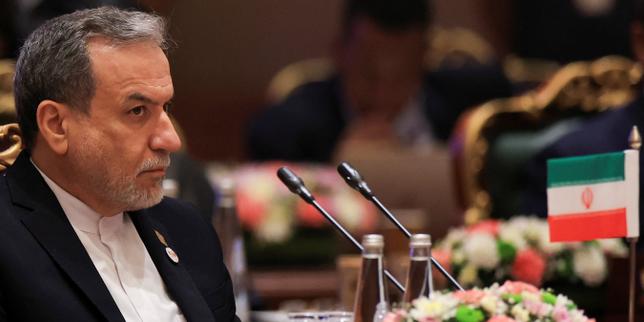
The current volatility in the Middle East is not a series of isolated skirmishes but a systematic breakdown of regional deterrence frameworks. When Tehran accuses the United Arab Emirates (UAE) of being an "active partner" in the ongoing conflict, it signals a shift from covert diplomatic friction to an overt strategy of rhetorical encirclement. This accusation, coupled with the scheduled high-stakes negotiations between Israeli and Lebanese delegations in Washington, underscores a dual-track crisis: the erosion of the "Gray Zone" between state actors and the desperate attempt to institutionalize a maritime and territorial ceasefire through third-party mediation.
The Architecture of Accusation: Iran and the UAE
Tehran’s diplomatic offensive against Abu Dhabi functions as a pressure valve designed to fragment the Abraham Accords. By labeling a neighboring Gulf power an "active partner" in Israeli military operations, Iran is utilizing a Complicity Framework to achieve three specific strategic objectives:
- Deterrence through Reputation: Iran aims to increase the political cost for Arab states cooperating with Israel by framing such cooperation as a direct threat to regional "sovereignty."
- Internal Distraction: Highlighting external "betrayals" serves to consolidate domestic support within the Iranian political apparatus during periods of economic or military strain.
- Proximate Threat Signaling: The UAE’s geographic proximity to Iran makes it a high-leverage target for rhetorical threats. If Tehran can successfully frame Abu Dhabi as a combatant, it theoretically justifies "defensive" maneuvers in the Persian Gulf or the Strait of Hormuz.
The UAE’s position is defined by the Hedging Paradox. As a small state with immense capital, the UAE must maintain a security guarantee with the West while managing a functional, albeit cold, relationship with Iran. Any perceived tilt too far toward active military coordination with Israel disrupts this delicate equilibrium, potentially exposing UAE infrastructure to asymmetric retaliatory strikes from Iranian-aligned non-state actors.
The Washington Negotiations: A Study in Asymmetric Diplomacy
The arrival of Israeli and Lebanese officials in Washington on Thursday represents a critical juncture in the Lebanese Border Calculus. Unlike traditional state-to-state diplomacy, these talks are governed by a "Mediated Sovereignty" model where the Lebanese government negotiates on behalf of a territory it does not fully control militarily.
The success of these talks depends on the resolution of three primary friction points:
- The Blue Line Discrepancy: Small pockets of land along the UN-demarcated Blue Line remain contested. While these segments are geographically negligible, their symbolic value is immense for Hezbollah’s narrative of "resistance against occupation."
- Buffer Zone Enforcement: The technical viability of UNIFIL (United Nations Interim Force in Lebanon) or a revamped international monitoring body to prevent the re-militarization of Southern Lebanon is the core security demand from the Israeli side.
- The Economic Incentive Structure: Lebanon’s catastrophic economic state provides the US with leverage. The "Gas-for-Peace" logic—where maritime border stability allows for offshore hydrocarbon exploration—remains the only viable carrot in an environment dominated by sticks.
The Triad of Regional Destabilization
To understand the current trajectory, one must analyze the interaction between state interests, proxy capabilities, and economic vulnerabilities. This can be viewed through the Triad of Destabilization:
1. Proxy Autonomy vs. State Command
There is a common misconception that Tehran exerts 100% control over its "Axis of Resistance." In reality, the relationship is one of Aligned Interests and Tactical Autonomy. Groups like the Houthis or various militias in Iraq often initiate strikes that serve their local political standing, even if they complicate Tehran’s broader diplomatic maneuvers. The risk of an "Accidental Escalation"—where a proxy strike causes a mass casualty event that forces a full-scale state-on-state war—is currently at its highest decadal peak.
2. The Logistics of Attrition
Israel’s military strategy has shifted from a "mowing the grass" approach to a systematic degradation of command structures. This creates a Power Vacuum Trap. When the leadership of a non-state actor is neutralized, the resulting decentralized cells often become more unpredictable and harder to negotiate with, as there is no central authority to enforce a ceasefire.
3. Energy Security as a Weaponized Variable
The threat to the Strait of Hormuz and the Red Sea shipping lanes introduces a global economic dimension to a regional conflict. If the rhetoric against the UAE translates into kinetic interference with shipping, the global Brent Crude price index becomes the ultimate arbiter of international intervention.
Tactical Constraints of the Washington Talks
The negotiations in Washington are not aimed at a comprehensive peace treaty; they are a De-escalation Management Exercise. The constraints are structural:
- The Zero-Sum Perception: For the Israeli government, any concession on the border is viewed by the domestic electorate as a reward for aggression.
- The Legitimacy Gap: The Lebanese delegation lacks the mandate to disarm non-state actors, meaning any agreement signed in Washington is functionally a "Paper Peace" unless it includes back-channel guarantees from the regional powers that fund those actors.
The logic of "Mutual Vulnerability" is the only force currently preventing a total regional conflagration. Both Israel and the Iranian-led bloc understand that a full-scale war would result in the "Economic Annihilation" of Lebanon and significant, perhaps existential, damage to the infrastructure of both Israel and the Gulf states.
Strategic Forecast: The Shift Toward Managed Conflict
The most probable outcome of the current diplomatic and military posturing is not a resolution, but a transition into a Permanent High-Tension Equilibrium.
The UAE will likely respond to Iranian accusations with a "De-escalation through Diversification" strategy, increasing its diplomatic engagement with Tehran while simultaneously deepening its technical and intelligence ties with the West. This double-game is a survival necessity in a multipolar regional environment.
The Washington talks will likely produce a technical memorandum regarding border coordinates—a "small win" intended to prevent immediate escalation—while failing to address the fundamental presence of armed non-state actors in the region. This creates a Conditional Calm, where the absence of war is mistaken for the presence of peace.
Observers should monitor the "Escalation Ladder" specifically in the maritime domain. If Iran moves from rhetorical attacks on the UAE to localized "regulatory" disruptions of UAE-flagged vessels, it will signal that the diplomatic track in Washington has failed to provide Tehran with the regional concessions it seeks. The strategy for international stakeholders must move away from seeking a "Grand Bargain" and toward the granular management of specific flashpoints—territorial markers, maritime rights, and proxy funding channels—to prevent the current friction from reaching its thermal ignition point.