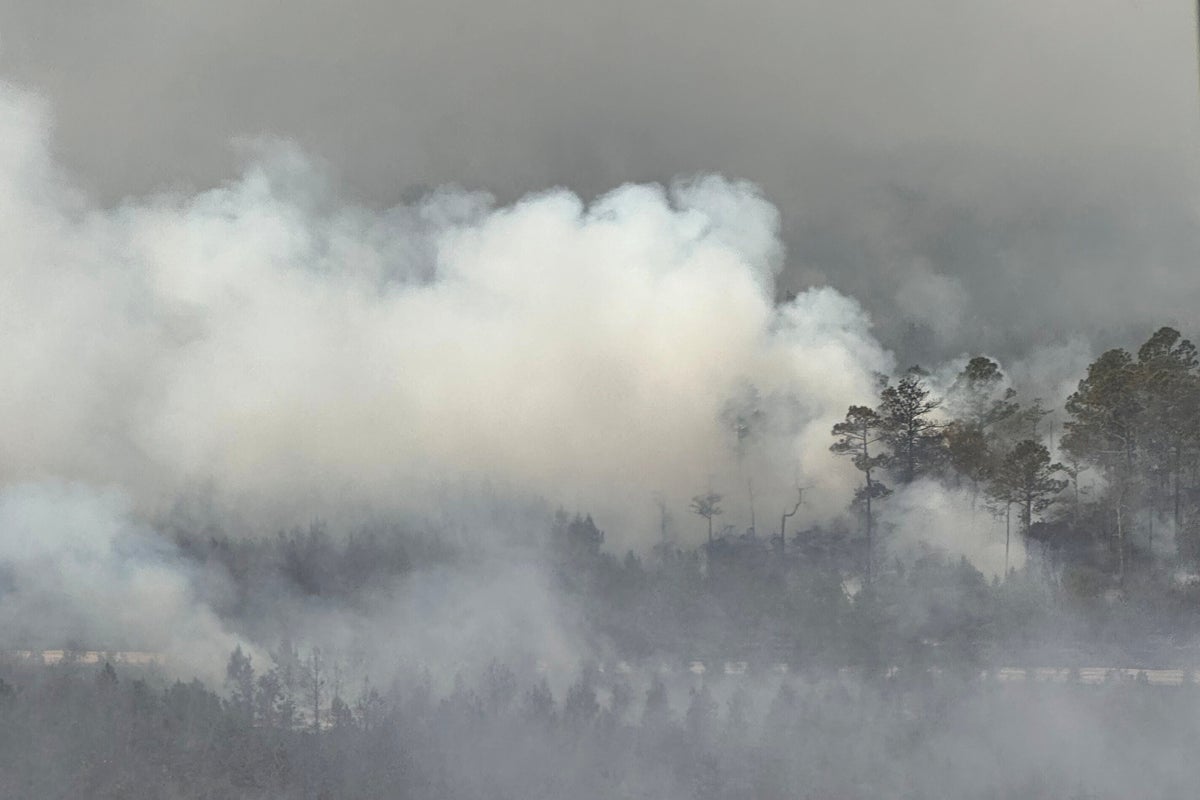
A wildfire in the Georgia wilderness has doubled in size over the last 48 hours, tearing through thousands of acres of parched timber and leaving emergency crews struggling to find a foothold. While the immediate threat centers on containment lines and evacuation orders, the rapid expansion of the blaze points to a much larger systemic failure. This is not just a story of high winds and low humidity. It is a story of how land management, shifting climate patterns, and a shrinking pool of rural resources have converged to create a tinderbox that was always going to ignite.
The blaze, currently chewing through the heart of the state’s timberland, remains less than ten percent contained. Dry conditions have turned the undergrowth into fuel that behaves more like gasoline than wood. When a fire reaches this level of intensity, it begins to create its own weather, sucking oxygen from the surrounding air and spitting out embers that start new "spot fires" miles ahead of the main front. For the people on the ground, the math is simple and brutal. They cannot outrun a fire that is being fed by decades of accumulated debris and a lack of aggressive preventative burning.
The Myth of Natural Disasters
We often treat these events as "acts of God," as if they were entirely outside of human control. That is a convenient fiction for policymakers. The reality is that the intensity of the current Georgia blaze is a direct result of how we have managed—or failed to manage—southern forests over the last fifty years.
Historically, the Southeast relied on regular, low-intensity fires to clear out the forest floor. These small burns prevented the buildup of "ladder fuels," which are the small trees and shrubs that allow a ground fire to climb into the canopy. When a fire hits the treetops, it becomes a crown fire, a nearly unstoppable force that moves with terrifying speed. Because we have suppressed these natural cycles for so long to protect property and timber interests, we have inadvertently built a massive warehouse of fuel. Now, that warehouse is burning, and the bill has come due.
A Broken Support System
Fighting a fire of this magnitude requires a massive influx of manpower and machinery, but the infrastructure for rural firefighting is cracking. Most of the counties currently under threat rely heavily on volunteer departments or small municipal crews that are underfunded and overworked.
When a fire doubles in size in two days, these local teams are immediately overwhelmed. They have to wait for state and federal reinforcements, which can take days to fully mobilize. By the time the heavy tankers and elite "hotshot" crews arrive, the fire has often already transitioned from a manageable incident into a regional catastrophe. We are asking people with twenty-year-old equipment to stand in the way of a modern environmental monster.
The Economic Aftershock
The smoke may clear in a few weeks, but the economic damage will linger for years. Georgia is a leader in the timber industry, and thousands of acres of commercial forest are currently being reduced to ash. This isn't just about lost trees. It’s about the ripple effect through local economies that depend on those forests for jobs, tax revenue, and tourism.
- Timber Losses: Private landowners often lose their entire life's work in a single afternoon.
- Property Values: Homes in the "wildland-urban interface" become uninsurable or prohibitively expensive to protect.
- Infrastructure Stress: Heat from these fires can warp rail lines and damage road surfaces, leading to long-term transportation bottlenecks.
Small towns near the fire perimeter are already seeing the effects. Businesses are shuttered because the air quality makes it impossible to work outside, and tourists are canceling trips to state parks and recreational areas. The recovery won't be measured in months, but in decades, as the soil itself takes time to heal from the extreme temperatures.
The Invisible Threat of Smoke
While the flames get the headlines, the smoke is the quiet killer. Fine particulate matter from these fires is drifting hundreds of miles, affecting air quality in major metropolitan areas far from the front lines. This isn't just a nuisance for people with asthma. It is a public health crisis that puts a massive strain on hospital emergency rooms and reduces the productivity of the entire region. We are seeing a spike in respiratory admissions that matches the growth of the fire itself.
The Failure of Current Policy
If we want to stop these mega-fires, we have to change how we live with the land. The current strategy of "wait and react" is a proven failure. We spend billions of dollars on suppression—dropping water and retardant from planes—but very little on the boring, un-glamorous work of thinning forests and conducting controlled burns during the off-season.
The bureaucracy involved in getting a permit for a prescribed burn is often so thick that landowners simply give up. At the same time, we continue to allow residential development to creep further into fire-prone areas without requiring the kind of "defensible space" landscaping that could save homes. We are building targets and then wondering why they get hit.
The Path to Resilience
True containment isn't just about digging a trench in the dirt. It’s about creating a landscape that can survive a fire without turning into a moonscape. This requires a radical shift in how we allocate resources.
- Investment in Local Crews: We need to stop treating rural firefighting as a hobby and start funding it as a critical piece of national infrastructure.
- Streamlined Land Management: The red tape surrounding forest thinning and prescribed burns must be cut to allow for faster, more frequent intervention.
- Updated Building Codes: If you want to build a house in a high-risk zone, you should be required to use fire-resistant materials and maintain a buffer zone.
The fire in Georgia is a warning. It is a clear signal that the old ways of managing our environment are no longer sufficient for the world we live in. We can continue to be surprised every time the woods go up in flames, or we can start doing the hard work of preparation before the next spark falls.
The crews on the line right now are doing everything humanly possible, but they are fighting a battle that was rigged against them long before the first plume of smoke appeared. The fire will eventually go out, extinguished by rain or a lack of fuel, but the conditions that allowed it to explode will remain. Without a fundamental change in how we treat the southern wilderness, we are simply waiting for the next headline to write itself. The time for reactive policy ended the moment the containment lines broke.