The screen at Gate B22 doesn't say "Delayed." It doesn't say "Canceled." It simply flickers, a rhythmic pulse of static that mirrors the heartbeat of the three hundred people sitting on the linoleum floor. Outside the floor-to-ceiling glass of the terminal, the horizon isn't glowing with the sunrise. It is glowing with something else.
When a region descends into war, the world’s map changes instantly. Borders that were once invisible lines on a GPS becomes jagged, physical scars. For the traveler, the businessman, or the student visiting home, the luxury of a scheduled flight evaporates. It is replaced by a desperate, high-stakes game of logistics where the currency isn't money—it’s time.
Governments are currently locked in a frantic choreography. They are trying to pull their citizens out of a Middle East that has, overnight, become a labyrinth of closed airspaces and grounded fleets. This isn't just about diplomacy. It is about the terrifying fragility of the systems we trust to keep us mobile.
The Anatomy of a Scramble
Imagine a woman named Elena. She is hypothetical, but her situation is mirrored in thousands of embassy phone calls this week. Elena is a mechanical engineer from London who was finishing a short contract in the region. On Monday, she had a boarding pass and a seat assignment. On Tuesday, the airline sent a generic automated text: We regret to inform you... Now, she is part of a "manifest."
When a major conflict erupts, commercial airlines are the first to flee. They have to. Insurance premiums for flying into a potential missile path skyrocket to the point of bankruptcy. Pilots, understandably, refuse the risk. This leaves a vacuum that only a state can fill. This is when the "repatriation" machine grinds into gear—a massive, expensive, and chaotic endeavor involving chartered wide-body jets and military transport.
The logistics are staggering. A government cannot simply land a plane in a war zone. They must negotiate "corridors." They have to coordinate with neighboring countries to allow passage through their skies. If Country A is at odds with Country B, the rescue flight might have to take a four-hour detour, burning through fuel and narrowing the window of safety.
The Cost of the Ticket Home
There is a common misconception that when the world catches fire, your government simply picks up the tab. The reality is far more bureaucratic and cold. Most nations operate on a "promissory note" system. To get on that gray, windowless military transport or the last-minute chartered Boeing, you often have to sign a legal document promising to repay the cost of a full-fare commercial flight at a later date.
It is a transaction made in a state of duress.
The numbers tell a story of immense pressure. During the initial phases of the current Middle East instability, several European nations reported over 10,000 citizens requesting immediate extraction within a forty-eight-hour window. No government maintains a standing fleet of passenger planes for this purpose. They have to beg, borrow, and lease from the private sector, competing against each other for the same limited number of available aircraft.
The Invisible Stakes of Airspace
Why can’t they just fly around it?
To understand the chaos, you have to look at the sky not as an open expanse, but as a series of tightly managed tunnels. When a conflict goes kinetic, those tunnels collapse. Suddenly, the "super-highway" of air traffic between Europe and Asia is severed.
Flights that used to take seven hours are suddenly redirected over the Caucasus or south across the Horn of Africa. This creates a secondary crisis: congestion. Thousands of planes are being funneled into narrower strips of sky. Ground delays in cities like Istanbul, Dubai, and Doha ripple across the globe. A family sitting in an airport in New Jersey feels the ghost of the war in the Middle East when their connection to Singapore is pushed back six hours because the incoming plane had to dodge a "no-fly" zone four thousand miles away.
The stress on the pilots is immense. They are navigating regions where GPS jamming has become a standard tool of electronic warfare. In recent months, reports have surfaced of commercial flight decks losing their primary navigation for minutes at a time, forced to rely on old-school radio communication and manual coordinates. It is a return to a more dangerous era of aviation.
The Human Toll of the "Safety" Line
Back in the terminal, the atmosphere isn't one of anger. It’s a heavy, vibrating silence. People speak in whispers. They watch their phone battery percentages with a focus usually reserved for oxygen levels.
For many, the struggle isn't just getting out—it's who they are leaving behind. International families are being torn apart by the cold logic of the passport. A husband with a British passport might be ushered onto a bus while his wife, holding a local ID, is told to wait for "further instructions." These are the moments that don't make it into the official government tallies of "Successful Repatriations."
The embassy staff on the ground are often just as exhausted as the travelers. They are working in makeshift centers, often under the threat of shelling, trying to verify identities while the internet flickers in and out. They are the ones who have to look a mother in the eye and explain that there are only two seats left on the final flight of the night, and she has three children.
A World That Never Truly Heals
The tragedy of these scrambles is that they are rarely "one and done." Even after the initial wave of citizens is brought home, the economic and social arteries remains severed. Businesses shutter. Families remain divided by thousands of miles and a sky that is no longer safe to traverse.
We live in an age where we assume the world is small. We believe that a credit card and a passport make us invincible, that the "Global Village" is a permanent structure. But when the first sirens wail, we realize the village is made of glass.
The planes eventually take off. They climb steeply, banking away from the smoke on the horizon, their cabins filled with a mix of sobbing and the profound, rhythmic breathing of people who have cheated death. They leave behind empty suitcases, abandoned rental cars, and a landscape that will take decades to resemble "home" again.
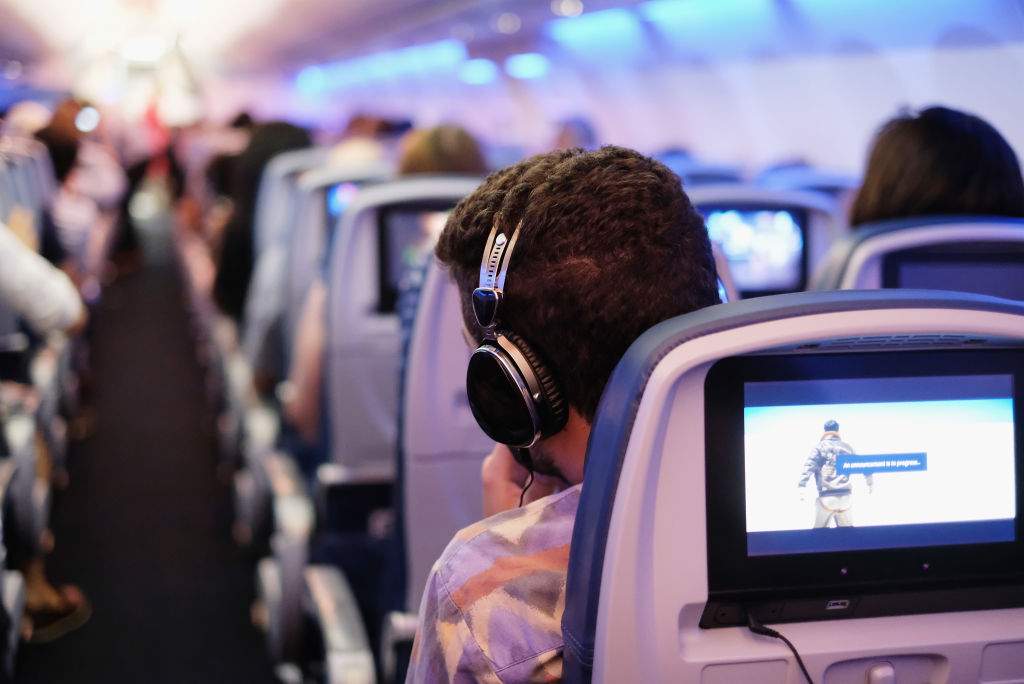
The lights of the city fade below the wing. For those inside the cabin, the war is now something to be watched on a small screen in the back of a headrest, a safe distance away. But for those left on the tarmac, staring at the empty sky where the last ghost flight disappeared, the silence is the loudest thing they have ever heard.
The passport in your drawer is just a piece of paper until it becomes the only thing that determines if you stay in the dark or fly toward the sun.
Would you like me to research the specific airline policies currently in place for passengers affected by the Middle East airspace closures?