In a windowless room somewhere in the American desert, a young lieutenant stares at a screen that looks like a video game. But the resolution is too high for a game, and the stakes are too permanent. On the screen, a grain of sand shifts three thousand miles away. A thermal signature—the heat of a human body—glows a ghostly white against the cool grey of a desert night near the Strait of Hormuz.
The lieutenant isn't alone. Beside him sits a silent partner that never blinks, never tires, and never feels the weight of its own decisions. It is a set of algorithms designed to do what the human brain cannot: process petabytes of data in the time it takes to draw a single breath. This is the new face of American "overmatch" in a potential conflict with Iran. It is fast. It is efficient. And it is terrifyingly quiet.
Military planners call this the "lethal edge." To the rest of us, it is the moment the machine begins to lead the man.
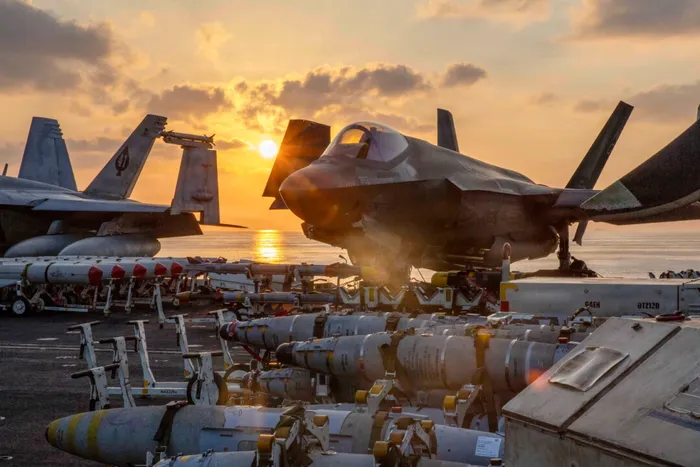
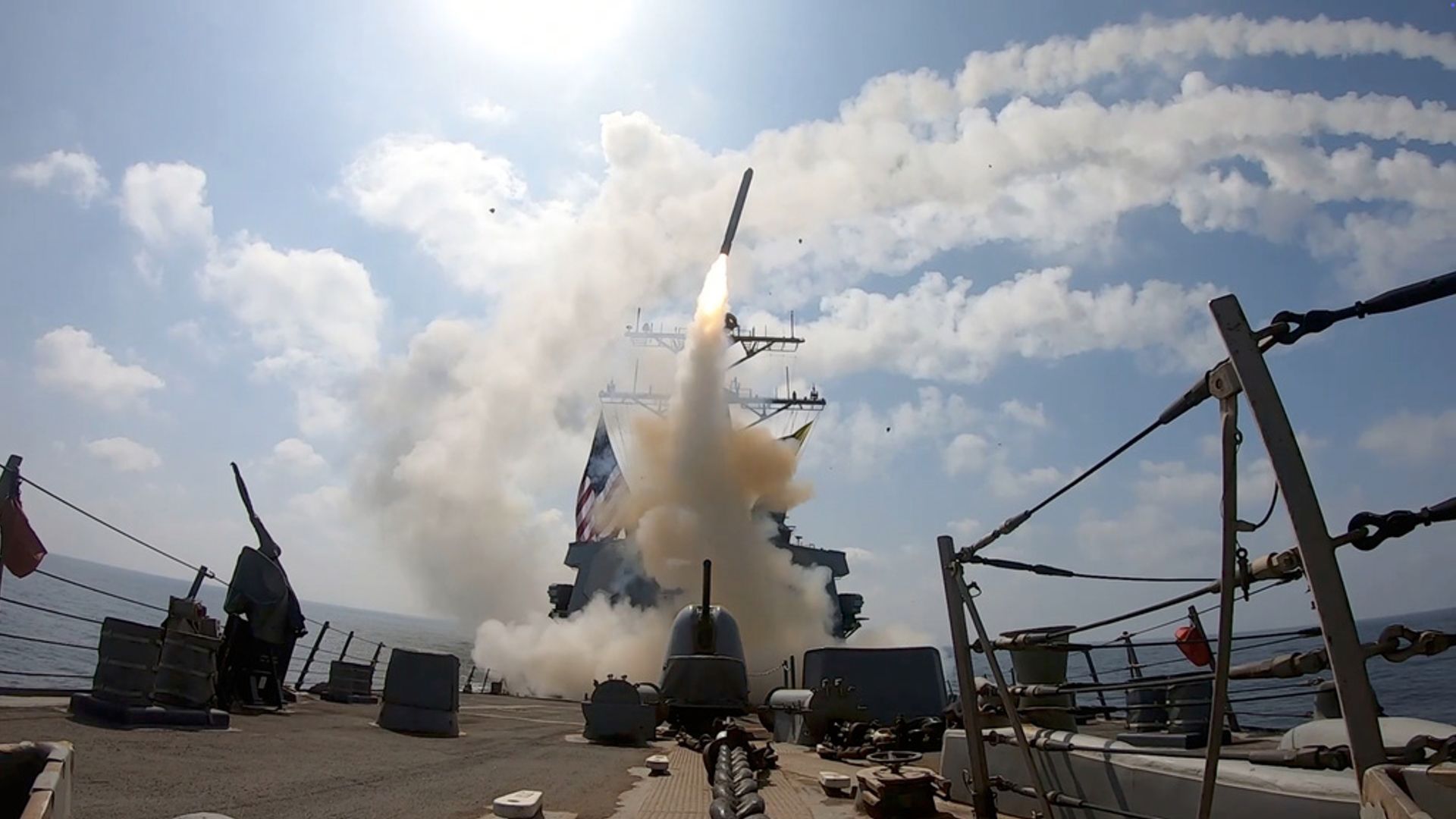
The tension between Washington and Tehran has always been a game of shadows, but the shadows are getting smarter. For decades, the US relied on sheer physical presence—the massive, churning wakes of aircraft carriers and the thunder of afterburners. Now, the advantage is invisible. It lives in the "kill web," a mesh of artificial intelligence that links a high-altitude drone to a satellite, then to a destroyer, then back to a command center, all in milliseconds.
Consider a hypothetical scenario, grounded in the current trajectory of US Central Command’s Project Linchpin. A swarm of Iranian fast-attack boats emerges from the jagged coastline. In the past, a human analyst would have to manually identify which boat carries the anti-ship missile and which is a mere decoy. The human brain, clouded by cortisol and the screech of alarms, might take twenty seconds to decide.
The AI does it in 0.4 seconds.
It cross-references heat signatures, historical movement patterns, and radio frequency emissions. It presents the lieutenant with a "confidence score." It suggests a strike. This is the promise of AI in the theater of war: the elimination of the "fog of war" through pure, calculated clarity. We are told this makes war cleaner. We are told it saves lives by ensuring we only hit exactly what we intend to hit.
But clarity is a fickle thing when it's rendered in code.
The danger isn't that the AI will "wake up" like a sci-fi villain. The danger is that the AI will do exactly what it was told to do, with a logic that humans cannot follow. Engineers call this the "Black Box" problem. When a deep-learning model identifies a target, it doesn't always tell the operator why. Was it the shape of the boat? Or was it a glitch in the way the sunlight hit the water?
If the machine misinterprets a fisherman’s frantic signaling for a combatant’s hostile intent, the result is a tragedy. If that tragedy happens in the powder keg of the Persian Gulf, the result is an escalation that no one—human or machine—can easily stop. We are building a system that operates at "machine speed," but our diplomacy still moves at the speed of a handshake.
There is a psychological toll to this edge, one we rarely discuss in Congressional hearings. Imagine being that lieutenant. You are told the machine is 99.9% accurate. It has been trained on millions of images. If you disagree with the machine and stay your hand, and a US sailor dies because you were too slow, you are a failure. If you trust the machine and it’s wrong, you can blame the software.
This creates a "bias toward automation." We start to defer. We stop questioning. The human element, which is supposed to provide the moral and ethical "fail-safe," becomes a rubber stamp for a processor. We become the biological appendages of a digital predator.
Iran knows this. They aren't sitting still. The asymmetric nature of this conflict means that while the US builds the world's most sophisticated AI, a competitor only needs to find a way to confuse it. Simple "adversarial attacks"—like placing specific patterns on the roof of a vehicle or using certain types of camouflage—can make a world-class AI see a school bus instead of a tank, or a tank instead of a hospital.
When both sides begin to integrate these systems, we enter a realm of "flash wars." Just as high-frequency trading led to the 2010 "flash crash" on Wall Street, where billions of dollars evaporated in minutes due to algorithmic feedback loops, a "flash war" could see a border skirmish escalate into a full-scale missile exchange before a human leader even has time to be briefed.
The stakes in the Iran-US standoff are not just about regional hegemony or nuclear enrichment. They are about the precedent of the first AI-driven conflict. If we use these tools to gain a lethal edge, we are teaching the world that speed is more valuable than deliberation. We are signaling that the messy, slow, empathetic process of human judgment is a liability.
We are currently in the honeymoon phase of military AI. The tech is shiny, the demos are flawless, and the "edge" feels like a superpower. But every superpower has its price. By removing the friction of war—the hesitation, the doubt, the sheer difficulty of killing—we might find that we’ve made war too easy to start.
The lieutenant in the desert room shifts in his chair. The white glow on his screen remains steady. The machine tells him the target is confirmed. He hovers his finger over the button, a final, thin barrier between a line of code and a plume of fire. He feels the weight of the air in the room. He hopes the machine is right.
But more than that, he wonders if he still has the power to tell the machine it’s wrong.
The sand continues to shift. The sensors continue to drink in the world. Somewhere in the silicon, a decision has already been made, and the humans are just waiting to find out what it was.