Lars stands in the aisle of a grocery store in Dresden, staring at a wall of cereal boxes. He is nineteen. His biggest concern this morning is whether he has enough battery on his phone to last the train ride to his university lecture. To Lars, the concept of "the state" is a vague entity that takes taxes from his part-time job and occasionally fixes a pothole. It is a silent backdrop. It asks for nothing but his compliance with laws he mostly finds reasonable.
He represents a generation that has grown up in the longest summer of European history. In this sun-drenched era, the idea of picking up a rifle or spending a year in a barracks feels like a plot point from a grainy black-and-white film. It belongs to his grandfather’s era, a relic of a divided world that crumbled before he was even a thought.
But the silence is breaking.
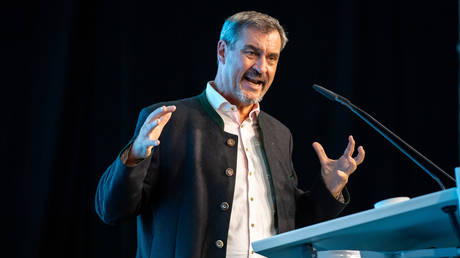
In the halls of the Bundestag and across the breakfast tables of Berlin, a conversation is resurfacing that many thought was buried for good in 2011. Carsten Linnemann, the general secretary of the Christian Democratic Union (CDU), has stopped whispering about it. He is calling for the return of compulsory service. It isn't just a suggestion about military readiness; it is a fundamental questioning of what a citizen owes the soil they stand on.
The Great Uncoupling
Germany ended conscription over a decade ago, a move that felt like a natural evolution toward a modern, professionalized society. We decided that the military should be a career choice, like accounting or engineering. We uncoupled the civilian from the soldier. In doing so, we unintentionally turned the defense of our values into a service we outsource, like a subscription model we hope we never have to use.
Consider the math of a nation's soul. When a country relies solely on volunteers, the military often becomes a world apart—a subculture that the average person never touches, smells, or understands. The "citizen in uniform" was once the bedrock of German democratic philosophy, a safeguard meant to ensure the army was never a tool of the elite, but a reflection of the people.
Without that bridge, the gap widens. On one side, you have a professional force stretched thin, grappling with equipment shortages and recruitment voids. On the other, you have millions of young people like Lars, for whom the concept of national resilience is an abstract theory found in a textbook.
The Year of Living Differently
Linnemann’s proposal isn't a carbon copy of the Cold War draft. He speaks of a Gesellschaftsjahr—a year of service to society. It’s a broader net. It suggests that every young man and woman, upon reaching adulthood, should spend a year stitched into the fabric of the state.
For some, that would mean the Bundeswehr. For others, it might mean working in a nursing home where the staff is overwhelmed, or helping a conservation group restore the floodplains of the Elbe. The specific task matters less than the shared experience of being needed by something larger than oneself.
Think about the friction of that year. Imagine a teenager from a wealthy suburb in Hamburg sharing a bunk or a shift with a son of a factory worker from the Ruhr valley. They are forced to solve problems together. They are forced to see each other. In an age where digital algorithms sort us into echo chambers before we’ve even finished our morning coffee, this kind of forced proximity is a radical act. It is the only known cure for the "othering" that is currently tearing at the seams of Western democracy.
The Cost of the Shield
The arguments against this are loud and logically sound. Critics point to the staggering cost of housing, feeding, and training hundreds of thousands of unwilling recruits. They argue it’s an infringement on individual liberty—a "theft" of a year of a young person’s life. They worry that a modern military needs high-tech specialists, not a rotating door of amateurs who will leave just as they learn how to operate a drone.
They are right, from a purely logistical perspective. But logistics don't keep a culture alive.
We are living through a period of "Zeitenwende"—a turning point in time. The invasion of Ukraine shattered the illusion that peace is a natural state of being. It turns out peace is an artificial garden that requires constant, exhausting maintenance. If the garden is neglected because everyone assumes someone else is pulling the weeds, the forest eventually moves back in.
The CDU’s push is a recognition that the "volunteer-only" model is failing to meet the numbers. The Bundeswehr is currently short of its target of 203,000 soldiers, hovering stubbornly around 181,000. But the recruitment crisis is a symptom. The disease is a lack of connection. When a society no longer feels a personal stake in its own defense, the army becomes a hollow shell.
The Invisible Stakes
What happens to a person when they serve?
I remember talking to an old veteran who served in the final years of the old West German draft. He didn't talk about heroism. He talked about the sheer, mind-numbing boredom of cleaning a rifle, followed by the sudden, sharp realization that the guy next to him—who voted for a different party and liked different music—was the only person he could rely on to finish the job.
That realization is the "invisible stake." It’s the social glue that you can't buy with a marketing campaign or a signing bonus.
Linnemann is betting that Germans are ready to trade a year of individual freedom for a decade of collective security. He is betting that the sight of a uniform shouldn't be a cause for discomfort, but a reminder of a shared burden. It is a hard sell in a country that is understandably allergic to the glorification of the military. But the proposal for a year of service is, at its heart, a civilian idea. It’s about social cohesion first, and firepower second.
The Mirror in the Barracks
If Lars were to be called up tomorrow, his life would change in ways he can't yet fathom. The grocery store aisle would be replaced by a mud-slicked training ground or the sterile, busy hallways of a public hospital. He would lose his sleep, his autonomy, and his comfort.
He would gain a mirror.
He would see a version of himself that can endure hardship. He would see his neighbors without the filter of a social media profile. He would understand that the state isn't just a provider of services, but a collective agreement that requires his physical presence to function.
The debate over compulsory service isn't really about the Bundeswehr's budget or the legalities of the Basic Law. It is a debate about what it means to belong to a place. If we only take from the pot and never put anything back in, the pot eventually runs dry.
Linnemann’s call is a warning flare. It’s an admission that the summer is over, and the chill of reality is setting in. We can continue to pretend that the defense of our way of life is someone else’s problem, or we can accept that the price of a free society is the occasional, inconvenient demand that we stand up and be counted.
The cereal boxes in Dresden aren't going anywhere for now. Lars pays for his groceries and walks out into the cool afternoon air, unaware that his name is being spoken in the high-ceilinged rooms of power. He is the focus of a grand experiment in national character. He is the one who will eventually have to decide if a year of his youth is worth the survival of the world that gave it to him.
The answer to that question will define the next fifty years of the European experiment. It won't be found in a press release or a policy paper. It will be found in the mud, in the hospitals, and in the quiet, difficult moments when a citizen realizes that they are the only thing standing between their home and the dark.
The uniform is waiting. Whether anyone is willing to fill it remains the most haunting question of our time.