The boardroom was never really about business. It was about the light—that specific, cold, clinical glow that turned a group of sweating mid-level managers into gladiators and a real estate mogul into a judge of human worth. For a decade, that light defined a specific brand of American aspiration. Now, reports suggest Amazon is looking to flip the switch back on. But the face reflecting that glare won't be the original architect. It might be the son.
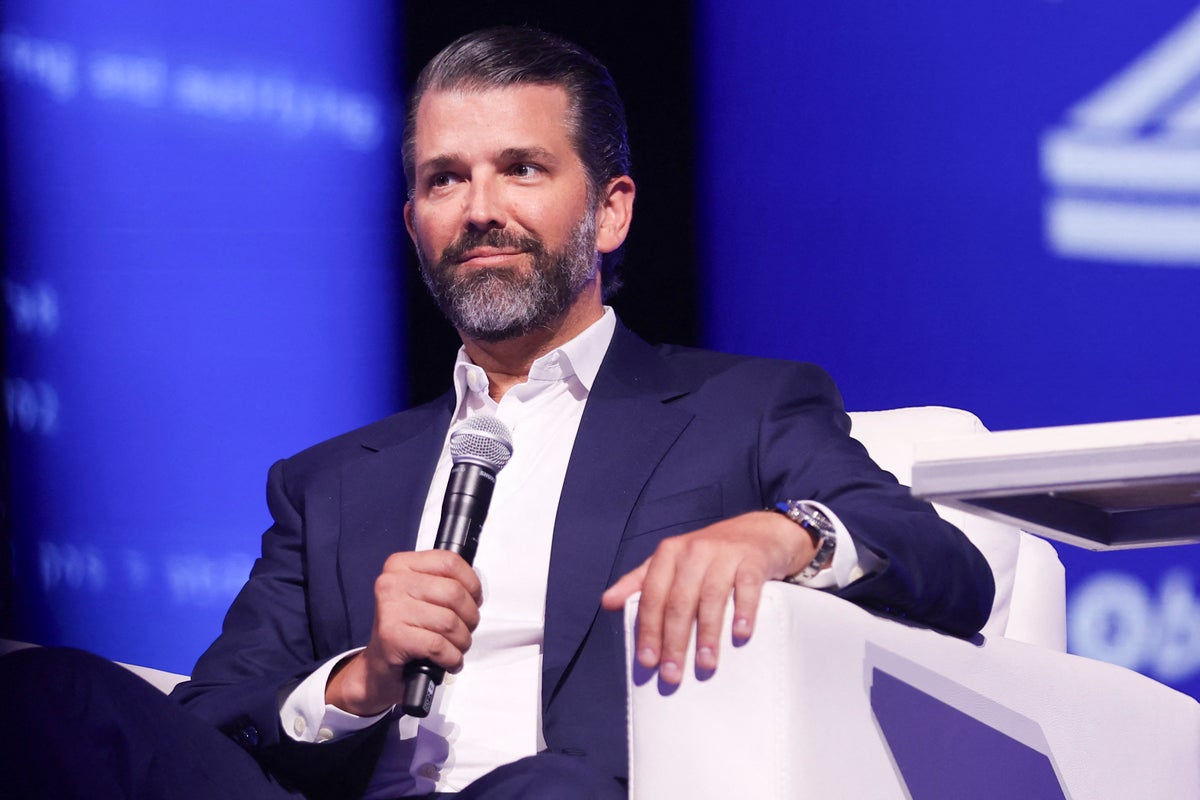
Rumors are swirling through the halls of MGM and the executive suites at Amazon that a revival of The Apprentice is in the works. This isn't just another nostalgia play or a desperate grab for streaming minutes. It is a calculated bet on a legacy. The name at the top of the shortlist for the new host? Donald Trump Jr. In similar developments, read about: Soap Opera Activism Is Actually Sabotaging The Causes It Claims To Save.
The Weight of a Name
Picture a young professional standing in the wings of a soundstage. Their heart hammers against their ribs. They have an MBA, three years of grueling startup experience, and a mountain of student debt. They aren't just looking for a job; they are looking for a blessing. In the original run, that blessing came from a man who had spent forty years building a persona of indestructible success.
Don Jr. walks into this scenario with a different kind of baggage. He isn't the self-made myth; he is the custodian of the brand. For Amazon, this choice represents a fascinating, if polarizing, intersection of commerce and cultural tribalism. To some, he is the natural heir to the boardroom throne, a man who has spent years defending the family empire in the most hostile arenas imaginable. To others, he is a symbol of everything they want to change about the corporate world. Entertainment Weekly has analyzed this fascinating topic in extensive detail.
The stakes for Amazon are invisible but massive. They aren't just buying a TV show. They are inviting a lightning rod into their ecosystem. When Jeff Bezos’s behemoth acquired MGM for $8.5 billion, they didn't just get James Bond’s tuxedo and Rocky’s gloves. They got the keys to the boardroom.
The Evolution of the Fired
The original show thrived on a very specific kind of 2004 energy. It was a world before the Great Recession, before the gig economy, and before "quiet quitting" became a headline. Success was vertical. You climbed the ladder, or you were pushed off it.
Today, the world looks different. A hypothetical contestant in 2026 isn't just competing for a salary. They are competing for a platform. They know that even if they hear those two famous words, they can pivot to a TikTok following or a venture capital seed round. The power dynamic has shifted.
This creates a problem for a host. How do you command authority over a generation that views "the boss" with inherent skepticism?
This is where the choice of Don Jr. becomes a narrative masterstroke or a catastrophic misfire. He doesn't command authority through traditional corporate tenure. He commands it through alignment. He is a creature of the modern media cycle—someone who understands that attention is the only currency that never devalues.
Consider the atmosphere of a modern boardroom. It is no longer just about who can sell the most lemonade on a street corner in Manhattan. It is about who can survive the digital meat grinder. Don Jr. knows that world. He lives in it. The show wouldn't just be about business acumen; it would be about the endurance of one’s personal brand under fire.
The Spectacle of Aspiration
Television is a mirror, even when the glass is tinted. When we watched the original series, we weren't just learning how to negotiate a contract for a bridal expo. We were watching a morality play. We wanted to believe that the smartest, hardest-working person in the room would eventually be recognized.
But the "truth" of reality TV is always a curated shadow. The editors decide who the villain is. The producers decide which failure is "educational" and which is "pathetic."
By potentially casting Don Jr., Amazon is leaning into the spectacle. They are acknowledging that The Apprentice was always as much about the personality at the head of the table as it was about the tasks. You don't tune in to see a fair HR process. You tune in to see a kingmaker.
The friction is the point. In a fractured media environment, "safe" content is often "invisible" content. Amazon Prime Video doesn't need a show that everyone likes; it needs a show that everyone talks about. They need the hate-watchers, the die-hard fans, and the people who will spend four hours arguing about it on X before the first commercial break is even over.
The Invisible Boardroom
There is a quiet irony in Amazon—the company that has fundamentally changed how we work, how we buy, and how we live—revisiting a show about "getting a job."
For the average person, the "boardroom" isn't a mahogany-clad room in a skyscraper. It’s an algorithm. It’s a performance review delivered via a standardized portal. It’s the crushing weight of being "tracked" for productivity every second of the day.
There is a hunger for the human element in that process, even if that element is exaggerated for TV. We want to see a person look another person in the eye and make a decision. We want the catharsis of a definitive ending.
Don Jr. represents a bridge to a specific kind of past—a time when the lines were clearly drawn and the boss was a person you could see, touch, and eventually, if you were good enough, replace.
The report of this reboot isn't just a business note in a trade publication. It’s a signal. It tells us that the era of the "faceless corporation" might be trying to put a face back on, even if that face comes with a legacy that divides the room before the meeting even starts.
The cameras are being dusted off. The chairs are being polished. The scripts are being tightened. Whether this becomes a triumphant return to the ratings peak or a footnote in the history of streaming gambles depends on whether we still believe in the myth of the boardroom.
We are waiting for the door to open. We are waiting to see who sits in the chair. Most of all, we are waiting to see if we still care enough to watch someone get told their time is up.
The red "On Air" light is about to glow. It is a cold light, but it’s the only one that reveals the cracks in the gold plating.