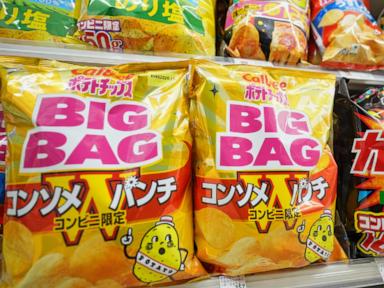
The headlines are predictable. They are also wrong. If you believe that Japanese snack manufacturers are stripping color from their bags because a conflict in the Middle East has suddenly vanished the world’s supply of cyan and magenta, you are the perfect mark for a corporate PR stunt.
The narrative currently circulating is a masterpiece of "lazy consensus." It suggests a direct, linear collapse: War in Iran leads to supply chain bottlenecks, which leads to a shortage of specialized chemicals for printing, which forces brands to adopt a minimalist, black-and-white aesthetic out of desperation.
It sounds logical. It fits the "global instability" trope we’ve been fed for years. But it ignores the fundamental mechanics of industrial chemical procurement and, more importantly, the ruthless psychology of brand positioning.
I have spent years watching C-suite executives turn logistics failures into "conscious" lifestyle choices. This isn't a crisis of supply. It is a tactical retreat into high-margin minimalism disguised as a supply chain tragedy.
The Myth of the Ink Desert
Let’s dismantle the technical premise first. The idea that a regional conflict instantly evaporates the global capacity to produce pigment is a gross oversimplification. Yes, the petrochemical industry is interconnected. Yes, precursors for synthetic dyes often originate in volatile regions.
However, major ink manufacturers like DIC Corporation or Toyo Ink—the giants that dominate the Japanese market—do not operate on a "just-in-time" basis for raw carbon black or basic organic pigments to the point where a single shipping lane closure forces a nationwide color ban within weeks.
The "Ink Shortage" is the new "Paper Shortage." It is a convenient scapegoat for companies looking to slash CO2 footprints and production costs without admitting they are cheaping out on the consumer experience. If you can convince a customer that their favorite spicy potato chips are now in a drab grey bag because of "global solidarity" or "unavoidable scarcity," you’ve successfully offloaded the cost of the crisis onto their aesthetic experience while protecting your bottom line.
Greenwashing in Monochrome
What the "competitor" articles won't tell you is that monochrome printing is significantly cheaper and easier to recycle. Multi-layer plastic films with high-saturation color are a nightmare for the circular economy.
By stripping the color, these companies are achieving several internal KPIs simultaneously:
- Reducing VOC (Volatile Organic Compound) emissions during the printing process.
- Cutting solvent usage, which is the actual bottleneck, not the pigment itself.
- Shortening lead times by removing the need for complex multi-pass drying.
They aren't "running out" of ink. They are optimizing their ESG (Environmental, Social, and Governance) scores and using a war as a shield against the inevitable backlash of a "worse" looking product. It’s a classic bait-and-switch. You get a premium-priced product in a budget-looking bag, and you’re told you’re a hero for accepting it.
The Scarcity Aesthetic as a Luxury Signal
In the world of Japanese design, there is a concept called wabi-sabi—finding beauty in imperfection and simplicity. The snack industry is weaponizing this.
When everything on the shelf is a neon explosion of reds and yellows, the black-and-white bag stands out. It screams "industrial," "authentic," and "limited edition." Marketers know that scarcity drives demand. By claiming the ink supply is depleted, they create a "get it before it’s gone" mentality for even the most basic rice crackers.
I’ve seen this play out in the semiconductor industry and the luxury watch market. You create a bottleneck—or the perception of one—to reset the consumer's expectations. If they can get you to accept a black-and-white bag today, they can get you to accept a smaller portion size tomorrow under the same guise of "resource management."
The Iran Variable: A Convenient Distraction
The focus on Iran is a masterful bit of misdirection. While the Strait of Hormuz is a vital artery for global trade, the pigments used in food packaging are often derived from titanium dioxide and carbon black.
- Titanium Dioxide (White): Primarily sourced and processed in China, the US, and Germany.
- Carbon Black (Black): A byproduct of heavy petroleum resins, produced globally.
If there were a true, existential ink crisis, the black ink would be just as at risk as the red. A truly "ink-depleted" package wouldn't be black and white; it would be clear plastic. But clear plastic looks "cheap." Black and white looks "designed."
The industry isn't pivoting to monochrome because they can't find blue; they are pivoting because black ink is the most opaque, covers the most flaws in recycled substrate, and requires the least amount of chemical stabilizer to remain shelf-stable under harsh fluorescent lights.
The Logistics of the Lie
Think about the timeline required to redesign packaging. You don’t just "run out of ink" on Tuesday and have a redesigned, plate-ready, monochrome bag on the shelves by Friday.
Packaging design, legal compliance for labeling, and printing plate manufacturing take months. For these bags to be hitting the shelves now, the decision to go "ink-minimalist" was made long before the current headlines hit the wire.
This suggests a proactive strategy, not a reactive one. The "war shortage" is the narrative they draped over a pre-existing plan to streamline manufacturing costs. It’s a PR wrapper on a logistical decision.
Why You Should Be Skeptical of "Shortage" Branding
When a brand tells you they are changing their product for your benefit or due to "global circumstances," you should immediately look at their margins.
- Cost of 4-color process (CMYK): High. Requires four sets of plates, precise registration, and higher ink volume.
- Cost of 1-color process (K): Low. One plate. Low maintenance. Faster run speeds.
If the price of the snacks hasn't dropped to reflect the cheaper packaging, you are simply paying a "style premium" for their cost-saving measures.
The "People Also Ask" Reality Check
People are asking: Is there really an ink shortage?
The answer is: There is a logistics friction, but there is no lack of pigment in the world. There is only a lack of willingness to pay for the shipping and the environmental offsets required to maintain high-color saturation.
People are asking: Will my snacks taste different?
The answer is: No, but your perception of them will. High-contrast packaging triggers dopamine. Minimalist packaging triggers a "sophistication" response. They are hacking your brain to ensure you don't feel "poor" while they provide a visually poorer product.
The Industry Insider’s Take
I’ve sat in rooms where "Supply Chain Constraints" were listed as the #1 marketing opportunity of the fiscal year.
If you want to see the truth, look at the high-end, luxury gift fruits in Tokyo. Are those packages turning black and white? No. Because those margins are high enough to absorb any ink price hike. The "shortage" only seems to affect mass-market goods where the manufacturer is desperate to squeeze another 0.5% margin out of a bag of chips.
This isn't about a war in the Middle East. It’s about a war on your expectations.
The Japanese snack industry isn't struggling; it's evolving into a leaner, meaner version of itself. It is using global instability as a laboratory for cost-cutting measures that would have been laughed out of the room five years ago.
By the time the "ink supply" returns to normal, the brands will have realized that you’ll keep buying the monochrome bags anyway. The color isn't coming back. Why would they spend the money to bring it back when you’ve already proven you’ll accept the excuse?
Stop mourning the loss of the vibrant red bag. Start questioning why you’re still paying full price for the "war-torn" version.
The ink hasn't run out. The industry’s respect for the consumer’s intelligence has.
Everything you’ve read about the "depleted ink supply" is a distraction from the reality that you are being conditioned to accept less for more. The bags are black and white because it’s more profitable, period. The rest is just flavor text.
Next time you reach for a monochrome bag, realize you aren't holding a piece of history or a byproduct of global struggle. You are holding a spreadsheet.
The revolution will not be televised in Technicolor; it will be printed in 10% grayscale to save on the bottom line.
Don't buy the story. Just buy the chips, or don't. But don't let them convince you that a lack of pigment is a badge of honor.
Logistics is the new marketing, and you are currently being sold a very expensive lack of color.
Make no mistake: the "crisis" is a feature, not a bug. It is a controlled demolition of the aesthetic standard, designed to see how little you will settle for before you stop clicking the "buy" button.
If they can sell you a black-and-white bag during a war, they’ll sell you a transparent one during a recession. And you’ll thank them for it because they’ll tell you it’s "carbon neutral."
The ink isn't gone. It's just being redirected to the pens used to sign the record-breaking profit reports at the end of the quarter.
Accept the monochrome if you must, but reject the narrative that the industry's hands were tied. They chose this. They planned this. And they are betting you are too distracted by the headlines to notice the margin creep.
Turn the bag over. Read the ingredients. The calories are the same. The price is the same. Only the effort has vanished.
The color didn't die in a war. It was smothered in a boardroom.


