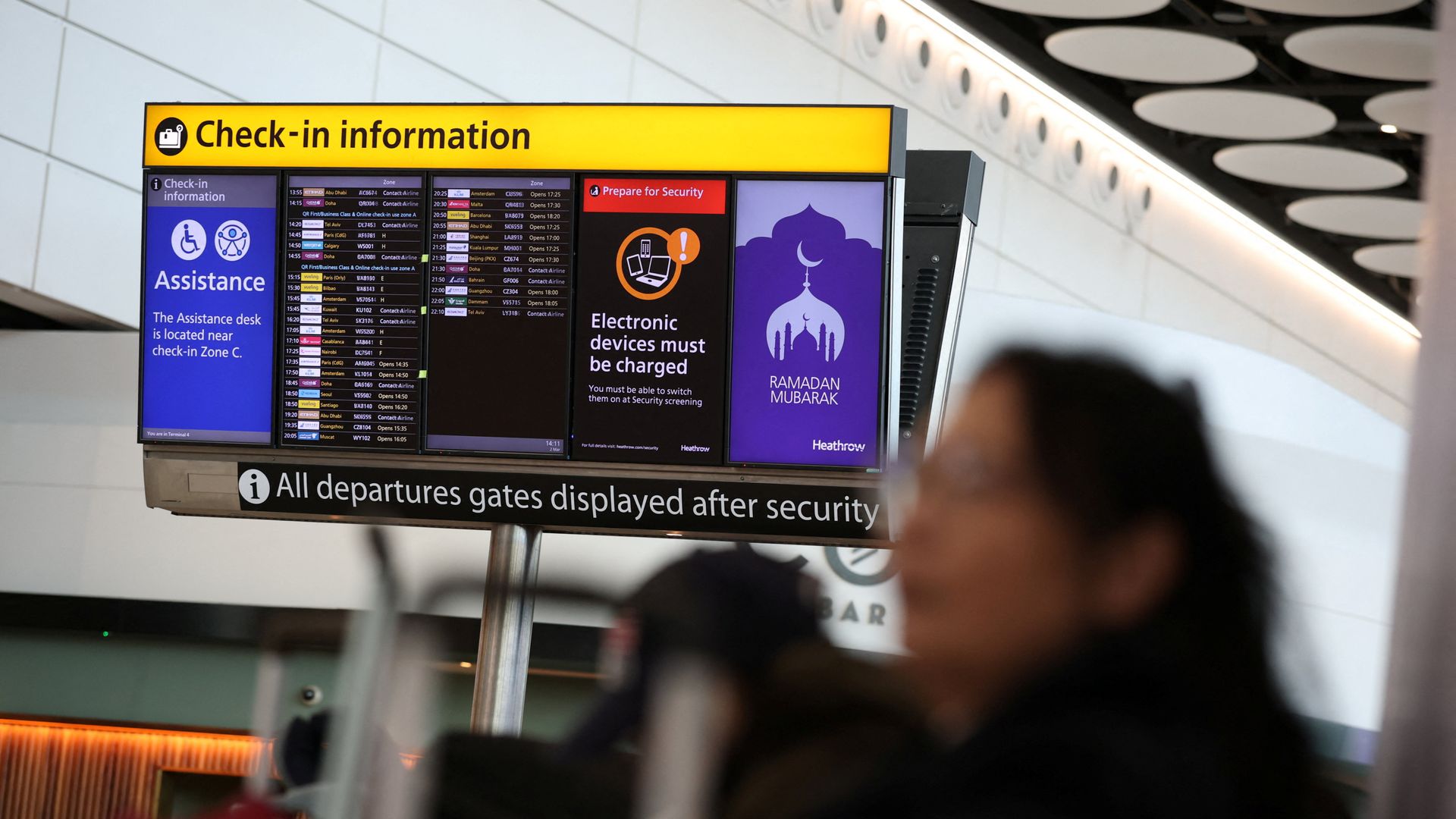
The headlines are screaming "shambles." They are obsessed with a metal tube sitting on a tarmac while the Middle East teeters on the brink. Critics are lining up to mock the Foreign, Commonwealth & Development Office (FCDO) because a chartered plane meant for British evacuees didn't take off exactly when the 24-hour news cycle demanded it.
They are wrong. Dead wrong.
If you’ve ever managed high-stakes logistics in a combat zone or a collapsing state, you know that a grounded plane is often the only thing standing between a successful extraction and an international disaster. The "lazy consensus" says that speed is the only metric of success in an evacuation. In reality, the most dangerous thing you can do is launch a half-baked flight into a contested airspace just to satisfy a PR timeline.
The Myth of the "Empty Seat" Crisis
The armchair experts are crying foul because the plane wasn't packed to the rafters. They see an empty seat as a waste of taxpayer money. I see it as a necessary buffer.
In emergency aviation, you do not book to capacity. You book for the worst-case scenario. When the FCDO charters a Boeing 737 or an Airbus A320, they aren't running a budget holiday route to Ibiza. They are securing "Ready-to-Move" (RTM) status.
Why empty planes happen:
- The "No-Show" Paradox: Civilians in a crisis zone are notoriously unreliable. They promise to be at the assembly point, then they hit a militia checkpoint, or their car runs out of fuel, or they decide at the last second they can't leave their grandmother behind.
- Insurance Latency: Underwriters for "War Risk" insurance can pull coverage in a heartbeat. If the risk profile shifts by 1% between 10:00 AM and 10:05 AM, that plane stays down. Period.
- Weight and Balance Flux: In an evacuation, you don't know if your passengers are bringing one backpack or four suitcases of family heirlooms. Pilots make the final call on the manifest. If the data is messy, the wheels don't turn.
I have seen private security firms burn $500,000 on "ghost flights" just to keep a slot open at a restricted airport. It isn't a shambles; it’s the cost of doing business in a world that is literally on fire.
Airspace is Not a Public Highway
The general public treats the sky like a motorway where you just merge and go. In the Middle East, airspace is a jigsaw puzzle of shifting jurisdictions, electronic warfare (EW) interference, and "deconfliction" protocols.
When a charter flight stays grounded, it’s rarely because the pilot forgot his keys. It is almost always because a regional power—be it Israel, Jordan, or Cyprus—has locked down a corridor for military assets.
The Deconfliction Reality
- NOTAMs (Notices to Air Missions): These change by the minute. A "safe" corridor at breakfast can be a "live fire" zone by lunch.
- GPS Spoofing: We are currently seeing unprecedented levels of signal interference in the Eastern Mediterranean. Sending a civilian charter into a zone where flight instruments are being fed false data is a suicide mission.
- Slot Squatting: Sometimes, you keep a plane on the ground just to hold the landing slot. If you vacate that spot, a different nation’s military might take it, and you lose your window for the next three days.
The media calls it "incompetence." Logistics professionals call it "holding the line."
Stop Asking "Why Isn't It Moving?" and Start Asking "Is It Ready?"
People also ask: "Why can't the RAF just handle it?"
Because the RAF brings a footprint that charters don't. A military C-17 landing in a flashpoint is a political statement. A chartered Titan Airways or Hi Fly jet is a commercial transaction. Using charters provides "plausible deniability" and lowers the heat. It allows the government to move people without triggering a diplomatic incident or looking like an invading force.
The "shambles" narrative is a byproduct of the Amazon Prime era. We expect "Buy Now" evacuation. We think that because we can track the flight on an app, we understand the complexities of the cockpit. We don't.
The True Cost of a Premature Takeoff
Imagine a scenario where the government yields to the "shambles" headlines. They push a flight out 4 hours early to appease a disgruntled MP. The plane enters a corridor just as a drone intercept occurs. The pilot has to bank hard, the transponder malfunctions due to EW, and suddenly a civilian jet is being tracked as a hostile "bogey" by a nervous SAM battery.
Is that better than a 12-hour delay?
The Logistics of Fear
Evacuations are 10% flying and 90% psychology. The moment the government announces a flight, they create a "pull factor." This is the dirty secret of the FCDO: they don't actually want to evacuate everyone at once. They want a steady, controlled trickle.
If they launched ten planes today and filled them all, the remaining 5,000 Brits would panic, storm the airport, and create a security vacuum that would require a full military intervention to solve. A "grounded" plane acts as a pressure valve. It signals that the option is there, but it maintains a level of friction that prevents a stampede.
It is cold. It is calculated. And it works.
The Actionable Truth for the Stranded
If you are on the ground, stop reading the "shambles" reports. They are written by people in air-conditioned offices in London who couldn't tell a flight manifest from a grocery list.
- Ignore the "Empty Plane" Photos: They mean nothing. A plane's presence is more important than its occupancy.
- Verify Your Documents: Most delays are caused by passengers showing up with expired passports or missing visas for their transit country (usually Cyprus). The government can't fix your paperwork mid-flight.
- Stay Near the Hub: The window between "Grounded" and "Takeoff" is often less than 60 minutes. If you aren't within striking distance of the gate because you were complaining on social media, you miss your seat.
We have reached a point where we value the appearance of "doing something" over the efficacy of doing it right. A grounded plane is a sign of a system that is still assessing risk, still negotiating with host nations, and still prioritizing life over optics.
The real shambles isn't the plane on the tarmac. It’s the hysterical demand that it fly into a storm before we’ve checked the weather.
Next time you see a "Total Shambles" headline, ask yourself: would I rather be on a grounded plane wishing I was in the air, or in the air wishing I was on the ground?
The answer is obvious to anyone who actually knows how the world works. Stop whining about the delay and start respecting the restraint. In a war zone, patience isn't just a virtue; it's a survival strategy.


