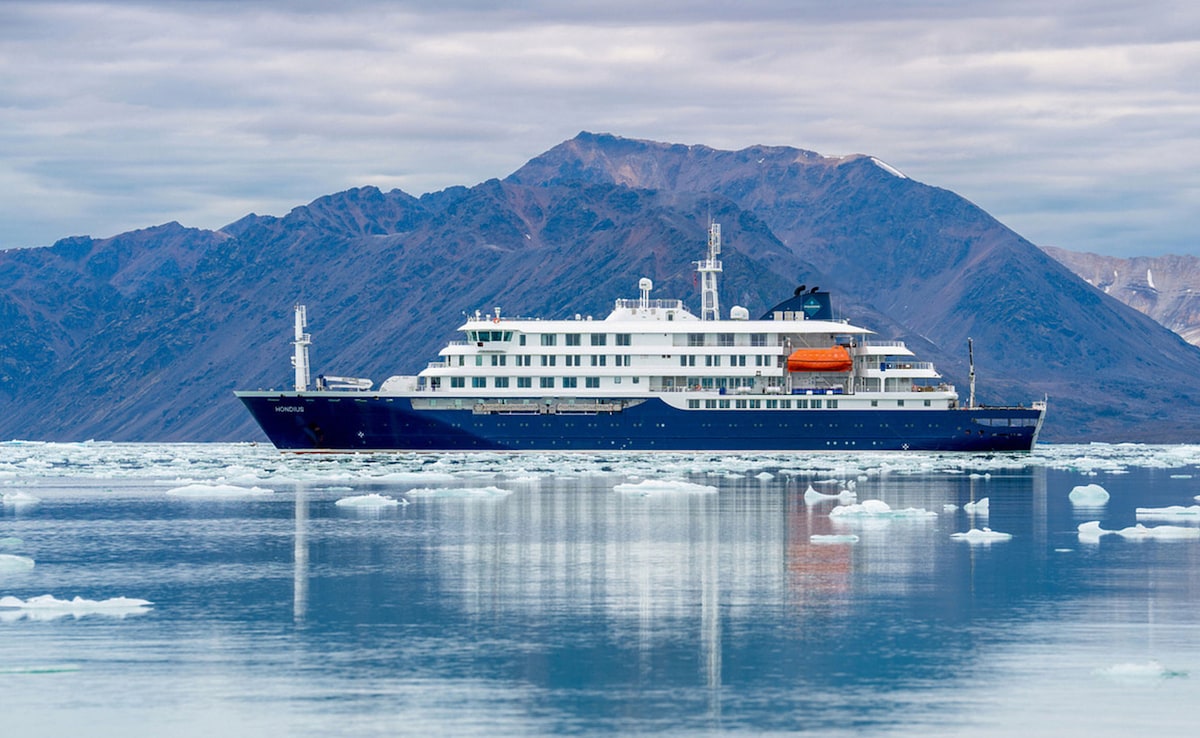
Fear sells, but context saves. The recent panic surrounding "human-to-human" hantavirus transmission on a cruise ship is a masterclass in medical sensationalism. Headlines are shrieking about a new plague on the high seas, yet they overlook the most basic biological reality of viral evolution.
If you’re terrified because a few people shared a virus in a metal tube, you’ve been sold a narrative that confuses a biological anomaly with a public health catastrophe. If you liked this article, you should look at: this related article.
We need to stop treating every rare transmission event as the prologue to a disaster movie. I’ve tracked infectious disease trends for years, and the pattern is always the same: media outlets find a "rare" event, strip away the statistical insignificance, and present it as an imminent threat.
The Andes Strain is Not a New Villain
Most hantaviruses—like the Sin Nombre virus prevalent in North America—are strictly "dead-end" infections. You breathe in dust contaminated by rodent droppings, you get sick, and the chain ends with you. The competitor narrative treats the recent cruise ship outbreak as if the virus suddenly learned a new trick. For another look on this development, see the latest update from Medical News Today.
It didn't.
We have known about the Andes virus (ANDV) for decades. Unlike its cousins, the Andes strain has always possessed the localized capability for person-to-person spread. This isn't a "mutation" or a "breakthrough"; it is a documented, geographic trait of a specific viral lineage found in South America.
By framing this as a shocking development, health reporting ignores the existing body of literature. When we scream "confirmed" about something that was already a known variable, we don't inform the public; we just raise their cortisol levels.
The Cruise Ship is a Laboratory, Not a Petri Dish
Critics love to call cruise ships "floating petri dishes." It’s a lazy metaphor. In reality, a cruise ship is one of the most controlled environments on earth.
Think about it. Where else is every single guest tracked via RFID, every meal logged, and every interaction potentially caught on camera? If you want to study how a virus moves, you couldn't design a better laboratory.
The "danger" of the cruise ship isn't the proximity; it's the surveillance bias. We find "rare" transmission on ships because we are actually looking for it. If these same individuals had been staying in private Airbnbs in rural Patagonia, the secondary cases would have been labeled as "independent exposures" or simply missed entirely.
The outbreak didn't happen because the ship was "dirty." It was identified because the ship was monitored.
Dismantling the R0 Myth
Public health "experts" love to toss around the basic reproduction number, or $R_0$. For most hantaviruses, $R_0$ is effectively zero. For the Andes strain in a crowded environment, it might tick up slightly, but it remains fundamentally inefficient.
To achieve a true pandemic-level threat, a virus needs an $R_0$ significantly greater than 1. The Andes virus is a biological clunker. It requires prolonged, intimate contact—the kind found in shared cabins or family units—to jump hosts.
- Fact: Hantavirus Pulmonary Syndrome (HPS) has a high mortality rate (often cited around 35-40%).
- The Nuance: High lethality is a massive evolutionary disadvantage for a virus.
A virus that kills its host quickly is a virus that fails to spread. This is why the common cold is everywhere and Ebola stays contained in localized outbreaks. Hantavirus is too "hot" for its own good. It burns through the host before it can reach the next airport.
Stop Asking if it Can Spread and Start Asking if it Matters
The "People Also Ask" sections of the internet are currently flooded with questions like: Is hantavirus the next COVID-19?
The answer is a blunt "No," but not for the reasons you think.
COVID-19 was the perfect storm: long incubation, asymptomatic shedding, and airborne stability. Hantavirus lacks all three. It is heavy. It is fragile. It dies quickly when exposed to UV light or standard detergents.
We are asking the wrong question. Instead of asking "Can it spread between humans?" we should be asking "Is our response to rare events destroying our ability to handle common ones?"
Every time we over-rotate on a niche South American virus because it happened on a luxury ship, we divert resources and attention from the boring, pedestrian killers like Norovirus or even the seasonal flu, which actually impact thousands of travelers every week.
The Professional Risk Assessment
I’ve seen travel companies lose millions because they reacted to a headline rather than a data set. If you are a traveler, the risk of contracting HPS on a cruise is statistically lower than being struck by lightning while winning the lottery.
To get sick, you need:
- A specific species of long-tailed pygmy rice rat to board the ship (unlikely).
- The rat to be shedding the virus in a confined space.
- You to inhale the aerosolized particles within a very narrow window of time.
- OR, you to spend 24+ hours in a small cabin with someone already in the acute phase of the illness.
Does that sound like a "global threat" to you?
The Industry Insider’s Take on Hygiene Theater
Expect to see "deep cleaning" rituals and "new protocols" announced by cruise lines in the wake of this. It’s theater.
The virus is sensitive to simple soap. You don't need a proprietary "bio-shield" or an AI-driven disinfecting robot. You need a bottle of bleach and a rag. But "We wiped the tables" doesn't satisfy a panicked board of directors or a terrified public.
We have entered an era where the appearance of safety is more valuable than safety itself. By focusing on the "rare human-to-human" aspect, the industry actually avoids talking about the real issue: port-side excursions into high-risk rural areas without proper guest education.
The Brutal Truth
The competitor’s article wants you to feel like the world changed because a virus crossed a threshold. It didn’t. The threshold was always porous; we just finally had the diagnostic tools and the captive audience to notice it.
Hantavirus isn't coming for your city. It isn't the "next big one." It is a tragic, localized medical event that happened to occur in a place with a high-speed internet connection and a lot of bored people with smartphones.
The next time you see "Confirmed" and "Hantavirus" in the same sentence, check the geography. If it says "Andes," take a breath. You are looking at a known entity being rebranded as a novelty.
If you want to be a smart traveler, worry about your sunscreen and your alcohol intake. The rodents aren't the problem; the hyperbole is.
Wash your hands. Move on.


