The headlines are screaming about a "gas theft epidemic" triggered by Middle East tensions. They want you to believe that every time a tanker gets diverted in the Strait of Hormuz, the average citizen is one siphoned tank away from total societal collapse. It is a tired, low-effort narrative. It ignores the fundamental mechanics of energy markets and human behavior.
Stop mourning the price at the pump. The obsession with "cheap gas" is the very thing keeping our infrastructure fragile and our security at risk. If you want to find the real culprit behind fuel theft and energy anxiety, look at the subsidization of inefficiency, not the drums of war.
The Myth of the Desperate Thief
The mainstream media loves the image of the "struggling commuter" forced into a life of crime because gasoline hit $5.00 a gallon. It’s a compelling sob story, but it’s statistically illiterate. Petty siphoning—the kind done by individuals in driveways—is a rounding error in the world of fuel loss.
The real "epidemic" is organized, industrial-scale diversion. We are talking about sophisticated rings using modified vans with floor-mounted bladders, hitting high-volume stations and tapping into pipelines. These groups aren’t motivated by a struggle to get to work; they are motivated by the massive arbitrage opportunities created by price volatility and poor digital oversight at the terminal level.
When people cry about "war on Iran" causing theft, they are confusing a catalyst with a cause. The cause is a crumbling, analog fuel distribution network that treats a liquid asset worth billions like it’s tap water. In my fifteen years analyzing supply chain vulnerabilities, I have seen more fuel lost to "paper errors" and outdated inventory software than to every rubber hose in America combined.
Price Shocks are a Necessary Immune Response
High prices aren't the enemy. They are a signal.
When the market reacts to geopolitical instability, it is doing its job. It is telling you to stop wasting a finite resource. The "lazy consensus" dictates that the government should step in, release the Strategic Petroleum Reserve (SPR), or cap prices to "protect" the consumer.
This is financial malpractice.
Capping prices during a supply crunch is like trying to cure a fever by breaking the thermometer. It ensures that demand stays artificially high while supply dwindles, leading to actual shortages—the kind where you don't just pay more, you simply can’t get any.
High prices do what no government PSA can: they force immediate innovation.
- They accelerate the transition to localized microgrids.
- They make the ROI on high-efficiency fleet logistics undeniable.
- They kill off zombie industries that only exist because they’ve been sucking on the teat of sub-$3.00 gasoline for decades.
The Fraud of Energy Independence
The competitor piece likely bleated about how "energy independence" would solve our theft and pricing woes. This is the biggest lie in the industry. We live in a globalized commodity market. Even if we pumped every drop of oil we consumed right here in Texas or North Dakota, the price would still be dictated by global benchmarks like Brent or WTI.
Unless you plan on nationalizing the oil industry and banning exports—a move that would collapse the US dollar faster than you can say "hyperinflation"—you are tied to the global price.
The real threat isn't that Iran might close a shipping lane. The threat is that our domestic grid and transport sectors are too rigid to handle a 20% price swing without the public losing its collective mind. We haven't built a resilient system; we've built a fragile one that requires perfect global peace to function. Peace is not a strategy.
The Digital Hole in the Tank
If you want to stop fuel theft, stop looking at the gas cap and start looking at the Point of Sale (POS) system.
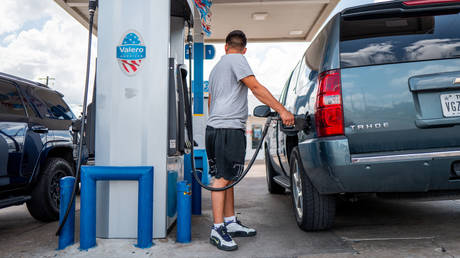
Most gas stations in this country are running on tech that belongs in a museum. The "epidemic" of theft often involves "pump jumping" or exploiting the delay between a card authorization and the actual flow of fuel.
Why Gas Stations Are Easy Targets
- Low Margins, Low Security: Most station owners make their money on Marlboros and Slurpees, not the fuel. They have zero incentive to invest in high-end cybersecurity for their pumps.
- Analog Volumetrics: We are still using physical floats and basic sensors to measure "shrinkage." By the time a station owner realizes 500 gallons are missing from the underground tank, the thieves are three counties away.
- The Bluetooth Vulnerability: Many pump controllers are still accessible via unsecured or poorly encrypted local signals. A teenager with a laptop can do more damage than a thousand siphons.
We don't have a "gas theft epidemic" because of a war in the Middle East. We have a gas theft epidemic because we treat fuel like a commodity while managing it with the security of a lemonade stand.
Stop Trying to Lower Prices
Here is the hard truth: Gas should be more expensive, not less.
If you want to end the "epidemic," you need to eliminate the "cheap fuel" delusion. When fuel is expensive, it becomes a high-priority asset. It gets tracked with GPS. It gets guarded by advanced telemetry. It gets used by people who actually need it, rather than people idling their three-ton SUVs in a Starbucks drive-thru for twenty minutes.
The "misery" of high gas prices is actually the sound of a market correcting for thirty years of waste. Every time the price spikes, the "theft" narrative is used as a distraction to prevent us from asking why our infrastructure is still so dependent on a single, volatile liquid.
The Actionable Reality
If you are a business owner or a fleet manager, stop checking the news for updates on Iran. It doesn't matter what happens in Tehran. What matters is your own resilience.
- Audit Your Telemetry: If you aren't tracking fuel consumption down to the milliliter in real-time, you are being robbed. Not by Iranians, but by your own employees and local opportunists.
- Hedge, Don't Complain: Use futures. Lock in your costs. If you are exposed to the spot market, you aren't a victim; you're a gambler who lost.
- Electrify the Last Mile: The most secure fuel is the one you generate on your own roof. You can't siphon a kwh out of a battery with a rubber hose.
The "War on Iran" is a convenient ghost story for people who don't want to admit that our energy model is obsolete. The theft isn't happening because of a geopolitical shift; it's happening because we've left the door wide open and the lights off for half a century.
Stop whining about the price. Pay it. Adapt. Move on.