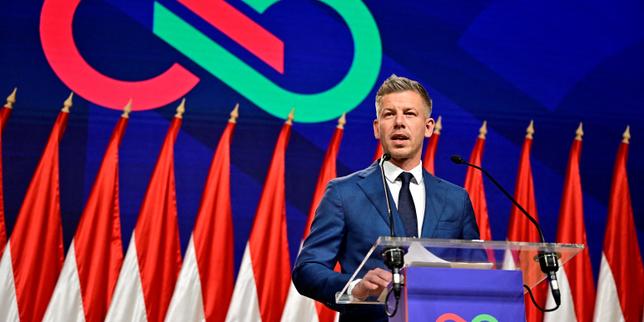
The champagne corks are flying in Brussels, but the hangover is going to be brutal. After 16 years of Viktor Orbán acting as the ultimate wrench in the gears of European integration, he's finally out. Péter Magyar and his Tisza party didn't just win on April 12; they steamrolled the incumbent with a two-thirds supermajority that leaves the old guard of the Fidesz party in a daze.
If you think this means Hungary is about to become a compliant, rubber-stamping member of the European project, you're missing the point. Magyar isn't an outsider; he's a former Fidesz insider who knows exactly where the bodies are buried. He won because he promised to clean up the corruption, not because he wants to take orders from the Berlaymont building. The EU leaders celebrating today need to realize that dealing with a competent, popular nationalist might actually be harder than fighting with a professional provocateur like Orbán.
The myth of the perfect pro-European savior
Brussels has a habit of falling in love with anyone who defeats a "populist," usually ignoring the fine print of their platform. Péter Magyar is pro-European in the sense that he wants Hungary back in the fold to unlock the billions in frozen recovery funds. Honestly, who wouldn't? Hungary needs that cash—roughly 10% of its GDP—to fix a healthcare system so neglected that patients literally have to bring their own toilet paper to hospitals.
But don't mistake financial pragmatism for ideological submission. During the campaign, Magyar was careful. He didn't join the Budapest Pride march. He's been skeptical about the scale of certain EU loans to Ukraine. He's even hinted that Hungary won't just roll over on the EU’s migration pact. He’s a "Democratic Populist." He’s using the same energy that fueled Orbán’s rise but aiming it at the oligarchs instead of "Brussels bureaucrats."
If the EU expects Magyar to be a "yes man," they're in for a shock. He has a massive mandate from 79.5% of the voting population. That kind of support doesn't come from promising to be a junior partner to Paris or Berlin; it comes from promising to put Hungary first without the international embarrassment.
Why the two-thirds majority is a double-edged sword
The irony of this election is almost too thick. Orbán spent years refining an electoral system designed to keep him in power forever, ensuring that even a slim lead could result in a supermajority. On Sunday, that same system bit him. Magyar’s Tisza party grabbed 136 of the 199 seats.
[Image of the Hungarian Parliament Building in Budapest]
This gives Magyar the power to change the constitution at will. While that's great for dismantling the "illiberal" legal structures Orbán built, it also means there are zero checks and balances on the new guy. For 16 years, the West complained about one-man rule in Budapest. Now, they have a new man with the same absolute power.
We've seen this movie before in Central Europe. A "clean" leader arrives to sweep out the trash, only to realize that the broom is just as powerful as the scepter. The EU's big test won't be whether they can work with Magyar, but whether they have the guts to hold him to the same rule-of-law standards they applied to Orbán if he starts enjoying that supermajority a little too much.
The economic mess Magyar inherited
The new government isn't walking into a victory lap; they're walking into a fiscal minefield. To try and buy the election, Orbán’s government hiked the minimum wage by 11% in January and handed out fourteenth-month salaries to pensioners. It didn't work, but it did leave the budget deficit at a staggering 5.5% of GDP.
Hungary’s public debt is the highest in Central Europe. Inflation might be down to 2.1% for now, but that’s largely due to artificial price caps on corporate profits that are set to expire. Once those caps vanish, prices for food and energy are going to jump.
Magyar’s immediate "to-do" list looks like this:
- Unlock the €19 billion in EU funds: This is the only way to avoid a total fiscal crunch.
- Purge the oligarchs: He’s promised to cut off the state-funded lifelines to Orbán-friendly businessmen.
- Fix the public sectors: Education and healthcare are essentially in a state of collapse.
It's a tall order. If he fails to deliver tangible improvements in the first 100 days, that massive "Tisza wave" could turn into a puddle of resentment. People didn't just vote for "democracy"; they voted for better wages and a country that actually works.
What this means for the Ukraine conflict
This is the big one for the international community. Orbán was Putin’s favorite backdoor into the EU. He blocked sanctions, stalled aid, and acted as a general nuisance whenever Kyiv needed help. Magyar has signaled a shift toward a more consistent NATO and EU stance, but he’s still playing it cool.
He knows a large chunk of the Hungarian electorate is terrified of being dragged into a war. You can expect Hungary to stop the theatrical vetoes in Brussels, but don't expect them to become the next Poland in terms of military support. Magyar’s "Hungary First" approach will likely manifest as a quiet, pragmatic cooperation rather than a vocal, crusading alliance.
Stop overthinking the transition
There’s a lot of talk about how long it will take to "de-Orbánize" the state. The truth? It’ll be faster than you think. In systems built on patronage, the moment the guy at the top loses, the people underneath start looking for new friends. We're already seeing reports of Fidesz-linked officials trying to bridge the gap with the Tisza party.
The danger isn't that the old system will resist change. The danger is that the new system will look exactly like the old one, just with different faces in the Habsburg mansions.
If you’re watching this from outside Hungary, the next steps are clear. Watch the EU Commission’s reaction over the next month. If they release the funds without ironclad guarantees on judicial independence, they’ve learned nothing. If Magyar uses his supermajority to further centralize power instead of decentralizing it, the "victory for democracy" was just a rebranding exercise.
The era of Orbán is over. The era of Magyar is just beginning, and it’s going to be a lot more complicated than a simple "pro-EU" narrative suggests. Keep your eyes on the budget deficit and the constitutional court. That’s where the real story is.