Hyundai isn't packing its bags and leaving China, despite what the rumors might tell you. For years, the South Korean giant has watched its market share evaporate as local players like BYD and Li Auto turned the "world’s largest auto market" into their personal playground. But as of April 2026, Hyundai is doubling down with a strategy that feels less like a corporate update and more like a desperate, well-funded counterattack. It’s called the Ioniq brand launch, and it’s a total reset of how they do business in the mainland.
The problem hasn't been the cars; it's been the culture. Foreign brands traditionally "globalized" their models—basically bringing Western or Korean designs to China and expecting them to sell. That doesn't work anymore. In 2025, Chinese brands grabbed nearly 70% of the passenger car market. If you aren't building specifically for the local tech-obsessed driver, you're invisible. Hyundai finally got the memo. Also making headlines recently: Structural Deficits in Political Transition Operations A Fiscal Analysis of the Trump Peace Board.
The Ioniq pivot and the end of global copy-pasting
Hyundai’s new "In China, For China, To Global" mantra isn't just marketing fluff. It’s a survival tactic. On April 10, 2026, the company officially launched the Ioniq brand as a standalone EV identity in China, moving away from the baggage of its internal combustion past.
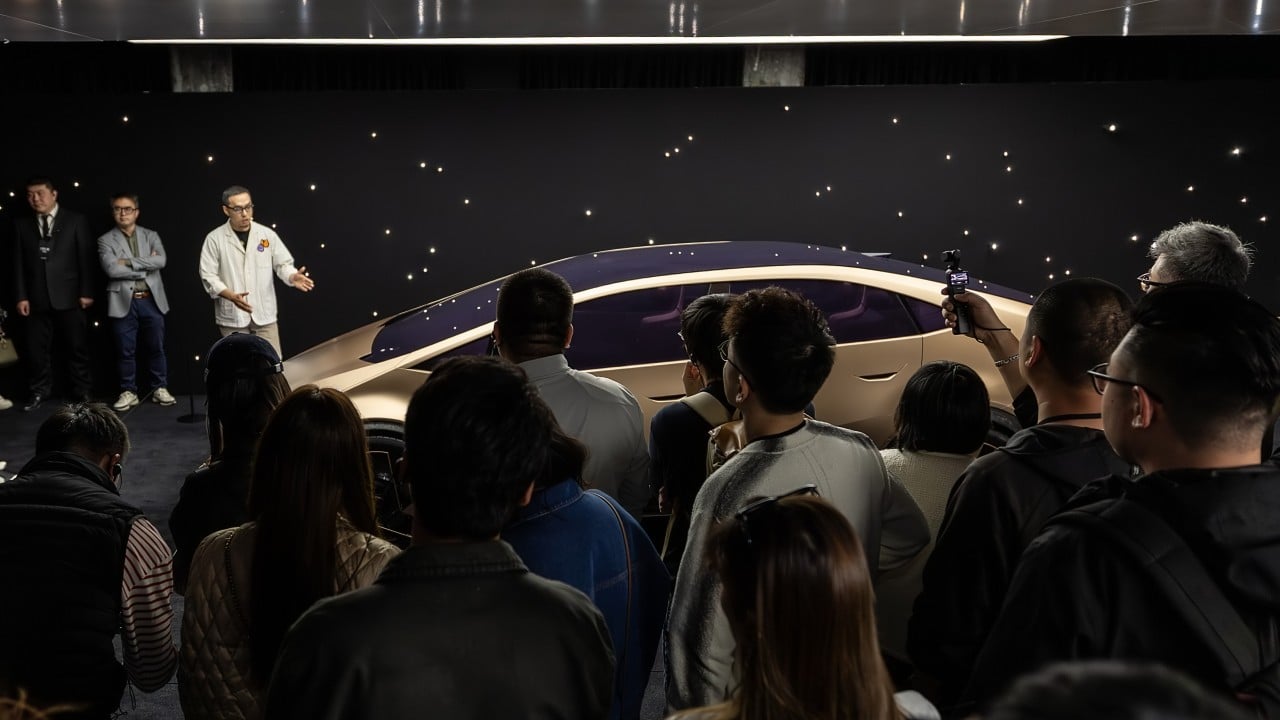
They aren't just shipping over the Ioniq 5 and 6 and hoping for the best. Instead, they’ve unveiled two concepts designed specifically for Chinese tastes: the VENUS, a sleek, trend-setting sedan, and the EARTH, a family-focused SUV. These aren't just show cars; they’re the blueprints for a production lineup that will hit the streets sooner than you think. Further information regarding the matter are covered by CNBC.
Why localization actually matters now
Chinese consumers don't care about "heritage" as much as they care about the "smart cabin." They want cars that feel like smartphones. To fix this, Hyundai is doing something radical: they’re outsourcing the brains.
- They’ve partnered with Chinese autonomous driving startup Momenta to bake local self-driving tech into the Ioniq line.
- They’re introducing Extended-Range Electric Vehicles (EREVs)—basically EVs with a small gas generator to kill range anxiety—because that’s exactly what Chinese buyers are currently obsessed with.
Confronting the brutal math of the China market
Let’s be honest about the numbers: they’ve been ugly. The Beijing Hyundai joint venture lost roughly 2.6 billion yuan ($358 million) in just the first nine months of 2024. By the end of that year, sales had plummeted by 41%. Most foreign brands would have cut their losses.
But Hyundai is playing the long game. They’ve injected nearly $1 billion in fresh capital into the joint venture to keep the lights on and the R&D flowing. They’ve set a goal to sell over 40,000 "eco-friendly" vehicles in China this year, with a massive production ramp-up planned through 2026.
It’s a crowded room, though. The average EV profit margin in China dropped to a measly 4.3% recently. Out of the 130+ EV makers in the country, only the big four—BYD, Tesla, Li Auto, and Geely—are actually making money. Hyundai is effectively jumping into a shark tank with a fresh coat of paint.
How the Ioniq ecosystem differs from the global version
In the US or Europe, an Ioniq is a car you buy at a dealership. In China, Hyundai wants it to be a "mobility ecosystem." They’re calling it the Ioniq Universe.
This includes:
- Planet-inspired naming: Future models won't just be numbers; they’ll have names meant to build "emotional connections" with local buyers.
- Hyper-local tech: Using local software for infotainment and navigation rather than trying to force-feed Korean systems into a market that uses WeChat and Baidu for everything.
- Faster cycles: They’re planning 20 new models over the next five years. In the EV world, if your car is two years old, it’s a fossil. Hyundai is trying to match the breakneck speed of Chinese startups.
The risk of being too late
You have to wonder if this is all too little, too late. Volkswagen is already launching a new vehicle every two weeks in China. Nissan and Toyota are pouring billions into their own local R&D centers. Hyundai isn't just fighting the Chinese; they’re fighting every other global brand that finally woke up to the fact that they’re losing.
The next big test is the Beijing Auto Show on April 24, 2026. That’s where the first mass-production Ioniq tailored for China will debut. If that car doesn't have the "wow" factor—the screens, the software, the range—then all the branding in the world won't save them.
Hyundai is betting its entire Chinese future on the Ioniq brand. They’ve stopped trying to lead from Seoul and started listening to Shanghai and Beijing. It’s a humbler approach, and honestly, it’s the only one that has a prayer of working. If you’re watching the EV space, the Beijing Auto Show is where we’ll see if this "comeback" is real or just a very expensive goodbye.
Stop watching the legacy sales figures and start looking at the tech specs of the upcoming VENUS and EARTH models. That’s where the real story is. If they can’t beat the local software, they won’t sell the hardware.